 Lynden Siding
 Abbotsford Roofs Work Harder Than Most
A roof in Abbotsford, BC deals with a specific combination of stresses that doesn't show up the same way everywhere else in the Fraser Valley or across the border in Whatcom County. You've got salt-tinged air drifting in off the strait and river systems, long stretches of driving rain that doesn't just fall but gets pushed sideways into fascia and flashing, and a moss season that can run most of the year on shaded or north-facing slopes. None of these on their own is unusual for the Pacific Northwest. Together, over years, they add up to roofs that fail earlier than their rated lifespan if they weren't installed with this specific climate in mind.
We work this area regularly out of Lynden, and the pattern is consistent: roofs that were installed correctly for the conditions here hold up. Roofs that were installed to a generic spec — right shingle, wrong underlayment, or right materials with corners cut on ventilation and flashing — start showing problems five to ten years earlier than they should. A new roof installation is the point where you either build in resistance to these conditions or bake in a shorter service life. There's no in-between.
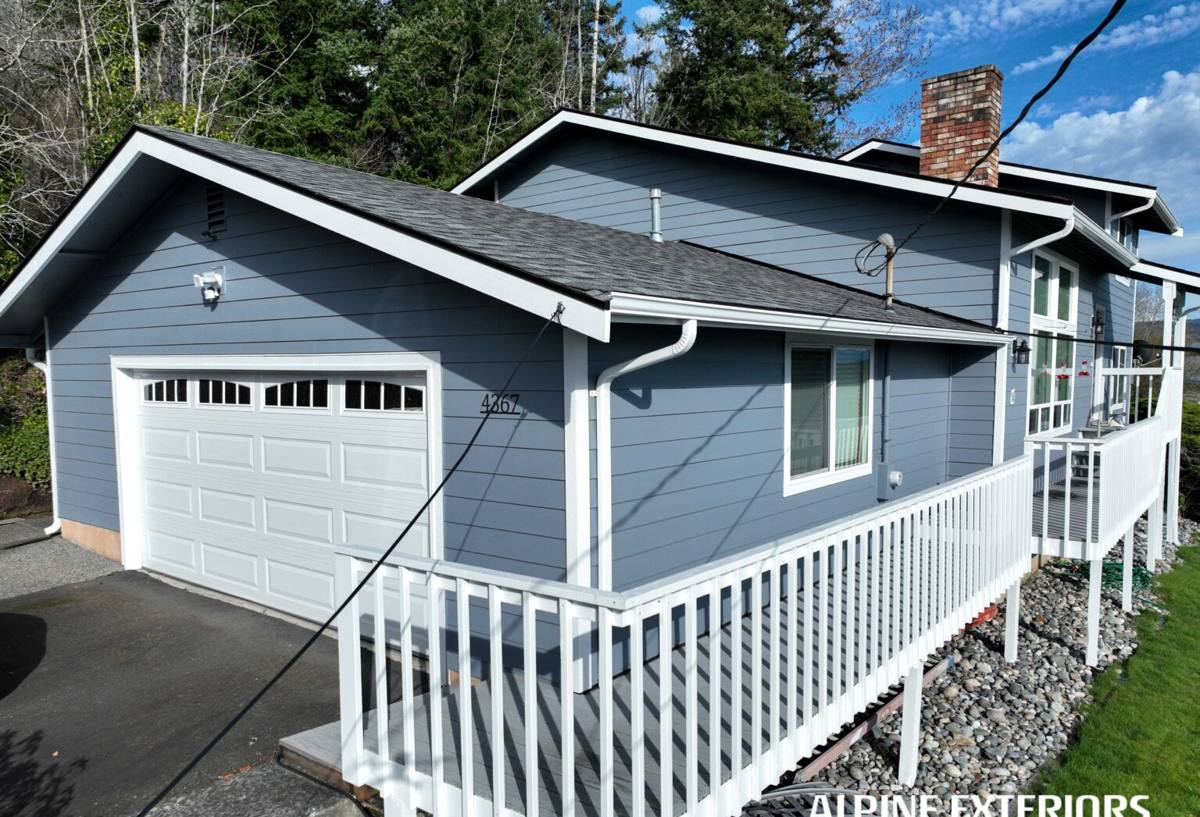
What "Driving Rain" Actually Does to a Roof
Driving rain is different from a straight-down downpour. Wind-driven rain gets pushed up and under shingle tabs, into nail penetrations, along valleys, and behind flashing that isn't lapped correctly. A roof that would shed water fine in a calm rain can leak in the same storm if the wind is coming from the wrong angle. This is why the details that don't show up in a driveway inspection — valley flashing method, underlayment type, how the ice-and-water membrane is lapped at eaves and valleys — matter more here than in drier climates.
Where Wind-Driven Rain Finds Weak Points
- Valleys where two roof planes meet and water concentrates
- Around chimneys, skylights, and any roof penetration
- Eaves, where wind can push water back uphill under the first course of shingles
- Rake edges on gable ends exposed to prevailing wind
- Low-slope sections and dormers where standard shingle coverage isn't enough on its own
What a Correct New Roof Installation Involves
A new roof isn't just stripping the old material and nailing down new shingles. Done right, it's a system, and every layer has a job:
Tear-Off and Deck Inspection
We remove the old roofing down to the deck rather than layering over it. This is the only way to actually see what's underneath — soft spots, water staining, rot around penetrations, or deck sheathing that's delaminated from years of moisture cycling. Any of that gets repaired before anything new goes down. Covering over a compromised deck is how a new roof ends up with problems in year three instead of year twenty.
Underlayment
This is the layer that actually keeps a home dry if wind ever drives water past the shingles, and in this region that's not a rare event — it's a design assumption. Ice-and-water membrane at eaves, valleys, and around penetrations, with synthetic underlayment across the field, gives the roof a real second line of defense instead of a token one.
Flashing
Flashing around chimneys, skylights, walls, and valleys is where the majority of leaks actually originate — not out in the open field of shingles. Correct step flashing, counter-flashing, and valley metal, properly lapped with the underlayment (not just caulked over old flashing), is one of the least visible parts of the job and one of the most important.
Ventilation
Balanced intake and exhaust ventilation keeps the attic close to outdoor temperature, which reduces condensation, extends shingle life, and helps prevent ice damming during cold snaps. It also directly affects how much moss and algae pressure the roof surface faces, since a hot, poorly ventilated attic accelerates moisture cycling at the deck.
Choosing a Roofing Material for This Climate
There's no single "best" roofing material — there's the right material for the roof's slope, the home's structure, the budget, and how much maintenance the owner wants to take on. Here's how the common options actually compare for a home in the Abbotsford / Fraser Valley climate:
| Material | Moisture & Moss Resistance | Typical Lifespan | Maintenance Load |
|---|---|---|---|
| Architectural asphalt shingle | Good, with proper ventilation and algae-resistant granules | 25–30 years | Low to moderate |
| 3-tab asphalt shingle | Fair — less wind resistance and shorter effective life in wet climates | 15–20 years | Moderate |
| Metal (standing seam or panel) | Excellent — sheds water and moss finds little to hold onto | 40–60 years | Low |
| Cedar shake | Requires active maintenance to resist moss and rot in this climate | 20–30 years with upkeep | High |
We'll walk through these trade-offs honestly during your estimate. Cedar shake can look excellent, but in a climate with this much sustained moisture, it's an ongoing maintenance commitment rather than a set-and-forget roof. Metal costs more upfront but performs exceptionally well against wind-driven rain and moss. Asphalt shingle remains the most common choice for good reason — it's a proven, cost-effective system when installed with the right underlayment and ventilation behind it.
Moss: The Slow Damage Most Homeowners Underestimate
Moss doesn't just look bad. It holds moisture against the shingle surface long after the rain has stopped, which accelerates granule loss and, on older or thinner shingles, can work its way under tabs and lift them. On shaded lots and north-facing slopes common in this area, moss can establish within a couple of years on a roof that isn't set up to resist it.
A correct new roof installation reduces moss pressure from the start — proper ventilation, adequate roof pitch drainage, and in some cases zinc or copper strips at the ridge, which release trace metal ions that inhibit moss growth as rain washes over them. This isn't a substitute for occasional cleaning, but it meaningfully extends the interval between moss treatments.
Signs Your Roof Needs Replacing, Not Another Repair
Not every roof problem calls for a full tear-off. But there's a point where patching becomes false economy. Before we recommend a new installation over a repair, we look for:
- Shingles that are cracked, cupping, or losing granules across large sections rather than one isolated spot
- Soft or spongy decking felt underfoot during inspection
- Daylight visible through the roof deck from the attic side
- Repeated leaks in different locations after prior repairs
- Heavy, persistent moss or algae coverage across most of the roof rather than isolated patches
- A roof already past 20–25 years old with valleys or flashing showing wear
If a roof only shows one or two of these and the deck is sound, a targeted repair is usually the honest recommendation. We'd rather tell you that than sell a full replacement you don't need yet.
How We Handle a New Roof Installation
- On-site assessment — we inspect the existing roof, attic ventilation, and deck condition, and measure the roof for an accurate material estimate.
- Written estimate — clear scope, material options, and pricing, with no pressure to decide on the spot.
- Tear-off and deck repair — old roofing removed, deck inspected, any damaged sheathing replaced before anything new goes down.
- Underlayment and flashing — ice-and-water membrane at vulnerable areas, synthetic underlayment across the field, new flashing at every penetration and valley.
- Roofing material installation — installed to manufacturer specification, which is what keeps material warranties valid.
- Ventilation check — intake and exhaust confirmed balanced for the attic's actual size and layout.
- Final walk-through — cleanup, gutter check, and a review of the finished roof with the homeowner.
Why It Matters That We Already Work Abbotsford
A crew that regularly works this stretch of the border region — Whatcom County and into the southern Fraser Valley — has already seen how roofs here actually fail, not just how they're supposed to perform on paper. That means we know which valleys tend to take the worst of the wind-driven rain on a given lot orientation, which neighborhoods see heavier moss pressure due to tree cover and shade, and which older installation shortcuts show up as leaks years later. That's practical knowledge, not something you get from a one-time job somewhere unfamiliar.
It also means logistics are straightforward — material delivery, permitting familiarity, and scheduling around this region's weather windows, which matter a lot for a job that needs a stretch of dry days to do right.
What Happens After Installation
A new roof installation should come with clear documentation: what was installed, the manufacturer's material warranty, and our workmanship coverage on the installation itself. We'll walk you through what routine maintenance actually looks like — periodic gutter clearing, occasional moss treatment if your lot is shaded, and what to watch for after major windstorms. A well-installed roof in this climate shouldn't need much, but knowing what "normal" looks like helps you catch a real problem early instead of late.
If your roof in Abbotsford is showing its age, or you just want an honest opinion on whether it needs replacing or can hold on a bit longer, we're glad to take a look. The estimate is free, there's no pressure, and you'll get a straight answer either way — just fill out the form below to get started.