 Lynden Siding
 Deck Building for Abbotsford, BC Homes
Abbotsford sits close enough to Lynden that a lot of homeowners on both sides of the border deal with the same weather, the same soil drainage headaches, and the same slow, grinding wear on outdoor wood structures. A deck built without that reality in mind might look fine the first summer and start showing problems by year three — soft boards, green film underfoot, fasteners bleeding rust streaks down the face boards. We build decks the way this climate demands, not the way a catalog photo from a dry climate suggests.
This page covers what actually matters for a deck in the Abbotsford area: the climate factors at play, what a correctly built deck involves structurally, how our process works from first call to final walkthrough, and what to ask any contractor before you hire them.
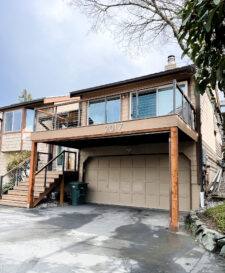
What the Local Climate Does to a Deck
The Fraser Valley and northern Whatcom County share a marine-influenced climate — long wet seasons, mild but persistent humidity, and enough cloud cover that surfaces stay damp for days at a stretch even when it isn't actively raining. Salt air carried in off the Strait, driving rain that comes in sideways during winter storms, and a moss season that can stretch from October through April all take a toll on anything built outdoors. A few specific ways that shows up on decks:
- Moss and algae growth on horizontal surfaces that don't get direct sun or airflow, which makes boards slick and, over time, holds moisture against the wood fiber.
- Fastener corrosion when screws or nails aren't rated for exterior/coastal exposure — you'll see black staining or rust bleed around the head within a couple of seasons.
- Ledger board rot where the deck attaches to the house, if flashing wasn't installed correctly and water has been quietly working its way behind the band board.
- Freeze-thaw movement at footings during the occasional hard frost, which can heave or shift posts that weren't set below frost depth.
- Cupping and checking in lower-grade lumber that absorbs moisture unevenly across the board.
None of this is exotic — it's just what happens to a deck in this region over a normal decade of weather. The fix isn't a special product, it's building with those conditions assumed from the start.
Choosing the Right Decking Material
There's no single "correct" material for every project — it depends on budget, how much upkeep you're willing to do, and how the deck will be used. Here's how the common options actually perform in this climate:
| Material | Moisture Performance | Maintenance | Typical Lifespan Here |
|---|---|---|---|
| Pressure-treated pine | Good if properly sealed; treatment resists rot but surface still absorbs water | Needs re-staining/sealing every 2-3 years | 15-20 years with upkeep |
| Cedar | Naturally rot- and insect-resistant; still needs a moisture barrier finish | Re-oil or re-stain every 1-2 years to hold color and grain | 20-25 years with upkeep |
| Composite/PVC boards | Excellent — doesn't absorb water or rot, resists moss staining better than wood | Occasional wash to keep surface film-free; no sealing | 25-30+ years, per manufacturer warranty |
| Untreated/reclaimed wood | Poor in this climate without heavy treatment | High — frequent inspection and sealing | Variable, often under 10 years |
We'll walk you through the honest trade-offs for your specific project rather than pushing one product. Composite costs more up front and some homeowners prefer the look and feel of real wood grain under bare feet — that's a legitimate reason to choose cedar or treated lumber even knowing it means more maintenance. What matters is that whichever material you pick, it's installed with the fastening, spacing, and drainage details that this climate requires.
Why We're Selective About Certain Products
Not every decking product sold at a big-box store is a good fit for a wet coastal climate. Some lower-cost composite boards use a cap layer that's more prone to surface scratching and doesn't handle standing water at the edges as well as mid- and upper-tier lines. Some cheaper hardware is rated for interior or dry-exposure use only, not coastal exterior applications. We don't install those combinations — not because the products are worthless everywhere, but because they're a poor match for the moisture load a deck here actually sees, and we'd rather tell you that upfront than have you dealing with a warranty dispute in five years.
What a Correctly Built Deck Involves
A deck is a structure, not just a surface to walk on, and most of what determines whether it lasts is invisible once it's finished. The parts that matter most:
Footings and Framing
Footings need to be sized and set to local frost depth and soil-bearing requirements, not just "deep enough to look right." Posts should sit on top of footings with a moisture break, never buried directly in concrete where water can wick up into the post end grain.
Ledger Attachment and Flashing
Where the deck ties into the house is the single most common failure point we see on older decks in this region. Proper flashing — metal flashing under the siding, over the ledger board, with a drainage gap — keeps water from tracking behind the band board and rotting the house rim joist. This detail gets skipped more often than any other.
Joist Spacing and Fasteners
Joist spacing needs to match the decking material's span rating (composite often requires tighter spacing than wood). Structural fasteners should be hot-dip galvanized or stainless, rated for ground contact and coastal exposure — not interior-grade screws that'll corrode within a couple of wet seasons.
Airflow Underneath
Decks built low to the ground with poor underside ventilation trap moisture and become a moss and mildew incubator. Proper clearance and, where grade doesn't allow it, drainage planning underneath make a real difference in how long the structure stays dry.
Our Process
We keep the process straightforward because most of the value is in getting the details right the first time, not in a complicated sales pitch:
- On-site assessment. We look at grade, drainage, sun exposure, and how the deck ties into the existing structure before recommending anything.
- Material and design discussion. We talk through the trade-offs above based on your budget and how you'll actually use the space.
- Permit check. We confirm what's required for the specific jurisdiction the property sits in before framing begins.
- Build. Footings, framing, ledger flashing, decking, and railing, in that order, with inspection points along the way rather than rushing straight to the finished surface.
- Final walkthrough. We go over the finished deck with you, including what maintenance it'll need and roughly when.
Permits and Jurisdiction — What Abbotsford Homeowners Should Know
One thing worth being upfront about: Abbotsford falls under British Columbia's building code and the City of Abbotsford's own permitting process, which is a different system than what applies on the Whatcom County side of the border. Requirements around deck height, guard rail specs, and setback from property lines can differ from what's standard in Washington. We tell every Abbotsford client to confirm current permit requirements with the city before work starts, and we build to whatever code applies to the property's actual location rather than assuming the two sides of the border match. It's a small detail that gets overlooked when a project moves quickly, and it's not one worth skipping.
What Affects the Cost of a Deck Build
| Cost Factor | Why It Matters |
|---|---|
| Deck size and shape | Multi-level or non-rectangular designs need more framing labor and material waste |
| Material choice | Composite runs higher up front than treated lumber; cedar sits in between |
| Ground slope and access | Steep or hard-to-access sites add footing and equipment work |
| Railing style | Cable or glass railing costs more than standard wood or metal baluster railing |
| Height off grade | Taller decks require larger footings, more bracing, and code-required guard rails |
| Existing structure condition | Rebuilding onto a house with rot at the ledger area adds repair scope before the deck itself starts |
We'll give you a real number after seeing the site — broad guesses over the phone tend to be wrong in one direction or the other once grade, access, and material choice are factored in.
Maintenance That Actually Extends Deck Life Here
- Sweep debris off the surface regularly, especially in fall — trapped leaves hold moisture against the boards.
- Wash the deck surface at least once a year to remove the moss and algae film before it gets established, especially on shaded sections.
- Check railing posts and stair stringers annually for movement or soft spots at ground contact points.
- Re-seal or re-stain wood decking on the schedule appropriate to the species — don't wait until the finish has already failed.
- Keep gutters and downspouts clear near the deck so runoff isn't dumping extra water onto or under the structure.
- Inspect ledger flashing and the house connection point every couple of years — this is the spot most likely to hide a slow leak.
Why a Local Crew That Knows This Area Matters
A deck built to a generic national spec sheet doesn't account for what this specific stretch of the Pacific Northwest does to outdoor lumber. A crew working regularly in Lynden and the Abbotsford area sees the same moss patterns, the same drainage issues on the same soil types, and the same failure points on older decks year after year — that repetition is what informs where we add extra flashing, upsize a fastener, or push back on a material that won't hold up. It also means we're not guessing at what the local jurisdictions expect, since we're regularly working through both Whatcom County and Abbotsford permit requirements rather than encountering them for the first time on your project.
Questions Worth Asking Before You Hire
- Will the ledger board be properly flashed, and can you explain how?
- What fastener grade are you using, and is it rated for coastal exterior exposure?
- How are footings sized for this soil and grade?
- What's the manufacturer warranty on the decking material, and what voids it?
- Who's confirming permit requirements for this specific property's jurisdiction?
Any contractor who can't give you a straight answer on these is worth a second look before you sign anything.
If you're planning a deck in the Abbotsford area, we're happy to come take a look and give you an honest, no-pressure estimate — just fill out the form below and we'll get in touch.