 Lynden Siding
 Metal Roofing Built for Wiser Lake's Weather
Wiser Lake sits in a part of Whatcom County where the weather doesn't do anything in half measures. You get long stretches of driving rain off the Strait, enough humidity and shade around the lake to keep moss growing nearly year-round, and just enough salt-laden air moving inland to matter over the life of a roof. A roof out here isn't just shedding water — it's fighting moisture intrusion, biological growth, and slow corrosion at the same time, month after month, for decades. Metal roofing handles that combination better than almost anything else on the market, but only when it's specified and installed correctly for this exact environment. That's the part that gets skipped by contractors who don't work this area regularly.
This page is about metal roofing specifically for homes in and around Wiser Lake — what the local conditions demand, what a correct installation actually involves, and how we approach the job when we're on your roof.
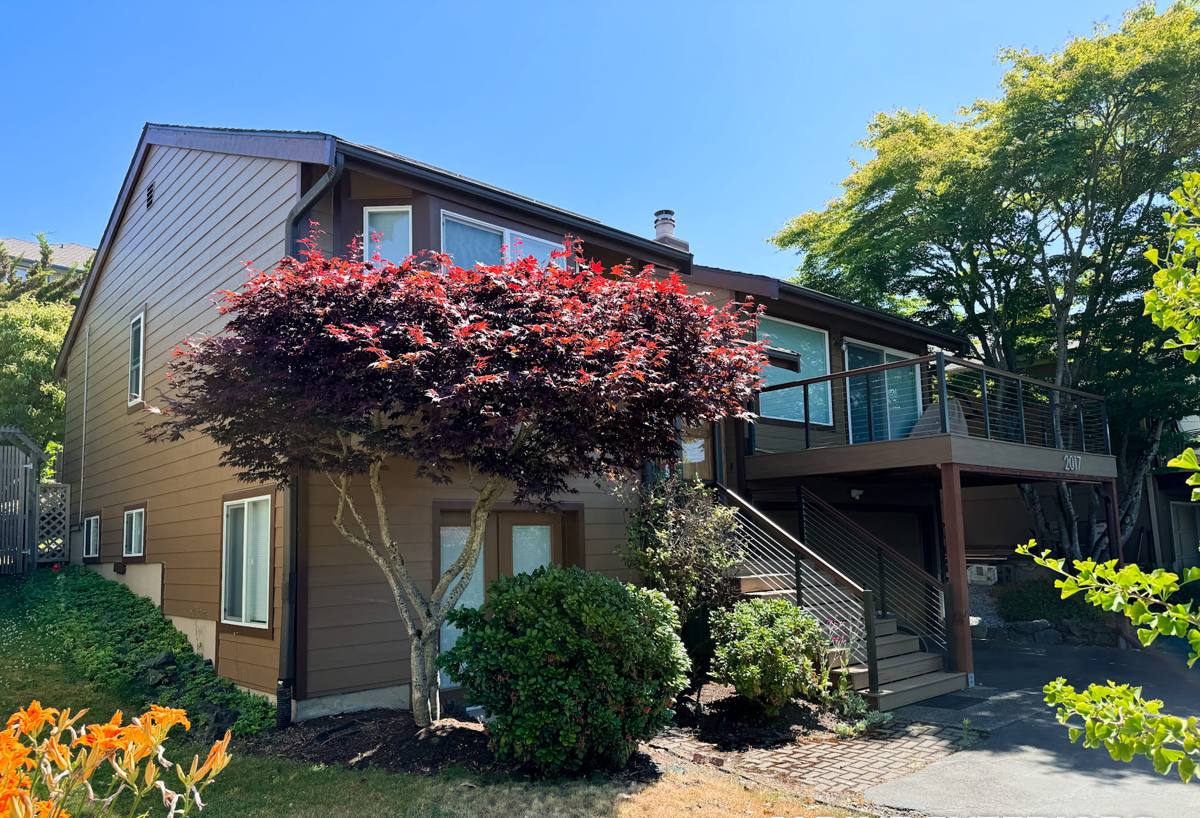
Why Wiser Lake Homes Are Hard on Roofing
Moisture That Doesn't Let Up
Lynden and the surrounding Whatcom County lowlands get a steady diet of Pacific rain, and the lake itself adds humidity that lingers in the air around it. Roofs here rarely get a long, dry stretch to fully shed and dry out the way they might east of the Cascades. Any weak point in a roof system — a bad seam, a poorly flashed penetration, underlayment that isn't rated for constant exposure — turns into a slow leak instead of an obvious one, and slow leaks are the ones that do the most damage before anyone notices.
Moss and Organic Growth
Shade from mature trees around the lake, combined with near-constant moisture, is exactly the environment moss wants. On asphalt shingles, moss roots into the granule surface and lifts it over time. On a correctly installed metal roof, moss has almost nothing to hold onto — but panel seams, valleys, and any spot where debris collects can still trap enough organic material to hold moisture against the metal if the roof wasn't designed with proper drainage and clean detailing.
Salt Air and Slow Corrosion
Wiser Lake isn't oceanfront, but Whatcom County's proximity to Puget Sound and the Strait of Georgia means airborne salt does travel inland, especially on windier days. It's a lower-intensity exposure than a true coastal property, but over 20-40 years it adds up — particularly at cut edges, fasteners, and any spot where a coating has been compromised. This is one of the biggest reasons material and coating choice matters more here than it would in a dry inland climate.
What a Correct Metal Roof Involves in This Climate
A metal roof is only as good as the system underneath it and the details at every transition. For Wiser Lake conditions, we treat these as non-negotiable:
- High-quality underlayment: A synthetic or self-adhering underlayment rated for extended exposure, not the minimum-code option, especially at eaves and valleys where water concentrates.
- Proper fastener selection: Fasteners matched to the panel metal to avoid galvanic corrosion, with correct spacing and torque so panels can expand and contract without stress cracking around fastener holes.
- Real flashing details: Custom-bent flashing at valleys, sidewalls, chimneys, and any roof-to-wall transition — not generic trim pieces that leave gaps for wind-driven rain to exploit.
- Ventilation that actually works: Balanced intake and exhaust ventilation so moisture-laden air escapes the attic instead of condensing against the underside of the metal.
- Coating and finish suited to airborne salt: A quality factory finish (typically a PVDF-type coating on steel or aluminum panels) that resists chalking, fading, and edge corrosion over the long haul.
- Clean drainage paths: Valleys and eaves detailed so moss debris and needle litter don't build up and dam water against a seam.
Skip any one of these and you can still end up with a roof that looks like a quality metal roof for a few years, then starts showing problems exactly where the shortcuts were taken — usually at flashing, fasteners, or the underlayment nobody sees until there's a leak.
Panel and Material Options
Not every metal roofing product performs the same way in a wet, moss-prone, salt-adjacent environment. Here's how the common options compare for a Wiser Lake home:
| Option | Corrosion Resistance | Moss/Debris Resistance | Typical Lifespan |
|---|---|---|---|
| Standing seam steel (PVDF coated) | Very good with proper coating | Excellent — smooth, minimal debris traps | 40-60 years |
| Standing seam aluminum | Excellent (no rust) | Excellent | 40-60+ years |
| Exposed-fastener steel panels | Good, but fasteners are the weak point | Good, but seams collect more debris | 25-40 years |
| Stone-coated steel (shake/tile profile) | Good | Fair — textured surface can hold moisture longer | 30-50 years |
For most Wiser Lake homes we lean toward standing seam steel or aluminum with a quality PVDF finish. The concealed fastener design removes the most common failure point in this climate, and the smooth panel surface doesn't give moss or organic debris anywhere to gain a foothold. Exposed-fastener panels can still be the right call on a budget-driven project or a secondary structure — it's a legitimate product, just one that needs more attention to fastener maintenance over time.
Our Process on a Wiser Lake Roof
- On-site assessment: We walk the existing roof, check the decking condition, look at ventilation, and evaluate how water currently moves across the roof and around the lake-influenced tree cover.
- System design, not just panel choice: We spec underlayment, flashing details, and ventilation together with the panel product — not as an afterthought.
- Written estimate: Clear scope, material specifics, and a straightforward price — no vague allowances that turn into surprises mid-project.
- Tear-off and deck inspection: Old roofing comes off, and we check the decking underneath for rot or soft spots before anything new goes down — a step that matters more on lake-adjacent homes with a history of moisture exposure.
- Installation: Underlayment, flashing, and panels installed to manufacturer spec and matched to this climate's demands.
- Final walkthrough: We review the finished roof with you, including how to spot early signs of moss buildup or debris accumulation so small issues stay small.
Maintenance Reality for Metal Roofs Near Wiser Lake
Metal roofing is low-maintenance compared to shingles, but "low" isn't "none," especially with the tree cover and moisture around the lake. A few honest points:
- Keep valleys and gutters clear of needles and leaf litter — debris that sits wet against a seam is the most common source of an otherwise-avoidable problem.
- Walk the roofline (or have it checked) after major storms for any shifted flashing, especially at chimneys and sidewalls.
- Rinse off heavy moss or algae buildup gently rather than letting it establish — on metal it's mostly cosmetic if caught early, but it shouldn't be ignored indefinitely.
- Have fasteners on exposed-fastener panels checked periodically, since they're the first thing to loosen or corrode over decades of exposure.
Cost Factors for a Wiser Lake Metal Roof
Every roof is different, but the price of a metal roofing project in this area is driven by a consistent set of factors:
| Factor | Why It Matters Here |
|---|---|
| Panel type (standing seam vs. exposed fastener) | Standing seam costs more upfront but reduces long-term maintenance in a wet, moss-prone climate |
| Roof complexity (valleys, dormers, chimneys) | More transitions mean more custom flashing labor, which is where leaks start if rushed |
| Decking condition | Moisture-related rot found during tear-off adds material and labor to repair before new roofing goes on |
| Ventilation upgrades | Older homes near the lake often need intake/exhaust improvements to prevent condensation under the new roof |
| Coating/finish grade | A better PVDF finish costs more but holds up longer against salt air and UV |
We don't quote a number without seeing the roof — anyone who does is guessing, and guesses turn into change orders. What we can tell you honestly: metal roofing costs more upfront than asphalt shingles, and on a Wiser Lake home dealing with moss, moisture, and salt-tinged air, it typically pays that difference back in avoided repairs and a roof that's still performing well decades later.
Why Hire a Crew That Already Works This Area
Metal roofing installation is unforgiving of shortcuts, and a crew that mostly works drier inland climates doesn't always plan for what a lake-adjacent, moss-heavy, rain-soaked property actually needs — the extra attention to valley drainage, the underlayment grade, the flashing detail at a shaded sidewall that never fully dries out. We work Lynden and the surrounding Whatcom County communities regularly, including homes around Wiser Lake, and we design every roof around the conditions it will actually face, not a generic spec sheet. That's the difference between a metal roof that looks right for a few years and one that's still doing its job in thirty.
If you're considering a metal roof for your Wiser Lake home, we're happy to take a look and give you a straightforward, no-pressure estimate — just fill out the form below.