 Lynden Siding
 Building Decks for Wiser Lake, Not Just Lynden in General
Wiser Lake sits just west of Lynden, and homes around it live with a slightly different set of conditions than a house downtown or out on the flats. There's the lake itself — humidity that lingers longer in the morning, shade from mature trees along the shoreline, and yards that stay damp well after the rest of Whatcom County has dried out. Layer that on top of the region's normal weather pattern — driving rain off the Pacific, marine-influenced air moving up from the Georgia Strait, and a moss season that can run from October into May — and you get a set of conditions a generic deck build isn't really designed for.
We work this specific area regularly, which matters more than it sounds. A crew that's built and repaired decks around Wiser Lake knows which yards hold water after a storm, which lots get shaded enough that boards never fully dry between rains, and which fastener and flashing choices actually hold up here versus what looks fine on a spec sheet. This page covers what a deck around Wiser Lake actually needs, how we build one correctly, and what to expect from our process.
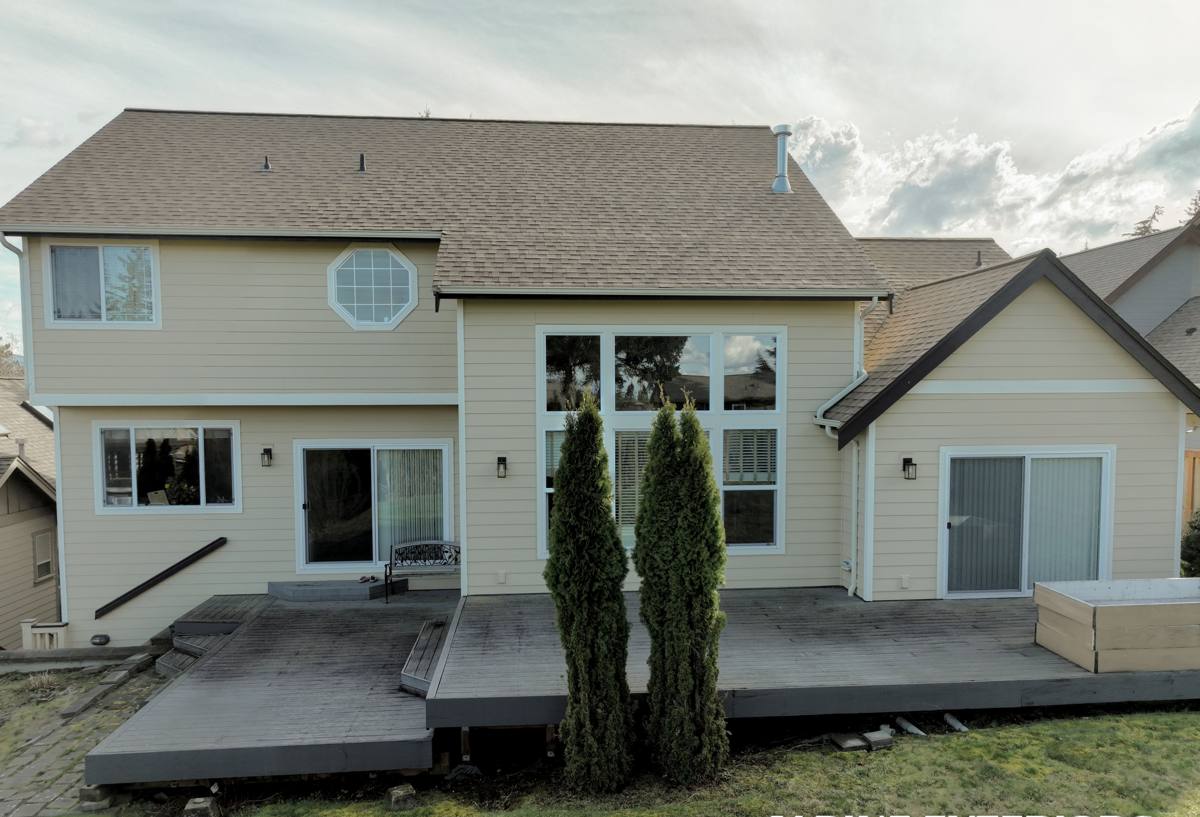
What the Wiser Lake Climate Does to a Deck
Moisture That Doesn't Leave
A deck near open water deals with moisture from two directions — rain falling on it and humidity rising off the lake underneath it. That combination keeps wood surfaces and joists damp for longer stretches than a deck on a dry, open lot across town. Wood that stays wet is wood that rots, and it's also wood that grows moss and algae, which hold even more moisture against the surface and make boards slick underfoot.
Shade and Slow Drying
Many lots around the lake have tree cover that's part of the appeal of living there, but shade also means a deck can go days after a storm without direct sun to dry it out. Decking, fasteners, and structural framing all need to be chosen with that slower drying cycle in mind — otherwise you're fighting rot and moss on a schedule that's faster than a typical Lynden yard would see.
Wind-Driven Rain and Marine Air
Whatcom County's weather regularly pushes rain sideways, not just down, which drives water into joints, fastener holes, and ledger connections that a fair-weather build wouldn't account for. The same marine-influenced air patterns that carry salt off the Georgia Strait through this part of the county accelerate corrosion on the wrong hardware — one more reason we don't cut corners on fasteners and flashing.
Decking Material Options for a Lake-Adjacent Property
There's no single "best" decking material — the right call depends on your budget, how much upkeep you want to do, and how much shade and moisture your specific lot deals with. Here's how the common options stack up for a Wiser Lake property specifically.
| Material | Moisture Behavior | Moss Resistance | Maintenance |
|---|---|---|---|
| Pressure-treated wood | Absorbs and releases moisture readily; needs to breathe and dry | Low — moss takes hold quickly in shaded, damp spots | Annual cleaning and periodic sealing/staining |
| Cedar | Naturally moisture-resistant but still organic; will grey and can cup if trapped wet | Moderate — better than PT wood but still needs cleaning | Regular cleaning, occasional oil or sealant |
| Composite decking | Doesn't absorb water like wood, but surface debris still holds moisture on top | Moderate to high, varies by product and surface texture | Low — periodic washing, no sealing or staining |
| PVC/capped composite | Fully sealed surface, sheds water well | High — least hospitable surface for moss growth | Lowest — occasional rinse |
We'll walk through these trade-offs with you honestly, including cost, rather than steering you toward whatever has the best margin. A shaded lot near the lake is exactly the kind of situation where spending more up front on a low-maintenance decking surface can be worth it — less time spent scrubbing moss off boards every spring.
What's Underneath Matters More Than What's on Top
The decking surface is what you see, but the framing, ledger, and footings are what determine whether the deck is still sound in ten years. This is where a lot of older decks around the lake run into trouble, and it's the part of the job we spend the most care on.
Ledger Attachment and Flashing
The ledger board — where the deck attaches to the house — is the single most common failure point on wood decks anywhere in this climate. Water that gets behind an improperly flashed ledger doesn't just rot the deck; it can work its way into the house's own framing. We flash this connection properly every time, with materials sized for sustained wet conditions, not just a quick wrap of tape.
Joist Protection
Joists that sit in standing moisture rot from the inside before it ever shows on the surface. We use joist tape or an equivalent moisture barrier on top of the framing, proper spacing for airflow underneath, and hardware rated for the conditions — not standard interior-grade fasteners that will corrode faster near the lake's humidity and the region's marine air.
Footings and Drainage
On lots with poor natural drainage — common near the lake — footing depth and placement need to account for water table behavior and soil that doesn't drain as fast as it would on higher, drier ground elsewhere in Lynden. Getting this wrong shows up years later as a deck that's settling or heaving unevenly.
Our Wiser Lake Deck-Building Process
- On-site assessment. We look at your lot's sun exposure, drainage, existing structure (if this is a replacement), and how the house itself handles moisture before recommending anything.
- Honest material walkthrough. We explain the real trade-offs between wood, composite, and capped composite decking for your specific spot — shade, budget, and maintenance appetite all factor in.
- Design and permitting. We handle the structural layout and any permitting your project requires through the county or city, sized correctly for the load and span you need.
- Build with moisture-first detailing. Ledger flashing, joist protection, hardware rated for wet marine-influenced conditions, and airflow underneath the deck are non-negotiable steps, not upsells.
- Walkthrough and care guidance. Before we leave, we walk you through what your specific deck and decking material need going forward — cleaning schedule, what to watch for, and when to call.
What We See Most Often on Deck Repairs and Replacements Near the Lake
- Moss and algae buildup on boards that never get direct sun, making the surface slick and holding moisture against the wood
- Rot starting at the ledger board where flashing was missing or installed incorrectly
- Rusted or corroding fasteners that were never rated for sustained damp, marine-influenced conditions
- Joists that rotted from underneath while the top surface still looked fine
- Standing water pooling under the deck due to poor grading or blocked drainage paths
- Railings and stair stringers loosening as wood swells and shrinks through repeated wet-dry cycles
If any of that sounds like your current deck, it's usually cheaper and safer to address it now than after another wet season adds to the damage.
Keeping a Wiser Lake Deck in Good Shape
Whatever material you choose, some upkeep habits matter more here than they would on a drier, sunnier lot:
- Sweep leaves and debris off the surface regularly, especially in shaded corners where they trap moisture
- Clean moss and algae off boards at least once a year, more often on heavily shaded sections
- Check the gap between boards periodically to make sure it hasn't filled with debris that blocks drainage and airflow
- Inspect the ledger flashing and any visible fasteners annually for corrosion or gaps
- Re-seal or re-stain wood decking on the schedule the product calls for — skipping years is how rot gets ahead of you
- Confirm the area underneath the deck still drains and isn't holding standing water after storms
Why a Local Lynden Crew Makes a Difference
A deck built to a generic national spec will hold up fine in a dry climate. Whatcom County isn't that climate, and Wiser Lake's own humidity and shade push conditions further still. A crew that's out here regularly knows which details actually get tested by this weather — the flashing, the fastener grade, the airflow underneath — versus which ones are just fine on paper elsewhere in the country. That's the difference between a deck that needs real repair work in five years and one that's still solid in twenty.
We're a Lynden-based crew, and Wiser Lake is part of our regular service area, not a stretch job we take occasionally. We show up knowing the lots, the drainage patterns, and the moss season this area deals with every year.
Get a Free Estimate for Your Wiser Lake Deck
Whether you're building new, replacing a deck that's showing its age, or just want an honest read on whether yours needs repair versus replacement, we're happy to take a look. Fill out the form below for a free, no-pressure estimate on your Wiser Lake property.