 Lynden Siding
 Roofing in Sumas: A Different Set of Problems Than Most of the Country
Sumas sits right up against the Canadian border in the northeast corner of Whatcom County, and the roofs here take a beating that homeowners in drier climates never have to think about. You're dealing with moisture pushed in off the Salish Sea and Georgia Strait, cool damp air that sits in the Nooksack valley for weeks at a time, and a growing season for moss and algae that in some years never really stops. A roof installed without that reality in mind will look fine for a year or two and then start failing from the inside out — soft decking, streaked shingles, and slow leaks that show up as a stain on a ceiling long after the actual damage started.
New roof installation in Sumas isn't a different product than what you'd install anywhere else in Whatcom County. It's the same core materials — asphalt composition shingle, standing seam metal, and a handful of specialty options — but the install details that matter change based on what the roof actually has to survive. This page covers what that means in practice: what a correct installation includes, what it costs to get right, and what to watch for when you're vetting a contractor to do it.
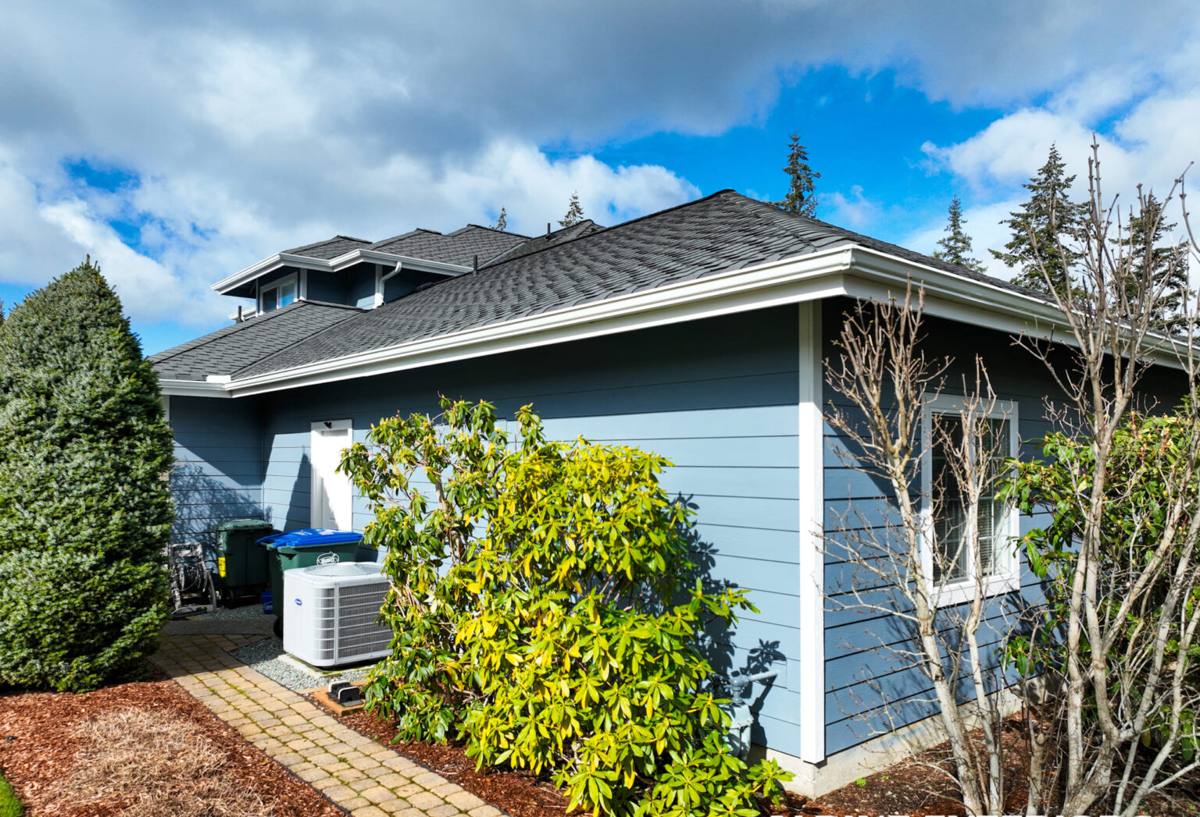
What the Regional Climate Actually Does to a Roof
Three things drive almost every roofing problem we see in this part of Whatcom County:
Driving Rain
Storms off the Pacific don't just fall straight down here — wind pushes rain sideways under shingle tabs, around vent boots, and up under flashing that isn't lapped correctly. A roof built for a drier, calmer climate can pass visual inspection and still leak the first time a real wind-driven storm rolls through.
Salt-Influenced Air
Sumas is inland compared to coastal Whatcom County towns, but the marine air still carries moisture and mineral content that accelerates corrosion on exposed metal — nails, flashing, vent caps, and gutter hardware. Fasteners and flashing that aren't rated for a coastal-influenced climate corrode faster than they should, and a corroded nail head is a future leak point.
A Long Moss Season
Shade, cool temperatures, and consistent moisture make this one of the better environments for roof moss and algae growth in the country. Moss doesn't just look bad — it holds water against the roof surface, works its way under shingle edges, and lifts tabs as it grows, which is exactly the mechanism that turns a small leak into a decking problem.
None of this means a roof in Sumas needs to be exotic or overbuilt. It means the standard details — underlayment choice, flashing method, ventilation, and material selection — need to be executed correctly, every time, with this climate specifically in mind.
What a Correct New Roof Installation Includes
A roof replacement is more than removing old shingles and nailing down new ones. Here's what should happen on every full tear-off and replacement:
Tear-Off and Deck Inspection
The old roofing comes off down to the decking, and the decking gets inspected board by board. In a climate this wet, it's common to find soft or delaminated plywood or OSB around old leak points, chimneys, and skylights — spots that look fine from the ground but are compromised underneath. Any bad decking gets replaced before anything new goes down; skipping this step is the single most common source of "brand new roof, still leaking" complaints in this region.
Ice-and-Water Barrier and Underlayment
Eaves, valleys, and roof penetrations get self-adhering ice-and-water barrier as a second line of defense, with synthetic underlayment across the rest of the field. In a market with this much sustained rainfall, this layer is not optional — it's what keeps a roof dry during the years its shingles are aging and its granules are wearing.
Flashing
Step flashing at walls and chimneys, valley flashing, and properly sealed vent boots are where most leaks actually originate — not the shingle field. Flashing needs to be new, correctly lapped (never just caulked over old flashing), and matched to material that won't corrode quickly in this air.
Ventilation
Balanced intake and exhaust ventilation keeps the attic space at a stable temperature and humidity, which does two things: it extends shingle life from underneath, and it reduces the condensation that contributes to mold and rot in a damp climate like this one.
Final Layer and Details
Starter strip, correctly nailed field shingles (not overdriven or underdriven — both cause failures), ridge cap, and a full cleanup with a magnetic nail sweep of the yard and driveway.
Choosing the Right Roofing Material for Sumas
There's no single "best" roofing material — the right choice depends on budget, roof pitch, how long you plan to stay in the home, and how much maintenance you're willing to keep up with. Here's an honest comparison of the options we install most often in this climate.
| Material | Typical Lifespan | Moss/Moisture Resistance | Maintenance | Relative Cost |
|---|---|---|---|---|
| Asphalt Composition Shingle | 20–30 years | Good, with periodic cleaning | Low — occasional moss treatment | Lowest |
| Standing Seam Metal | 40–60 years | Excellent — sheds moss and moisture fast | Very low | Highest |
| Architectural/Dimensional Shingle | 25–35 years | Good to very good | Low | Mid |
| Cedar Shake | 20–30 years with upkeep | Poor without regular treatment | High | Mid-High |
For most Sumas homes, we steer people toward architectural asphalt shingle or standing seam metal. Asphalt shingle gives the best balance of cost and performance in this climate when it's installed with proper ventilation and moisture barriers. Metal costs more up front but essentially eliminates the moss problem, since moss and algae struggle to get a foothold on a smooth, fast-draining metal surface — that's a real advantage in a place with this much sustained damp shade.
We don't push cedar shake for full replacements here unless a homeowner specifically wants the look and understands the maintenance commitment. In a climate with a long moss season, an untreated or infrequently treated cedar roof holds moisture against the wood and shortens its own lifespan — that's a maintenance-burden and moisture-behavior issue, not a reflection on cedar as a material used correctly elsewhere.
Our Installation Process
- Roof inspection and estimate. We walk the roof (or use a lift/drone where pitch or access requires it), check the decking condition from the attic side where possible, and give you a written scope and price — not a verbal ballpark.
- Material selection. We go over shingle or metal options, colors, and warranty terms so you're choosing with full information, not just picking off a sample card.
- Scheduling around weather. Full tear-offs get scheduled with an eye on the forecast — we don't leave a house open to a Whatcom County rain system overnight if we can help it.
- Tear-off, deck repair, and dry-in. Old material comes off, decking is inspected and replaced where needed, and underlayment goes down the same day whenever possible so the house isn't exposed longer than necessary.
- Flashing, ventilation, and final installation. All flashing and vents are installed or replaced, then the finish material goes down to manufacturer spec.
- Cleanup and walkthrough. Full site cleanup, a magnetic sweep for stray nails, and a walkthrough so you know exactly what was done and what your new roof needs from you going forward.
Moss, Algae, and Long-Term Roof Care
A new roof installed correctly still needs a little seasonal attention in a climate like this one. That's not a defect in the roof — it's just what owning a roof in the Nooksack valley involves. A few habits go a long way:
- Have gutters cleared at least twice a year so water isn't backing up under the eaves during heavy rain.
- Keep overhanging branches trimmed back — shade and falling debris are the two biggest drivers of moss growth on an otherwise healthy roof.
- Have moss treated or gently removed before it establishes rather than after — lifted shingle tabs from mature moss growth are much harder to fix than preventing it in the first place.
- Walk the roofline from the ground after major storms and check for lifted shingles, displaced ridge cap, or damaged flashing.
- Schedule a professional inspection every few years, even if nothing looks wrong — small flashing issues are cheap to fix early and expensive once they've caused decking damage.
Signs Your Sumas Home Needs a New Roof, Not a Repair
Not every roof problem calls for full replacement, but these are the signs that usually point that direction rather than a patch job:
- Granules collecting in gutters and downspouts in noticeable amounts, indicating shingles are past their functional life.
- Multiple leak points in different areas of the roof, rather than one isolated spot.
- Visible sagging anywhere in the roofline, which can indicate decking or structural issues underneath.
- Shingles that are curling, cracking, or missing across large sections rather than a handful of storm-damaged spots.
- A roof approaching or past 20–25 years old, especially if the original installation didn't include modern underlayment or ventilation upgrades.
- Persistent moss coverage that keeps coming back within a season or two of treatment.
What Drives the Cost of a New Roof
Every roof is priced individually, but the same handful of factors move the number up or down on most jobs in this area:
| Factor | Why It Matters |
|---|---|
| Roof size and number of facets | More square footage and more valleys/hips mean more material and labor time. |
| Pitch and access | Steep roofs require more safety equipment and slower, more careful work. |
| Decking condition | Rot or delamination found during tear-off adds material and labor to replace it properly. |
| Material choice | Standard asphalt shingle, architectural shingle, and metal each carry a different material cost. |
| Number of penetrations | Chimneys, skylights, and multiple vent stacks each need individual flashing work. |
| Ventilation upgrades | Adding or correcting intake/exhaust venting is a smart long-term investment but adds to the scope. |
We won't quote a number without seeing the roof, but we'll always break the estimate down by these categories so you can see exactly what you're paying for and where — not just a single lump total.
Why Hiring a Crew That Already Works in Sumas Matters
A roof installed by someone unfamiliar with this specific stretch of Whatcom County can still look correct on paper and underperform in practice. Border-area weather patterns, the local moss and algae pressure, and even permitting expectations from the county are things a crew learns by working the area repeatedly, not by reading a spec sheet once. A contractor who's already done roofs nearby knows which flashing details tend to fail first in this climate, which materials hold up honestly versus which ones look good on a sample board, and how to sequence a tear-off so a house isn't left exposed if the weather turns.
That local familiarity also means faster response if something needs attention after the install — warranty callbacks, storm damage checks, or just a question about maintenance a year or two down the road. You're not waiting on a crew that has to drive in from out of the area and relearn the site every time.
Get a Straight Answer on Your Roof
If you're weighing repair versus replacement, or you already know your roof is due, we're happy to take a look and give you an honest, itemized assessment — no pressure, no inflated urgency. Fill out the form below for a free estimate on new roof installation for your Sumas home.