 Lynden Siding
 Why Metal Roofing Makes Sense in Nooksack
Nooksack sits in the Nooksack River valley, close enough to the marine air moving in off Puget Sound and the Strait of Georgia that homes here deal with a mix most inland towns don't: salty, damp air, long stretches of driving rain off the Pacific storm track, and shaded, moisture-trapping conditions that keep moss and algae growing nearly year-round. A roof out here isn't just shedding water a few months a year — it's under load almost constantly. Metal roofing holds up well against that combination when it's specified and installed correctly, which is the part that gets skipped more often than it should be.
We're not going to tell you metal is the only right answer for every home in Nooksack — asphalt and other systems have their place. What we will say is that when a homeowner asks us specifically about metal, it's usually because they're tired of replacing shingles every 15-20 years, tired of scrubbing moss off a roof that stays damp under fir and cedar cover, or they want something that will genuinely outlast the rest of the house's major systems. Metal can do that, but only if the details underneath it are right.
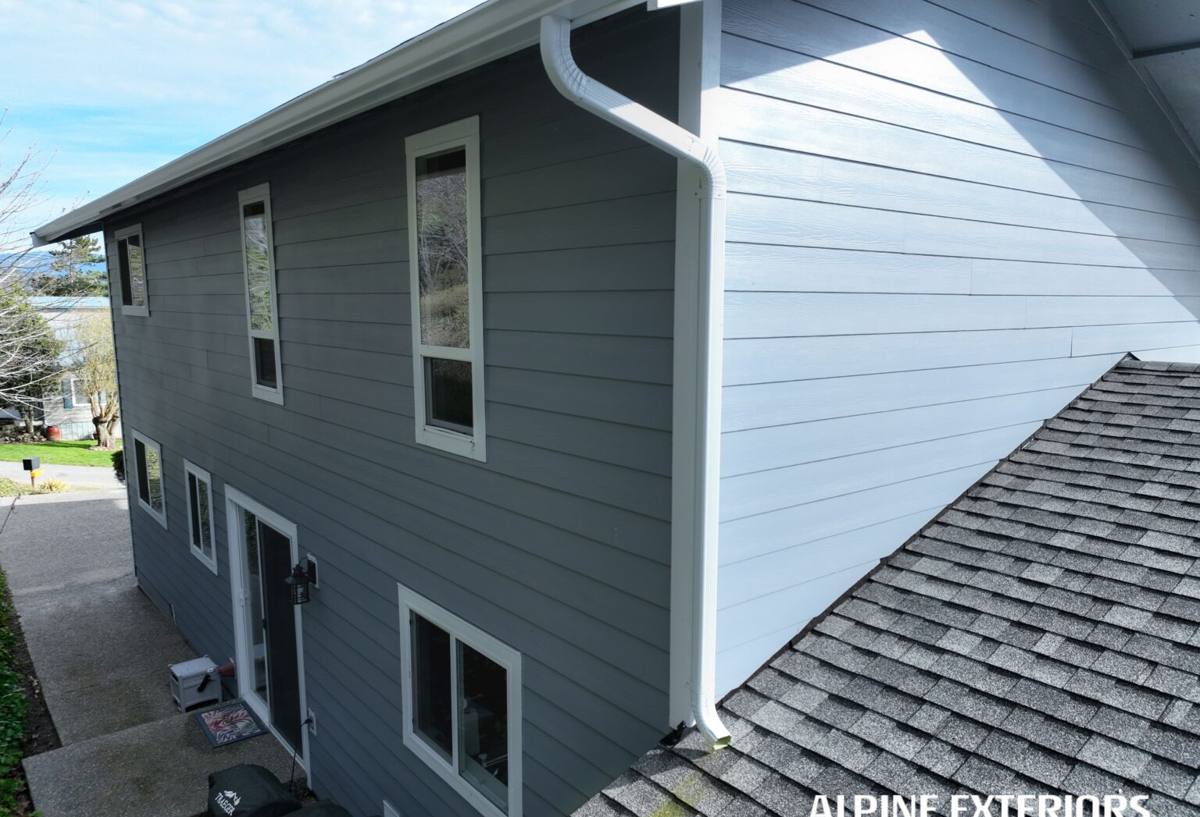
What Nooksack's Climate Actually Does to a Roof
Salt Air and Corrosion
Even well inland from open saltwater, prevailing marine air carries enough salt to accelerate corrosion on unprotected or poorly coated metal fasteners, flashing, and panel edges. This is less about the panel finish failing outright and more about the small stuff — exposed screw heads, cut edges, dissimilar metals touching — corroding first and starting leaks years before the field of the roof shows any wear.
Driving Rain and Wind-Driven Water
Storms coming through Whatcom County frequently push rain sideways, not straight down. That matters enormously at every penetration, valley, and eave. A roof that performs fine in a calm downpour can still leak under wind-driven rain if the underlayment, flashing laps, and fastening pattern weren't detailed for that specific stress.
Extended Moss Season
Shaded lots, tree cover, and persistent damp weather give moss and algae a long growing window here — often nearly year-round on north-facing slopes or roofs shaded by mature trees. On asphalt shingles, moss lifts the mat and holds moisture against the roof deck. On metal, moss has a much harder time getting a foothold on the panel surface itself, but it can still colonize dust and debris that collects in valleys, at panel seams, and around fasteners if those areas aren't kept clear.
What a Correct Metal Roof Install Involves
A metal roof is only as good as the assembly underneath the visible panel. On every job in the Nooksack area, we treat the following as non-negotiable, not upsells:
- A synthetic, high-temperature underlayment rated for the moisture exposure of this climate — not a low-cost felt that degrades under sustained dampness.
- Ice-and-water shield style membrane at eaves, valleys, and any low-slope transitions where wind-driven rain is most likely to back up under panels.
- Closed-cell or vented foam closures at ridges and eaves matched to the panel profile, to block wind-driven rain and pests without trapping condensation.
- Fasteners and flashing in metals compatible with the panel material, to avoid galvanic corrosion between dissimilar metals in a salt-influenced climate.
- Properly lapped and sealed flashing at every penetration — plumbing vents, chimneys, skylights — sealed with butyl tape or compatible sealant, not just caulk on top.
- Adequate attic or roof-deck ventilation, since a tight, well-insulated metal roof can trap condensation on the underside of the deck if airflow isn't planned for.
Skipping any one of these doesn't usually cause an immediate failure. It shows up two, five, or ten years later as a leak that's hard to trace, because the water is entering at a flashing detail or fastener and traveling before it shows a stain inside the house.
Choosing the Right Metal Roofing System
Not every metal roofing product is built the same way, and the differences matter more in a wet, salt-influenced climate than they do in a dry one. Here's how the common options compare for a Nooksack home:
| System | Typical Lifespan | Corrosion Resistance | Best Fit |
|---|---|---|---|
| Standing seam steel | 40-60+ years | Very good with proper coating/finish | Homes wanting concealed fasteners, cleanest look, longest service life |
| Exposed-fastener steel panels | 25-40 years | Good, but fastener seals need eventual re-tightening/replacement | Budget-conscious projects, outbuildings, simpler rooflines |
| Aluminum panels | 40-60+ years | Excellent — naturally corrosion-resistant, good choice for salt-influenced air | Homes closer to marine exposure or where long-term corrosion resistance is the priority |
| Stone-coated steel tile/shake profiles | 40-50+ years | Good with correct coating | Homeowners wanting a traditional shingle or shake look with metal durability |
For most Nooksack homes, we lean toward standing seam or aluminum specifically because concealed fasteners and inherently corrosion-resistant material reduce the number of small failure points that salt air and driving rain tend to find first. Exposed-fastener panels aren't wrong — they're a legitimate, more affordable option — but they require an honest conversation about the maintenance schedule for re-checking fastener seals over the years.
Our Process for a Nooksack Metal Roof
1. On-Site Assessment
We look at the existing roof deck, ventilation, slope, tree cover, and drainage patterns specific to the property. A shaded lot with heavy moss history gets different valley and ventilation detailing than an open, sun-exposed roof.
2. System Selection
Based on that assessment and your budget, we recommend a panel type, gauge, and finish — explaining the real trade-offs rather than just upselling the most expensive option.
3. Tear-Off and Deck Inspection
We remove the old roofing and inspect the deck for rot or soft spots, which is common on older Whatcom County homes where moss and moisture have been sitting against the roof for years. Any deck repair is priced and discussed before we cover it up.
4. Underlayment and Flashing
This is where the climate-specific work happens — high-temp synthetic underlayment, membrane at vulnerable points, and flashing detailed for wind-driven rain, not just gravity-fed water.
5. Panel Installation
Panels go on with the fastening pattern and closures specified for the profile and local wind exposure, with clean, straight lines and properly lapped seams.
6. Final Walkthrough
We walk the roof and the ground with you, point out anything you should keep an eye on over time (like debris buildup in valleys), and go over what maintenance actually looks like for the system you now have.
Maintenance: What a Metal Roof in Nooksack Actually Needs
One of the real advantages of metal here is how little routine maintenance it needs compared to shingles — but "little" isn't "none." A short annual checklist keeps a metal roof performing for decades in this climate:
- Clear debris and needles out of valleys and around penetrations before fall rains set in.
- Check gutters and downspouts for buildup, since clogged gutters back water up under eave flashing.
- Look for any developing rust streaks at cut edges, fasteners, or flashing — early spot treatment is far cheaper than a later repair.
- Trim back overhanging branches that keep sections of the roof shaded and damp longer than the rest.
- Confirm attic ventilation isn't blocked by insulation or debris, since trapped moisture is the main long-term threat to the deck under a metal roof.
Cost Factors for a Nooksack Metal Roof Project
Metal roofing costs more upfront than asphalt shingles, generally by a meaningful margin, but the math changes when you factor in lifespan and reduced maintenance. Rather than quote a number that won't reflect your specific roof, here are the factors that actually move the price:
| Factor | Why It Matters |
|---|---|
| Roof complexity (valleys, dormers, penetrations) | More cuts, flashing, and labor hours; simple gable roofs cost less per square than cut-up rooflines |
| Panel type and material | Standing seam and aluminum run higher than exposed-fastener steel |
| Existing deck condition | Rot or soft decking found during tear-off adds repair cost before panels go on |
| Access and pitch | Steep or hard-to-access roofs require more safety equipment and labor time |
| Ventilation upgrades | Adding or correcting attic ventilation as part of the job is worth the added cost long-term |
Why It Matters to Hire a Crew That Already Works in Nooksack
A crew that only occasionally works in this part of Whatcom County can install a metal roof that looks fine on day one and still fails early, because they detailed it the way they would in a drier climate. Knowing how far wind-driven rain travels under a poorly lapped flashing here, how long moss actually stays active on a shaded valley, and how salt-influenced air treats exposed fasteners over a decade isn't something you learn from a spec sheet — it's something you learn by doing the work in this specific area, season after season. That local knowledge shows up in the small decisions: which underlayment gets used at eaves, how tight the fastener schedule is on an exposed roof, and whether ventilation gets a second look before the deck is covered.
If you're weighing a metal roof for your Nooksack home, we're happy to take a look, walk you through what your specific roof needs, and give you a straightforward estimate — no pressure, no hard sell. The form below gets you started.