 Lynden Siding
 Why Ferndale Roofs Wear Differently Than Roofs Inland
Ferndale sits close enough to the Salish Sea that salt-laden air is a real factor in how roofing materials age here, not just a talking point. Add Whatcom County's long wet season, frequent driving rain off the water, and the shade from mature evergreens that keeps roof surfaces damp for days after a storm, and you get a climate that's genuinely harder on a roof than most manufacturers' warranty testing accounts for. Homes a few miles inland in drier, sunnier microclimates simply don't deal with the same combination of moisture and salt exposure.
The practical result: fasteners corrode faster if the wrong metal is used, moss and algae get a longer growing season to take hold, and any weak point in flashing or underlayment turns into a leak faster than it would in a milder climate. A new roof installed for Ferndale needs to be built with that reality in mind from the first nail, not patched for it later.
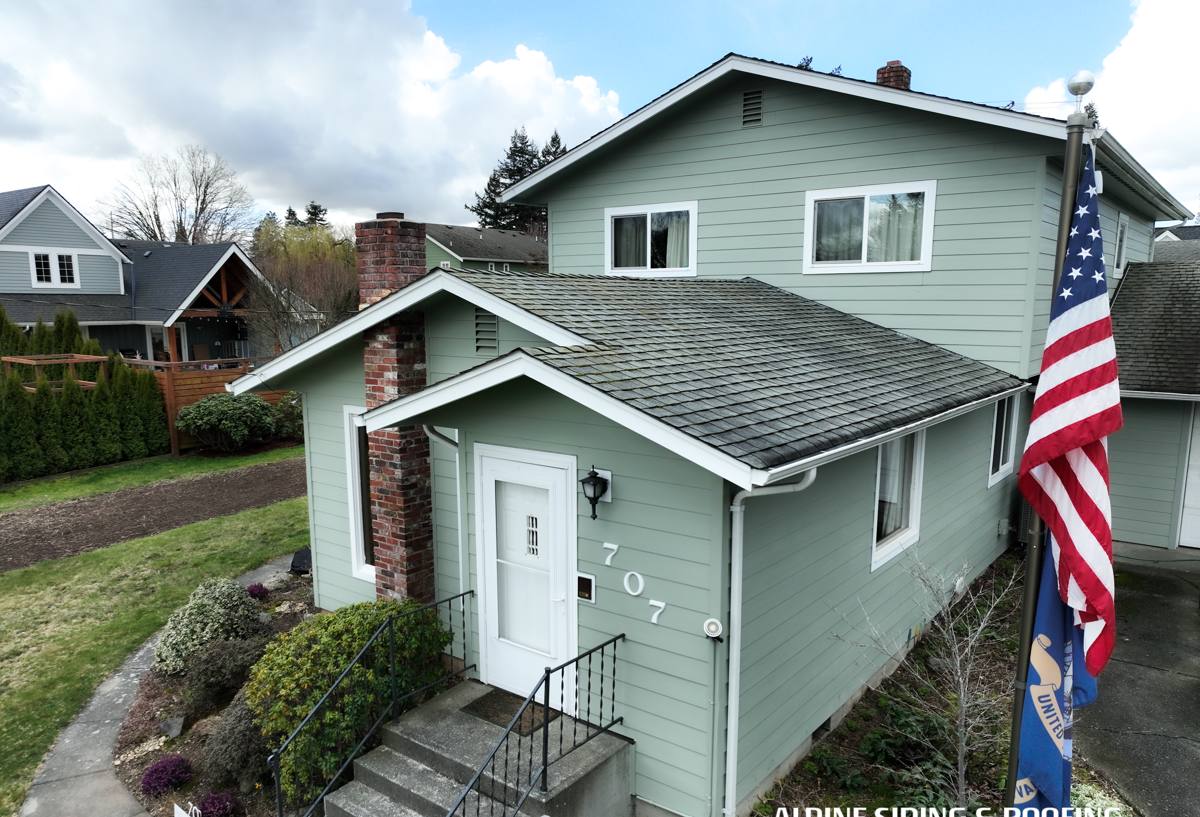
What a Correct New Roof Installation Actually Involves
"New roof" sounds simple, but the quality of the job is decided in details most homeowners never see once the shingles are down. Here's what should happen on every installation, regardless of which material you choose.
Tear-Off and Deck Inspection
A full tear-off strips the roof to bare decking so it can actually be inspected, not covered over. Soft spots, delaminated plywood, or rot around old vent boots and chimney flashing get found and replaced here. Skipping this step, or worse, installing a new roof over an old one, hides problems instead of fixing them and shortens the life of the new roof no matter how good the shingles are.
Underlayment and Moisture Barrier
In a climate with this much sustained rain, the underlayment matters almost as much as the shingle itself. Synthetic underlayment holds up better than old-style felt when it's exposed to wind and moisture during installation, and it doesn't tear as easily underfoot. Valleys and eaves get additional ice-and-water membrane, since those are the areas where wind-driven rain and ice-dam-style backup are most likely to find a gap.
Flashing and Roof Penetrations
Chimneys, skylights, vent pipes, and roof-to-wall transitions are where most leaks actually start, not in the open field of shingles. Flashing needs to be new, properly lapped, and sealed with materials rated for long-term moisture exposure, not just caulked over the old metal.
Ventilation
A roof that can't breathe traps moisture in the attic, which speeds up sheathing rot from the inside and feeds moss and algae growth from underneath the shingle layer. Balanced intake and exhaust ventilation is part of a correct install, not an upsell.
Roofing Materials That Hold Up in Ferndale's Climate
There's no single "best" roofing material for every home, but some materials need more attention than others in this environment. We'll walk through the honest trade-offs for your specific home and budget, but here's the general picture.
| Material | Performance in Salt Air & Rain | Moss Resistance | Maintenance |
|---|---|---|---|
| Architectural asphalt shingles | Good when installed with corrosion-resistant fasteners and flashing | Moderate; benefits from zinc strips and regular cleaning | Low to moderate |
| Metal roofing (standing seam) | Excellent; sheds water fast and resists moss better than most materials | High | Low |
| Cedar shake | Requires careful detailing; absorbs and releases moisture more than other materials | Lower without diligent upkeep | Higher |
| 3-tab asphalt shingles | Adequate but thinner profile wears faster under sustained wind-driven rain | Moderate to low | Moderate |
We don't push cedar shake for most Ferndale homes not because it's a bad product, but because it demands a level of upkeep and moisture management that most homeowners don't want to sign up for in a climate this wet. That's a maintenance-burden judgment call, not a knock on the material itself.
Moss, Algae, and Salt Air: What You Can Actually Do
Moss and algae are less about the roof failing and more about the climate doing what it does. A few things genuinely reduce the problem over the life of the roof:
- Zinc or copper control strips installed near the ridge, which release trace metals that inhibit moss growth as rain washes over the roof
- Keeping overhanging branches trimmed back so roof surfaces get more sun and dry out faster between rains
- Proper attic ventilation, which reduces the underside moisture that feeds growth from below
- Gutter maintenance, since clogged gutters hold water against the roof edge and accelerate rot and moss buildup at the eaves
- Gentle, low-pressure cleaning on a routine schedule rather than pressure-washing, which can strip granules and shorten shingle life
None of these eliminate moss entirely in a Whatcom County winter, but together they meaningfully slow it down and protect the investment.
Our Installation Process
- On-site inspection and estimate — we look at your current roof, attic ventilation, and any problem areas before recommending anything, and give you a written estimate with no pressure to sign that day.
- Material selection — we walk through the honest trade-offs for your home, budget, and how long you plan to stay in it.
- Scheduling and permitting — we handle the paperwork so you don't have to track it down yourself.
- Tear-off and deck inspection — the old roof comes off and the deck gets checked before anything new goes on.
- Installation — underlayment, flashing, ventilation, and the finish material go in, in that order, with attention to the details that actually determine how long the roof lasts.
- Cleanup — we run magnetic sweeps for nails and clear debris before we consider the job finished.
- Final walkthrough — we go over the completed roof with you and answer any questions before closing out the job.
Signs Your Ferndale Home May Need a New Roof
Some of these are obvious, some aren't. If you're seeing more than one of these, it's worth a look before it becomes a bigger repair:
- Shingles that are cupping, curling at the edges, or missing granules in patches
- Daylight visible through the roof deck from inside the attic
- Dark streaking or thick moss growth across large sections, not just isolated spots
- Soft or spongy spots when walking the roof, or sagging visible from the ground
- Water stains on interior ceilings or upper walls, especially near chimneys or skylights
- A roof that's approaching or past the expected lifespan of its material, especially if it's never had ventilation upgrades
- Granules collecting in gutters, which signals the shingle surface is breaking down
Cost Factors for a New Roof
Every roof is priced individually, and we won't quote a number without seeing the job, but the factors that move a bid up or down are consistent. Broadly, full replacements on an average home tend to run in the low-to-mid five figures, with material choice being the biggest swing factor.
| Factor | Why It Affects Cost |
|---|---|
| Roof size and number of planes | More square footage and more complex geometry mean more material and labor hours |
| Pitch and access | Steeper or harder-to-access roofs require more safety setup and slow down the crew |
| Number of tear-off layers | Removing multiple old layers takes longer and adds disposal costs |
| Material choice | Metal and premium shingle lines cost more upfront but often less over the life of the roof |
| Deck repairs | Rotted or soft sheathing found during tear-off adds material and labor not visible in the original estimate |
| Ventilation upgrades | Adding or improving intake/exhaust ventilation is a smaller add-on that pays off in roof longevity |
Why a Crew That Already Works Ferndale Makes a Difference
A roofer who works this area regularly already knows how Ferndale's wind exposure off the water behaves differently than a sheltered lot a few miles inland, which flashing details tend to fail first on homes in this specific climate, and what Whatcom County's permitting process actually requires before work starts. That familiarity shows up in fewer surprises mid-project and a roof that's built for the conditions it will actually face, not a generic install pulled from a manual written for a drier region.
It also means a crew that's accountable locally, not one that's here for a single job and gone. If a question comes up two years after installation, you're calling a business that's still working in your neighborhood, not chasing down a company that's moved on to other markets.
Getting Started
If your roof is showing its age, or you just want an honest read on how much life it has left, we're glad to come take a look. The estimate is free, there's no pressure, and we'll tell you straight whether you need a full replacement now or can reasonably wait. Use the form below to get started.