 Lynden Siding
 Deck Repair Built for Maple Falls Conditions
Maple Falls sits up against the foothills east of Lynden, and decks out here take a different kind of beating than decks closer to town. Between the elevation, the tree cover, and the moisture that rolls off the North Cascades foothills, a deck in this area deals with more standing dampness, more shade-driven moss, and more freeze-thaw cycling through the colder months than a deck sitting out in open sun. We've repaired enough decks in this corridor to know the failure points aren't hypothetical — they're predictable, and that's actually good news for homeowners, because predictable problems are fixable problems.
This page is about one thing: deck repair, done right, for homes in and around Maple Falls. Not a full rebuild sales pitch, not a generic "we do decks" page — just what actually goes wrong with decks out here, what a correct repair looks like, and how we handle the job when you call us.
Why Whatcom County's Climate Is Hard on Decks
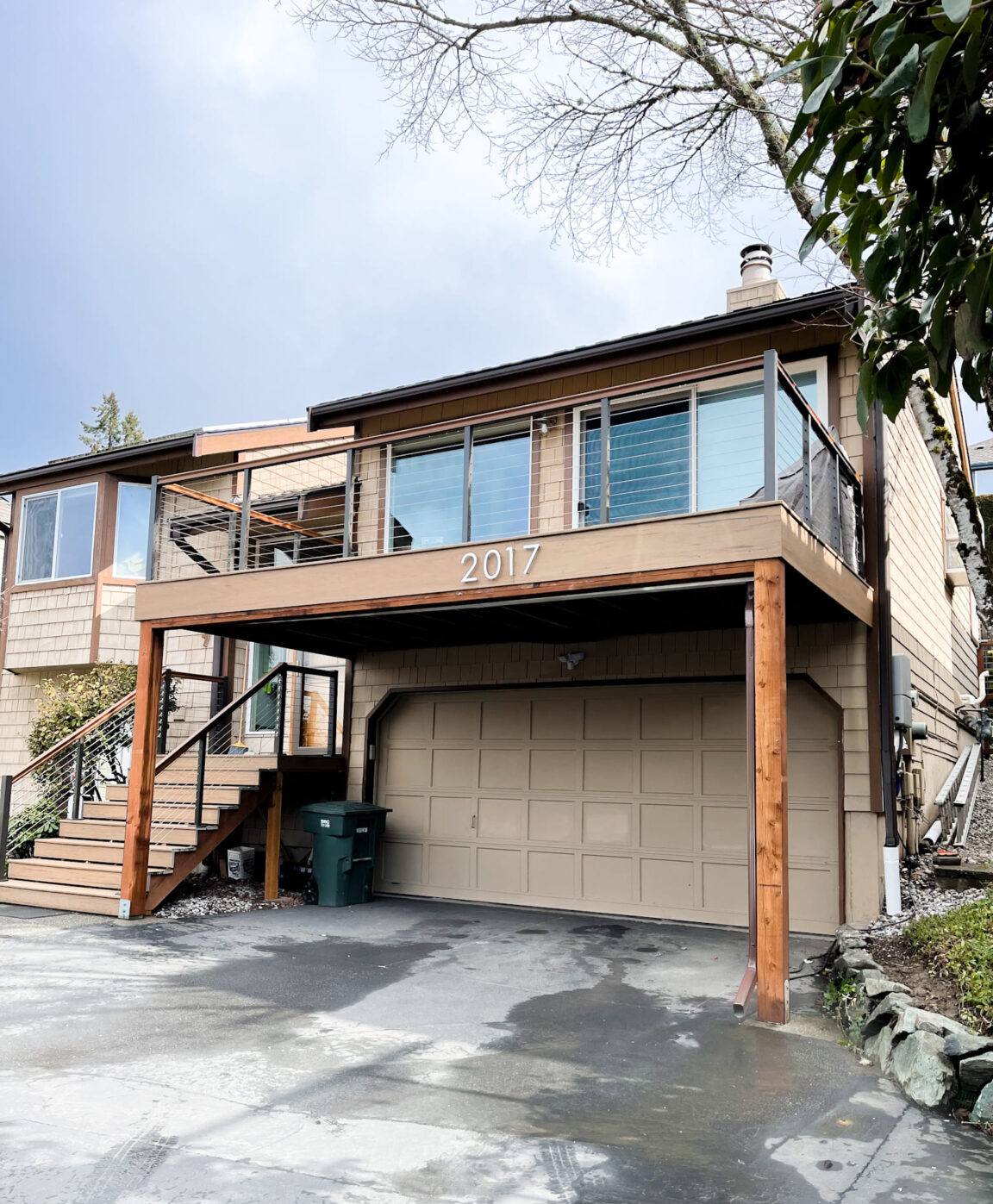
Whatcom County gets a long wet season, and the closer you are to the foothills or under tree cover — which describes a lot of Maple Falls properties — the longer that dampness lingers on wood and hardware. A few specific climate factors drive most of the repair calls we get in this area:
- Extended moss season: Shaded decks and north-facing sections can stay damp for weeks at a stretch, which gives moss and algae a long runway to establish on decking boards and in the gaps between them.
- Driving rain: Wind-blown rain gets pushed sideways into ledger board connections, stair stringers, and any spot where flashing is thin or missing, which is where we find the worst hidden rot.
- Salt-tinged air moving inland: Even away from the immediate coast, airborne salt combines with constant moisture to accelerate corrosion on fasteners, joist hangers, and any exposed metal hardware.
- Freeze-thaw cycling: Water that soaks into end grain or gets trapped under moss can freeze, expand, and split wood fibers over a winter or two, especially on older lumber that's already past its prime.
None of this means a deck in Maple Falls is doomed — it means the maintenance schedule and repair priorities need to match the actual climate, not a generic checklist written for a drier region.
The Parts of a Deck That Fail First Here
In our experience working this area, damage doesn't spread evenly across a deck. It concentrates in a few predictable spots:
- Ledger board attachment to the house — the single most common source of hidden rot and the most important thing to get right
- Stair stringers, especially where they meet a concrete pad or the ground
- Joist hangers and fasteners, where rust can weaken a connection long before it's visible
- Board ends and butt joints, where end grain soaks up water fastest
- Railing posts where they anchor to the deck frame
- Any section that sits in permanent shade or under overhanging trees
Signs Your Deck Needs Repair, Not Just Cleaning
A lot of homeowners assume a mossy, gray deck just needs a pressure wash. Sometimes that's true. But moss and discoloration can also be masking real structural problems underneath, and pressure-washing over rotten wood or rusted hardware doesn't fix anything — it just makes the surface look better temporarily.
| What You're Seeing | Likely Cause | Cosmetic Fix or Real Repair? |
|---|---|---|
| Green or black film on boards | Moss/algae from shade and moisture | Usually cleaning, unless boards feel soft underneath |
| Soft or spongy spots when you step | Rot in the board or joist below it | Real repair — board and possibly framing replacement |
| Deck feels bouncy or springy | Weakened or undersized joists, failing hangers | Real repair — structural |
| Rust streaks below fasteners | Corroding screws or nails reacting with moisture | Real repair — hardware replacement |
| Gap or movement where ledger meets house | Ledger board separating or rotting | Real repair — priority safety issue |
| Railing that wiggles when pushed | Loose or rotted post connection | Real repair — safety issue |
| Faded, gray wood with no soft spots | UV and weather exposure, sound wood | Cosmetic — cleaning and refinishing |
What a Correct Deck Repair Actually Involves
A proper repair starts with figuring out what's actually wrong, not just patching what's visible. That means checking framing and connections, not just the decking boards people see from the yard.
Inspection First
We check the ledger board connection, probe joists and beams for soft spots, look at every joist hanger for rust or failure, and check stair stringers and railing posts for movement. On a shaded or older deck, we pay particular attention to any spot where water has an obvious path to collect and sit — that's almost always where the real damage is.
Matching the Repair to the Damage
Not every problem needs the same fix. Some general guidelines we work from:
- Isolated rotten boards: Replace the individual boards, but only after confirming the joists underneath are still sound.
- Rotted or failing joists: These get sistered (reinforced alongside a new piece of lumber) or fully replaced — patching over a compromised joist just delays a bigger failure.
- Rusted hardware: Replaced with corrosion-resistant hangers and fasteners rated for exterior/ground contact use, since standard hardware doesn't hold up long in this climate.
- Ledger board separation: This gets treated as a priority repair, since a failing ledger connection is the leading cause of deck collapses nationally — it's not a cosmetic issue.
- Moss and surface staining with sound wood underneath: Cleaned and, where appropriate, refinished with a breathable exterior finish rather than something that traps moisture in the wood.
Hardware and Fastener Standards
Given how much airborne moisture and salt exposure this area sees, we don't use standard interior-grade fasteners or basic galvanized hardware on repairs. We use hardware rated for exterior and ground-contact exposure, because the cost difference is small compared to redoing a repair in a few years when standard fasteners rust through.
Our Process When You Call Us
- Initial conversation: You describe what you're seeing — soft spots, movement, discoloration — and we get a sense of scope before we even come out.
- On-site inspection: We walk the deck, check framing and connections, and identify what's cosmetic versus structural.
- Written estimate: You get a clear breakdown of what needs repair, what it involves, and the cost — no vague verbal quotes.
- The repair itself: We do the work with attention to what's underneath, not just what's visible, and we clean up thoroughly when we're done.
- Honest follow-up advice: If your deck is nearing the end of its usable life rather than being a good repair candidate, we'll tell you that directly instead of patching something that needs replacing.
Repair vs. Replacement: An Honest Comparison
Not every deck problem should be repaired, and not every deck needs full replacement. Here's roughly how we think about the line:
| Factor | Favors Repair | Favors Replacement |
|---|---|---|
| Extent of rot | Isolated to a few boards or one section | Widespread across framing and decking |
| Ledger board condition | Solid connection, minor surface issues | Significant separation or rot at the house connection |
| Age of the deck | Under 15-20 years, built to reasonable standards | Older, undersized framing not built to current expectations |
| Joist condition | Mostly sound with a few weak spots | Widespread softness or hanger failure |
| Budget priorities | Want to extend usable life affordably | Want a long-term fix without repeat repairs |
Cost for deck repair varies a lot depending on whether we're replacing a handful of boards and some hardware, or dealing with structural framing and a ledger board issue. We won't quote a number without seeing the deck, but we'll always tell you honestly if repair is throwing good money after bad and replacement makes more sense.
A Homeowner Checklist Before You Call
A few things worth checking yourself before scheduling an inspection — it helps us understand scope and it helps you know what to expect:
- Walk the deck and note any spots that feel soft, spongy, or bouncy underfoot
- Push on railings and posts to check for wobble or movement
- Look underneath (if accessible) for visible rust streaks or sagging joists
- Check where the deck attaches to the house for gaps, staining, or separation
- Note which sections stay shaded or damp longest after rain
- Take note of the deck's approximate age if you know it
Why a Crew That Already Works Maple Falls Matters
Deck repair isn't complicated in theory, but doing it well in this specific area means understanding how the local climate actually behaves — which sections of a typical property stay wet longest, how fast moss establishes under tree cover, and which hardware actually holds up through a Whatcom County winter instead of failing in a couple of years. A crew that's worked other decks in Maple Falls and the surrounding Lynden area has already seen these failure patterns repeat property to property, which means less guesswork and a repair that's sized to the actual conditions your deck faces, not a one-size-fits-all approach imported from a drier climate.
We also stand behind the repair itself — meaning if something we fixed fails prematurely due to our workmanship, we make it right. That's a straightforward standard, not a marketing claim.
Get a Straight Answer About Your Deck
If you're dealing with a soft board, a wobbly railing, moss that won't quit, or you just want an honest read on whether your deck needs a repair or something bigger, we're glad to come take a look. We'll give you a clear, no-pressure estimate and tell you what we'd actually do if it were our own deck. Use the form below to request a free estimate for your Maple Falls property.