 Lynden Siding
 Siding Built for Kendall's Weather, Not Just Its Curb Appeal
Kendall sits in the part of Whatcom County where the weather doesn't do things halfway. Homes here take on driving rain that comes in sideways during winter storms, long stretches of damp, shaded weeks where moss and algae get a foothold on anything that stays wet too long, and marine-influenced air moving in off the Salish Sea that carries salt and moisture farther inland than most homeowners expect. Siding in this area isn't just a design choice — it's the one layer standing between that weather and the framing, sheathing, and insulation behind it.
When we install siding in Kendall, we're not treating it like a generic exterior remodel. We're treating it like a building science problem specific to this stretch of Whatcom County: how water moves down a wall during a wind-driven rain event, how long a wall assembly stays wet after it does, and what happens to a siding product that spends five or six months a year in shade and moisture without ever fully drying out.
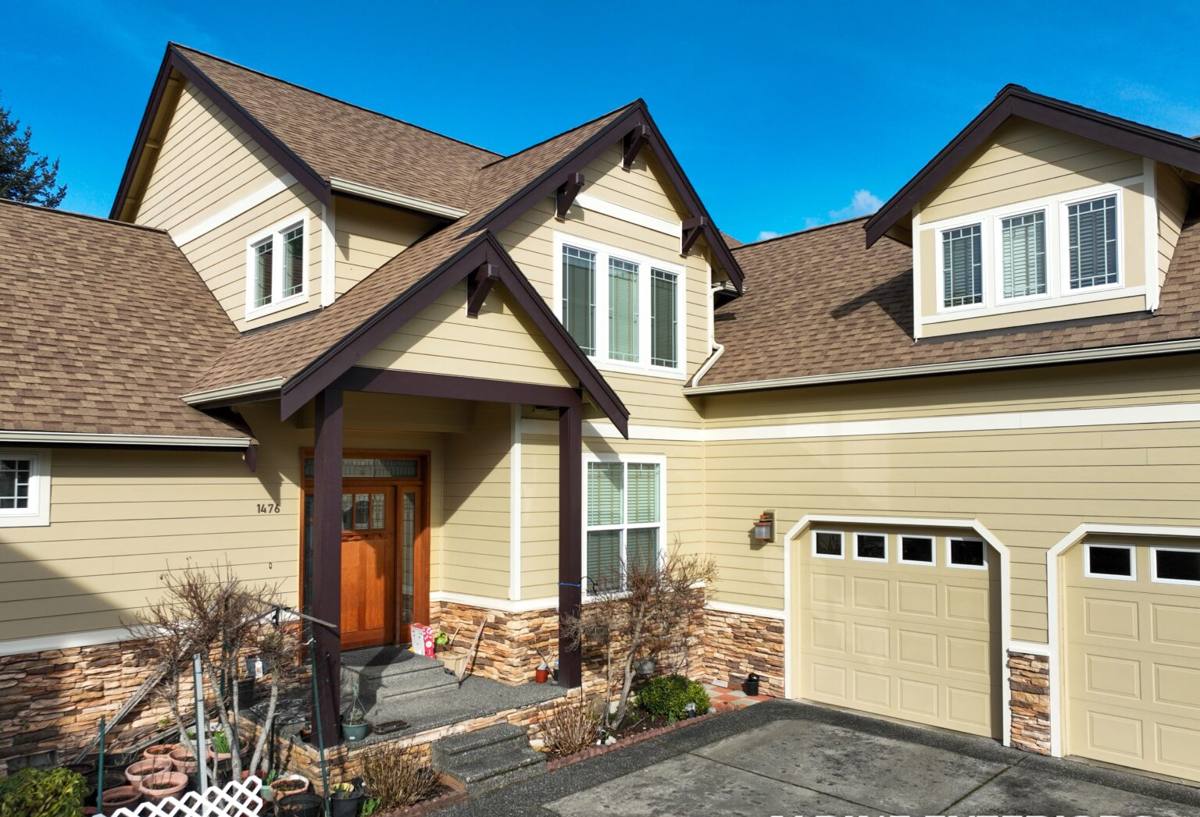
What Kendall's Climate Actually Does to Siding
Driving Rain
Rain that falls straight down is easy for any siding to shed. Rain that comes in at an angle, pushed by wind off open fields or through tree-lined properties, finds every gap — behind trim, at butt joints, around windows, at inside corners. Over years, that repeated wind-driven moisture is what separates a siding job that lasts three decades from one that starts failing at year eight or ten. The product matters less here than the flashing, the joint treatment, and the water-resistive barrier behind it.
Moss and Algae Season
Kendall's tree cover and cooler, shaded exposures mean some walls simply don't get direct sun for long stretches of the year. Combine that with consistent moisture and you get ideal conditions for moss and algae growth on any siding surface that holds water at its surface or absorbs it into the material itself. Porous or wood-based siding products are far more vulnerable to this than a dense, factory-sealed fiber cement panel.
Salt-Tinged Marine Air
Even well inland from open coastline, Whatcom County's marine weather patterns carry moisture-laden, mildly corrosive air across the region. That air accelerates the breakdown of exposed fasteners, unprotected wood fiber, and any finish that isn't formulated to resist it. It's a slow, cumulative effect — not dramatic, but real over the life of a house.
What Correct Siding Installation Actually Involves
A lot of siding problems we get called out to inspect in this area aren't product failures — they're installation failures. The material was fine; the way it went on the wall wasn't. A correct job, regardless of brand, has to get these fundamentals right:
- Water-resistive barrier first. A continuous, properly lapped weather barrier behind the siding, not just around it, so any water that does get past the surface has somewhere to go besides your sheathing.
- Flashing at every penetration. Windows, doors, hose bibs, light fixtures, and vents all need flashing detailed to shed water outward, not trap it against the wall.
- Rainscreen or drainage gap where called for. A small air gap behind the siding lets bulk water drain and lets the wall assembly dry, which matters enormously in a climate like Kendall's.
- Correct fastening pattern and clearance. Nailing schedule, board overlap, and ground clearance all follow manufacturer specs — not "close enough."
- Caulking and sealant only where the manufacturer specifies it. Over-caulking traps moisture; under-caulking lets it in. Both are common mistakes.
- Proper cutting and sealing of cut edges on fiber cement, since an unsealed factory-cut edge is the one place the material can absorb water.
None of this is exotic. It's just detail work that takes time and experience, and it's where a lot of corners get cut on rushed jobs.
Why We Install Only James Hardie Fiber Cement
We standardized on James Hardie fiber cement siding for every home we side, including in Kendall, and we don't install vinyl, LP SmartSide, primed wood, or other fiber cement brands. That's not a marketing position — it's a maintenance and durability call based on what actually holds up in this climate over decades, not just years.
Fiber cement is non-combustible, dimensionally stable in wet-dry cycling, and dense enough that it doesn't absorb and hold water the way wood-based or engineered-wood products can. James Hardie's ColorPlus factory finish is baked on under controlled conditions, which gives it better fade and moisture resistance than field-applied paint — a meaningful advantage in an area that stays damp and shaded as much as Kendall does. Hardie also engineers specific product lines (HZ5 for harsher, wetter climate zones) rather than selling one formulation everywhere, which matters when the goal is a wall assembly that performs in Pacific Northwest conditions specifically.
The transferable warranty backing the product also gives homeowners something concrete if they sell the house within the coverage period — a detail worth asking about with any siding contractor, on any brand.
Comparing What Kendall Homeowners Are Actually Choosing Between
| Factor | James Hardie Fiber Cement | Vinyl Siding | Wood-Based Siding (LP/Primed Wood) |
|---|---|---|---|
| Moisture absorption | Very low; dense cement composite | None, but seams/panels can trap water behind them | Higher; wood fiber core is moisture-sensitive |
| Moss/algae resistance | Good; factory finish sheds surface growth better than porous materials | Fair; smooth surface but seams collect debris | Poor in shaded, damp exposures without regular treatment |
| Fire performance | Non-combustible | Combustible, can melt/deform in heat | Combustible |
| Finish longevity | Factory-baked ColorPlus finish, long fade resistance | Color molded in but can fade/chalk | Field-applied paint, needs repainting on a cycle |
| Installation sensitivity | Moderate; skilled crew required for cuts, fastening, joints | Low; forgiving but expands/contracts with temperature | Moderate to high; edge sealing critical |
This table isn't meant to declare every alternative unusable — plenty of homes wear vinyl or engineered wood without major issues. It's meant to explain, honestly, why we made the call to install one product and install it well rather than offer several and install them inconsistently.
Our Process for a Kendall Siding Installation
- On-site evaluation. We look at the existing siding, sheathing condition where accessible, drainage around the foundation, and exposure of each wall to wind and shade — Kendall properties often have very different exposure conditions wall to wall.
- Tear-off and inspection. Removing old siding gives us a look at the sheathing and framing underneath. Any rot or moisture damage gets addressed before anything new goes up — covering a problem is worse than finding it.
- Weather barrier and drainage detailing. This is where most of the long-term performance is decided, and it's the step that gets rushed on lower-quality jobs.
- Hardie installation to manufacturer spec. Correct fastening, clearances, and joint treatment, with attention to the details that matter most in wind-driven rain — inside corners, window heads, and butt joints.
- Trim, caulk, and final detailing. Finish work sealed exactly where it should be and left open exactly where it should be, so the wall can shed water and still dry out.
- Walkthrough. We go over what was done and what to expect from the finish over the first year or two of weathering.
What to Check Before Hiring Anyone for Siding Work in Kendall
- Do they carry current WA state contractor licensing and insurance, and will they show you proof without being asked twice?
- Have they installed siding on other homes in this specific part of Whatcom County, not just generally in the Northwest?
- Can they explain their flashing and water-barrier detailing in plain language, not just the brand of siding they're selling?
- Do they specify a manufacturer-approved fastening and clearance schedule, or just "standard installation"?
- Is the warranty — both material and labor — spelled out in writing before work starts?
Why Local Experience in This Part of Whatcom County Matters
A siding crew that mainly works drier, more sheltered areas can do a technically fine install and still miss the details that matter for Kendall specifically — where shaded exposures stay damp longer, wind patterns push rain into places a standard install doesn't account for, and moss pressure builds faster than it would on a more exposed, sun-facing wall. Local experience means we've already seen which details fail first in this environment and we build past them by default, not as an afterthought.
It also means realistic timelines. Siding work in this region has to work around a wetter season where installation quality and weather conditions both matter, and a crew that works here regularly plans around that instead of promising a schedule the weather won't cooperate with.
Get a Straight Answer on Your Kendall Siding Project
If your current siding is holding moisture, showing moss growth that keeps coming back, or just past its realistic service life, it's worth getting an honest, no-pressure look before deciding what's next. We'll walk the exterior, tell you what we see, and give you a straightforward estimate for a James Hardie installation built for what this part of Whatcom County actually throws at a house — no obligation either way.