 Lynden Siding
 Roof Repair Built for Kendall's Climate
Kendall sits in the foothill country northeast of Lynden, where the mix of tree cover, higher rainfall, and marine air off the Sound creates roofing problems that look different from what you'd see on a roof in town. Homes out here tend to have more shade, more standing moisture, and more debris landing on the roof deck than open-farmland properties closer to central Lynden. That combination shows up as moss mats, slower drying times after storms, and flashing that corrodes or works loose faster than the shingles around it wear out.
A roof repair in this part of Whatcom County has to account for all three of those pressures at once: salt-laden marine air that accelerates corrosion on metal flashing and fasteners, driving rain that finds every gap in a roof's weakest points, and a moss season that can run most of the year under tree canopy. Patch a leak without addressing why it happened here, and it comes back within a season or two.
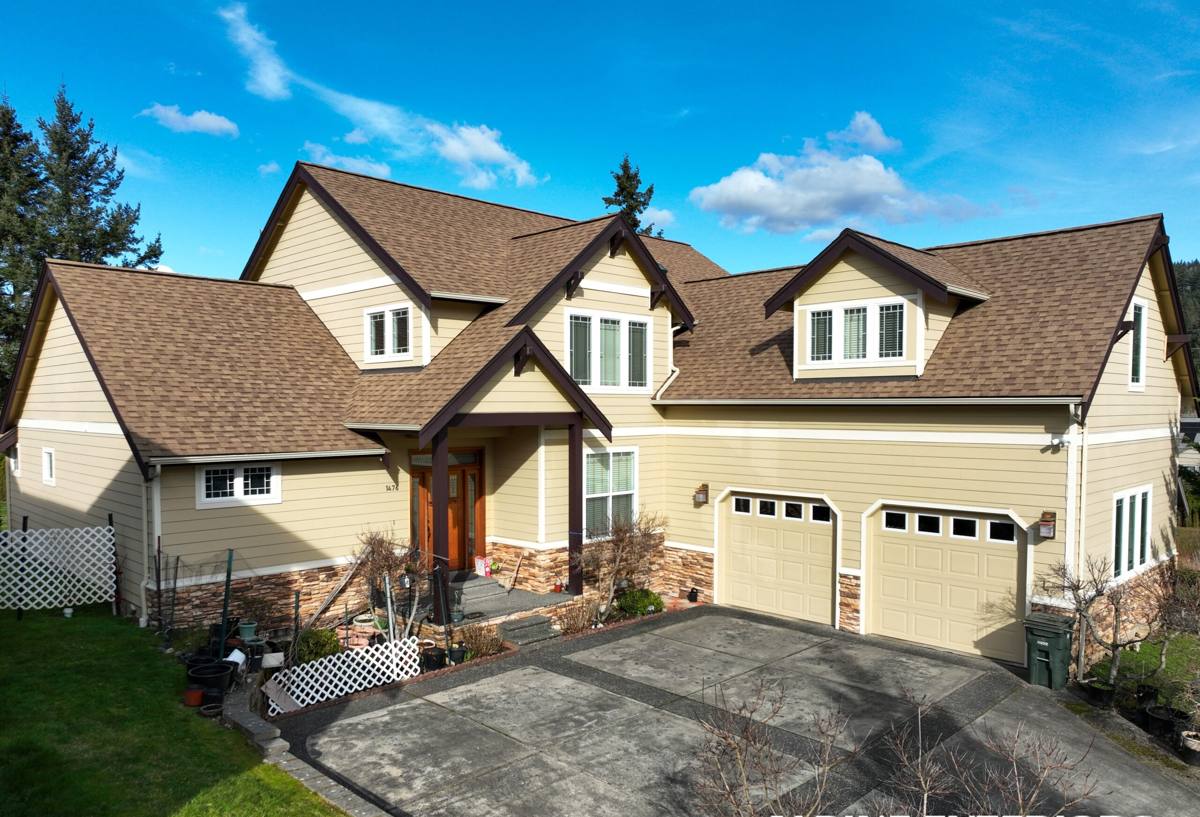
Common Roof Problems We See on Kendall Homes
Moss and Organic Growth
Roofs shaded by fir and cedar canopy stay damp longer after every rain. Moss takes hold in the granule layer of asphalt shingles first, then works its way under shingle tabs and lifts them, breaking the seal that keeps water out. On cedar or wood-shake roofs, moss holds moisture directly against the wood, which speeds up rot at a rate you won't see on a sunnier, more open lot.
Flashing Failures
Flashing around chimneys, skylights, roof-to-wall transitions, and valleys is usually where a "roof leak" actually starts, not the field of the roof itself. Marine air accelerates corrosion on lower-grade or aging metal flashing, and once pinholes or lifted edges develop, driving rain pushes water sideways under the shingles instead of running off the surface the way it's designed to.
Wind-Driven Rain Intrusion
Storms in this area don't just drop rain straight down — wind pushes it sideways and up under shingle edges, ridge caps, and exposed nail heads. A repair that only reseals the visible gap and ignores the underlayment beneath it will fail again the next time wind direction shifts during a storm.
Gutter and Roof-Edge Backup
Needles, cones, and leaf debris from surrounding trees clog gutters and valleys faster out here than on a treeless lot. When water backs up at the edge of the roof, it can work its way under the starter course and into the fascia and soffit before you ever see a stain on the ceiling inside.
What a Correct Repair Actually Involves
A roof repair done right isn't just "find the hole, cover the hole." It's a short diagnostic process followed by work that matches the existing roofing system, not just the closest material on the truck.
Diagnosis Before Anything Gets Opened Up
We trace water stains and soft spots back to their actual entry point, which is very often several feet away from where the damage shows up inside the attic or ceiling. Water travels along rafters and sheathing before it drips, so guessing based on the interior stain alone leads to repairs in the wrong spot.
Matching Materials, Not Just Colors
Shingle repairs need to match not just the color but the profile, weight, and age-appropriate wear of the surrounding roof so the patch doesn't stand out and doesn't create a mismatched seal line. On older roofs where the exact shingle is no longer made, we'll talk through the closest honest match rather than pretend it'll be invisible.
Flashing Gets Rebuilt, Not Just Caulked
Caulk and roofing cement are short-term fixes, not repairs. A correct flashing repair means removing the compromised metal or shingle course, replacing underlayment where it's saturated or torn, installing new flashing with proper step-and-counter overlap, and re-integrating it with the surrounding shingles so water sheds over every seam, not just around it.
Checking Ventilation and Decking While We're Up There
Persistent moisture problems are sometimes a ventilation issue as much as a roofing issue. Trapped moist air in an attic condensates on the underside of the deck and can be mistaken for a roof leak. Part of a proper repair visit is checking whether the attic is venting correctly, because fixing the shingle without fixing the airflow just delays the next callback.
Repair Approaches Compared
Not every roof problem needs the same fix, and not every fix holds up the same way under Whatcom County conditions. Here's how the common approaches stack up:
| Approach | Best For | Trade-Offs in This Climate |
|---|---|---|
| Spot shingle replacement | Isolated wind or impact damage, a small number of shingles | Fast and affordable, but only as good as the flashing and underlayment beneath it — skip that and moss/rain find the same weak point again |
| Flashing rebuild | Leaks at chimneys, skylights, valleys, roof-wall joints | More labor than a shingle patch, but this is where most real leaks originate, so it's rarely optional if you want the repair to last |
| Moss treatment and removal | Shaded, tree-covered roofs with visible growth | Needs to be paired with a gentle removal method — aggressive pressure washing strips granules and shortens shingle life |
| Section re-roofing | Roofs with widespread wear on one slope (usually the shaded, north-facing side) | Costs more than a patch but avoids repeatedly repairing the same failing section every year or two |
| Sealant-only "quick fix" | Emergency, temporary stopgap only | Breaks down under UV and moisture cycling within a season or two; we use this to stop active water intrusion, never as the final repair |
Our Repair Process, Step by Step
- Inspection and diagnosis — we get on the roof (or use a camera where access is limited) to trace the actual source of the problem, not just the symptom.
- Honest scope and estimate — you get a plain explanation of what's failing, why, and what it'll take to fix it correctly, including if a full section or reroof makes more sense than another round of patching.
- Material match — we source shingles, flashing, and underlayment that match your existing roof system as closely as possible.
- Removal of compromised material — damaged shingles, saturated underlayment, and failing flashing come out; we don't build a new layer over a wet one.
- Proper reinstallation — new flashing with correct overlap, new underlayment where needed, shingles set and sealed to manufacturer spec.
- Clean-up and walk-through — debris and old material hauled off, and we show you what was done and why.
Moss, Algae, and Salt Air: Keeping a Repair From Becoming a Repeat Job
A repair is only as good as what happens to the roof afterward. In a tree-covered, moisture-heavy area like Kendall, ongoing upkeep matters more than it would on a dry, open lot. A few habits go a long way toward protecting the work:
- Clear moss and debris from valleys and gutters at least twice a year, more often under heavy tree cover
- Trim back overhanging branches so leaves and needles don't pile up against the roof edge
- Have flashing points (chimney, skylights, vents) checked annually — they're the first thing marine air and driving rain attack
- Avoid high-pressure washing to remove moss; it strips granules and shortens shingle life
- Watch for dark streaking, which usually signals algae rather than moss and calls for a different treatment
- Address small leaks immediately — a slow drip in a damp climate turns into rot much faster than in a dry one
Repair vs. Replacement: How We Help You Decide
Not every roof problem calls for a full reroof, and we don't push one when a proper repair will hold. As a general guide: if the damage is isolated, the roof is under roughly two-thirds of its expected lifespan, and the decking underneath is sound, repair is usually the right call. If multiple slopes show wear, the shingles are past their rated life, or we're finding soft or rotted decking under more than one problem area, patching becomes a short-term fix for a roof that's telling you it's done. We'll walk you through what we actually find, not just what's easiest to sell.
Why a Crew That Already Works Kendall Matters
Roofing problems in this part of Whatcom County follow patterns — which slopes shed water badly under tree cover, which flashing details fail first in driving rain, how fast moss returns under a given amount of canopy. A crew that repairs roofs across Kendall and the Lynden area regularly sees those patterns repeat from one property to the next, which means less time spent diagnosing and more time spent fixing the actual cause. It also means we're already familiar with the kind of roofing systems common on homes out here, so we're not guessing at material matches or ordering the wrong flashing profile on the first trip.
Local also means accountability. If a repair doesn't hold through the next storm season, we're not driving in from out of the area to make it right — we're already working nearby.
Scheduling Around Whatcom County Weather
Roofing work has a weather window, and in this climate that window is narrower than homeowners moving here from drier regions expect. Late spring through early fall gives the most reliable stretch of dry days for shingle and flashing work. That said, active leaks don't wait for good weather — we can tarp, stabilize, and stop water intrusion in wet conditions, then schedule the permanent repair for the next dry window if the damage isn't urgent enough to force immediate full replacement of materials. Waiting until the first heavy fall rain to address a known issue almost always turns a manageable repair into a bigger one.
If you're dealing with a leak, moss buildup, or damaged flashing on a Kendall-area roof, we're happy to take a look and give you a straight answer on what it needs. Fill out the form below for a free, no-pressure estimate.