 Lynden Siding
 Building New in Kendall? Windows Are a One-Shot Decision
If you're framing a new home out in the Kendall area, the window install happens once, on a schedule, in front of an inspector, and then it gets covered by siding, trim, and interior finish. There's no easy do-over. Get the flashing sequence wrong or use the wrong fastening pattern, and the mistake sits behind the wall for years before it shows up as a stain, a soft spot, or a drafty room. New-construction windows are a different job than swapping out an old window in an existing wall — they go in before the weather barrier is complete, they rely on a nailing fin instead of a frame anchored to existing framing, and they set the tone for how well the whole building envelope performs. For a Kendall build, where the site sits inland from town under more tree cover and takes on more standing moisture and moss growth than open ground, that first install matters even more.
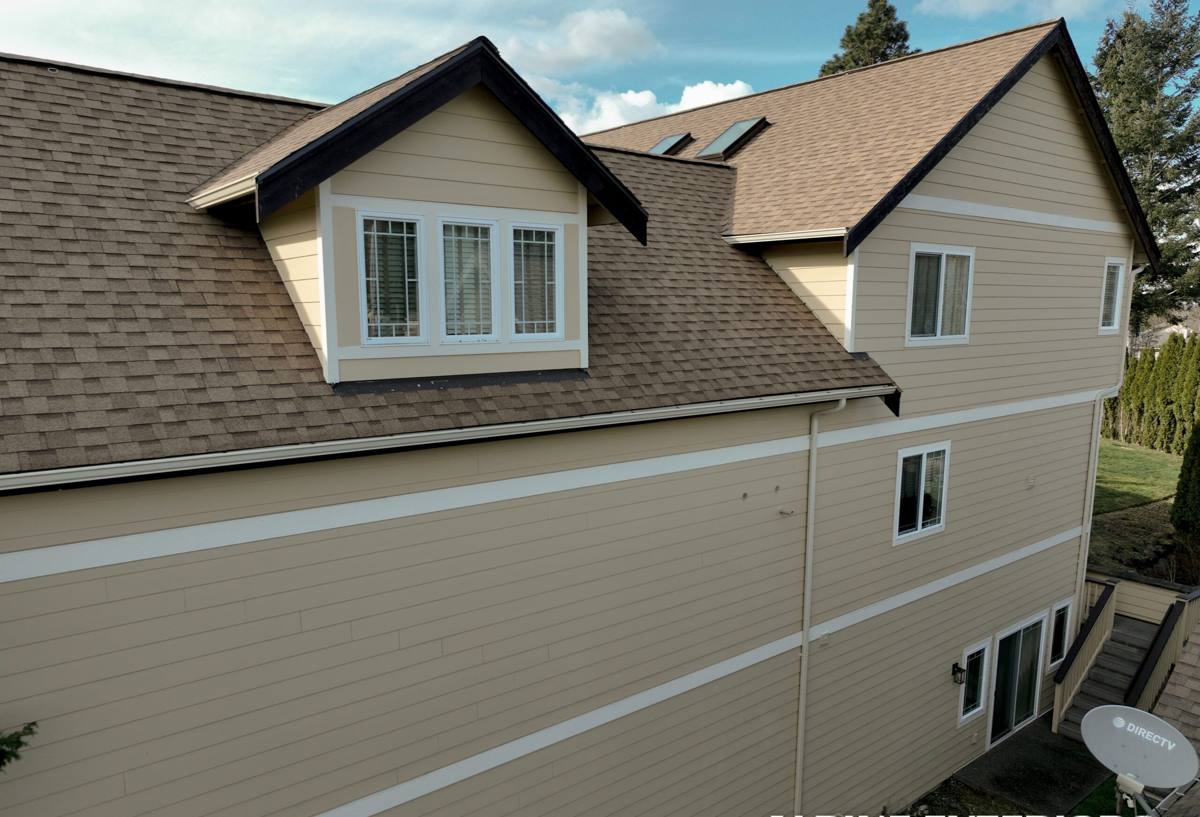
What Whatcom County Weather Does to New-Construction Windows
Western Whatcom County doesn't get brutal winters, but it gets a lot of everything else — wind-driven rain off the Salish Sea and Strait of Georgia, long wet stretches that keep siding and trim damp for days at a time, and enough shaded, tree-covered ground in outlying areas like Kendall to grow moss on anything that stays wet. None of these are dramatic events. They're slow, steady conditions that punish shortcuts.
Wind-Driven Rain and Flashing
Rain here rarely falls straight down. It comes in sideways, which means water gets pushed up under trim and into any gap in the window flashing that a calm-weather installer might get away with skipping. A new-construction opening has to be flashed in the correct order — sill pan first, then the window, then side flashing, then head flashing lapped over the top — so water sheds outward at every layer no matter which direction the wind is blowing.
Moss Season and Long-Term Moisture
Whatcom County's moss season runs long, especially on shaded lots and north-facing walls, which describes a fair number of Kendall properties tucked back from open road frontage. Moss itself doesn't hurt a window, but it's a sign that a surface is staying wet longer than it should. Sills, trim boards, and the caulk lines around a window are exactly the kind of surface moss favors. A properly sloped sill and correctly lapped flashing shed water fast enough that moss doesn't get the standing moisture it needs to take hold in the first place.
Salt Air and Coastal Influence
Closer to the water, salt air accelerates corrosion on hardware, screws, and lower-grade metal flashing. Kendall sits well inland, so this is a lighter factor here than it is on waterfront lots elsewhere in the county — but it's still part of why we spec corrosion-resistant fasteners and flashing tape across every job we run in this region, rather than switching materials site to site. Consistency in what goes behind the wall matters more than guessing at how much salt exposure any one lot actually gets.
New-Construction Windows vs. Retrofit — Why the Install Method Matters
People sometimes assume a "new-construction window" just means a window that happens to be new. It's actually a specific product and installation method, built around a nailing fin that gets fastened directly to the sheathing before the weather-resistive barrier and siding go on. Retrofit and insert windows are built without that fin, designed to slide into an existing frame during a remodel. Using the wrong type — or installing the right type with the wrong sequence — is one of the more common mistakes we see corrected on new builds.
| Factor | New-Construction (Nailing Fin) | Retrofit / Insert |
|---|---|---|
| Best used for | New builds, additions, full wall openings | Replacing a window in an existing, intact frame |
| Attachment | Fin nailed to sheathing, integrated into WRB and flashing | Fastened into the old window's existing frame |
| Water management | Full sill pan and flashing system, built into the wall assembly | Relies on the condition of the existing opening |
| Glass area | Can match the full rough opening size | Slightly smaller than the original opening |
| Typical timing | Installed during framing, before siding | Installed any time, no framing access needed |
For a Kendall new build, this isn't really a choice — nailing-fin windows are the correct product for framed-in openings. The decision that actually matters is how carefully the flashing and sealant details around that fin get executed, because that's the part that determines whether the window performs for twenty years or starts leaking in five.
What a Correct New-Construction Window Install Involves
Rough Opening Prep
Before a window ever gets set, we check that the rough opening is square, level, and sized correctly with the right amount of shim space on all sides. An opening that's slightly out of square gets forced into place by too many installers, which stresses the frame and can bind the sash before the homeowner has moved in.
The Flashing Sequence
This is the part that actually keeps water out, and it goes in a specific order every time: a sloped sill pan first so any water that gets past the window drains back outside instead of pooling, then the window itself set into the sill pan and fastened through the nailing fin, then flashing tape up both jambs, and finally a head flashing piece lapped over the top of the side flashing — never under it. Every layer overlaps the one below it, shingle-style, so gravity does the work.
Sealant and Fastening
The nailing fin gets fastened with corrosion-resistant fasteners at the spacing the manufacturer specifies, not stretched out to save time. Sealant goes where it belongs — typically at the head flashing and select fin locations — and just as important, it does not go where it blocks drainage, like along the bottom of the sill pan, which needs to stay open so water can escape.
Insulation and Air Sealing
Once the window is set and flashed, the gap between the frame and rough opening gets filled with a low-expansion foam or backer rod and sealant — enough to stop air movement and add a little insulation value, without overfilling and bowing the frame inward.
Choosing Frame Material and Glass Package for This Climate
Kendall's mix of shade, moisture, and cooler winters points toward a few sensible defaults, but the right choice still depends on the home's design, budget, and how much sun exposure the specific lot actually gets.
| Frame Material | How It Handles This Climate | Trade-Offs |
|---|---|---|
| Vinyl | Low maintenance, doesn't rot, handles moisture well | Less rigid over very large spans; color/finish options are more limited |
| Fiberglass | Very stable in temperature swings, strong, low maintenance | Higher upfront cost than vinyl |
| Wood / Wood-Clad | Traditional look, good insulator | Exterior wood needs ongoing maintenance in a wet climate — a real commitment, not a one-time finish |
On glass, dual-pane with a low-E coating is the standard baseline for new construction in this region and performs well against Whatcom County's damp, moderate climate. Triple-pane adds real insulation and sound-dampening value, but it also adds weight and cost — worth it on north-facing walls or rooms where energy performance is a priority, less necessary on every window in the house. We'll walk through what's actually worth paying for on your specific plans rather than upselling triple-pane across the board.
Our Process for Kendall New Builds
- Plan review. We look at the window schedule and rough opening sizes on your plans before framing is finalized, so nothing gets ordered wrong or discovered too late.
- Site coordination. We work with your builder or general contractor to hit the framing-to-dry-in window on schedule — windows go in after the sheathing and WRB are ready, before siding starts.
- Flashing and install. Sill pan, window, side flashing, head flashing, fastening, sealant — done in that order, on every opening, with no shortcuts based on how the weather looks that day.
- Walkthrough. We check operation, weatherstripping, and seal quality on every window before we call the job done, not just the ones that are easy to reach.
- Documentation. You get a record of what was installed and how, useful for warranty claims and for your own records if you ever sell the home.
Why a Crew That Already Works Kendall Matters
New-construction window work isn't complicated in theory, but it's easy to get sloppy on if a crew doesn't build to it regularly in this specific climate. A crew that's done this in Kendall and around Lynden knows to plan around wet framing days without cutting corners on flashing, knows what moss and moisture actually look like on this ground versus a dry-climate job, and knows how to sequence with local builders instead of learning a new general contractor's habits from scratch. That familiarity shows up in small decisions — extra care on north-facing openings, not sealing over a sill pan's drainage gap, catching a rough opening that's slightly out of tolerance before it becomes a callback.
Checklist: What to Ask Before You Sign a New-Construction Window Contract
- Does the quote specify a sill pan and full shingle-lap flashing sequence, or just "flash and seal"?
- What fastener and flashing tape materials are being used, and are they rated for this climate?
- Is the glass package dual-pane low-E or triple-pane, and does that match what's on the energy plan for the house?
- Who coordinates timing with the framer — you, the builder, or the window crew directly?
- Is there a written warranty on both the window product and the installation labor, and what voids it?
- Will the same crew that quotes the job actually be the one installing it?
Timing Your Window Install in the Build Schedule
Window install timing on a new build isn't flexible in the way some finish work is. Windows need to go in after the sheathing and weather-resistive barrier are in place but before siding starts, and ideally while the framing crew or builder can still make small adjustments if an opening needs correcting. Scheduling too early means working around incomplete framing; too late means holding up the siding crew and extending the window the house sits open to weather. On a Kendall lot, where wet stretches can run several days in a row, that scheduling window matters even more — we'd rather set a realistic install date around the weather than rush a flashing job between rain bands.
If you're framing a new home in the Kendall area and want windows installed correctly the first time, we're happy to walk your plans and give you a straightforward, no-pressure estimate — just fill out the form below.