 Lynden Siding
 Building Decks for Kendall's Wet, Wooded Conditions
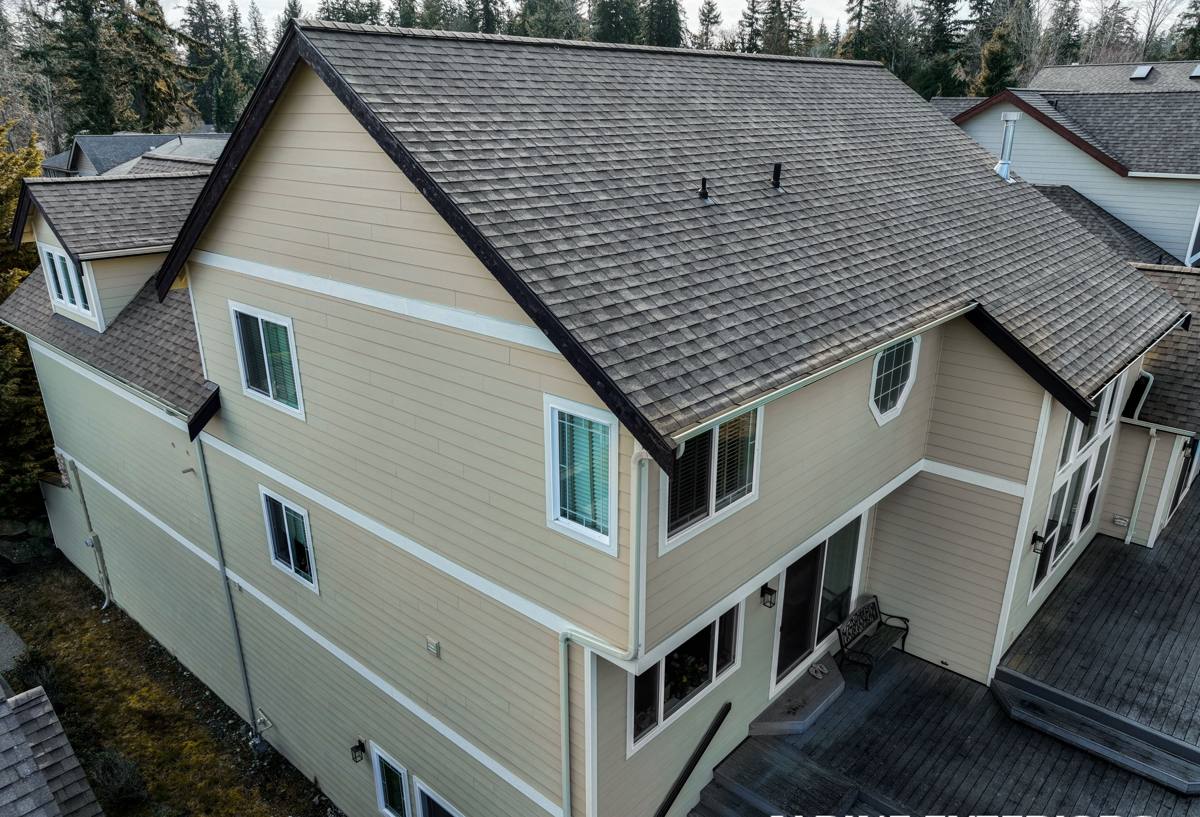
Kendall sits back from the coast in the shadow of the Nooksack River valley and the Mt. Baker foothills, and that setting shapes what a deck has to survive here. Homes are often tucked among fir and cedar trees, which means more shade, slower drying after rain, and a steady drop of needles and debris onto deck surfaces. Add in the driving rain that moves through Whatcom County most of the fall and winter, and the moss and algae growth that follows, and you have a very different set of demands than a deck built in a dry inland climate. We've built and repaired decks throughout the Lynden area long enough to know that a deck designed for a sunny catalog photo rarely holds up out here without some real adjustments.
A deck in Kendall needs to shed water fast, dry out between storms, and resist the slow creep of moss and mildew that settles into anything shaded and damp. That's not a cosmetic concern — moss holds moisture against wood and fasteners, and over a few seasons that moisture is what causes rot, corrosion, and soft spots you don't notice until someone's foot goes through a board.
What a Deck in This Area Actually Needs
Drainage First, Everything Else Second
Before we talk about board species or railing styles, the more important question is where the water goes. A deck built tight to a house without proper flashing, slope, and gapping will trap moisture against the ledger board and framing — and that's the single most common failure point we see on older decks in this area. Correct ledger flashing, a slight pitch away from the house, and consistent gapping between boards for airflow matter more to a deck's lifespan than almost any other decision.
Framing That Doesn't Rot From the Inside Out
Joists and beams need to be either naturally durable wood or pressure-treated lumber rated for ground contact where it's close to grade, and any cut ends or drilled holes need to be sealed. In a climate where the ground stays damp for months at a time, untreated cut edges are where rot starts first — often invisibly, under the decking, long before it shows on the surface.
Footings Set for Local Soil and Frost
Footings need to be sized and set to Whatcom County code depth and bear on solid, undisturbed soil — not fill or organic topsoil, which is common in wooded lots around Kendall. Undersized or shallow footings are one of the most expensive mistakes to fix after the fact, since it usually means pulling the deck apart.
Choosing Decking Material for a Shaded, Wet Lot
There's no single "best" decking material — there's a best material for your site, your budget, and how much upkeep you're willing to do. Here's how the common options actually compare once you factor in shade, rain, and moss exposure typical of this area.
| Material | Moisture & Moss Behavior | Maintenance | Typical Lifespan |
|---|---|---|---|
| Cedar | Naturally resists rot better than most softwoods, but still needs airflow underneath to prevent moss buildup on the shaded side | Periodic cleaning and refinishing to keep its color and sealant intact | 15–25 years with upkeep |
| Pressure-treated pine | Treated against rot but can hold surface moisture longer, making it more prone to algae film in shaded spots | Regular cleaning, occasional re-staining or sealing | 15–20 years |
| Composite decking | Doesn't absorb water into the board itself, but surface film (moss, algae) can still form and needs washing off | Low — occasional washing, no staining or sealing | 25–30+ years, warranty-backed |
For lots with heavy tree cover and limited direct sun — common in and around Kendall — composite decking often makes sense simply because it removes the sealing/staining maintenance cycle that shaded wood decks demand. That said, plenty of homeowners prefer the look and feel of real wood and are happy to keep up with it. We'll walk through the honest trade-offs for your specific site rather than push one product line.
Railings, Stairs, and Code Requirements
Any deck more than 30 inches off grade needs a code-compliant guardrail, and Whatcom County follows the same baseline requirements most Washington jurisdictions use: guardrails at 36 inches minimum for residential decks (42 inches for some commercial or multi-family situations), baluster spacing that won't pass a 4-inch sphere, and stair handrails where there are four or more risers. These aren't arbitrary numbers — they're there because deck failures and fall injuries are two of the most common and most preventable problems in residential construction. We build to these specs as a baseline, not an upsell.
Fasteners Matter More Than People Expect
In a wet climate, the wrong fastener is a slow-motion failure. Standard galvanized screws and joist hardware can corrode faster than the wood around them when exposed to the kind of prolonged dampness common under tree cover. We use stainless or coated fasteners rated for the treated lumber and decking combination on the job, which costs a little more upfront but avoids the streaking, staining, and structural weakening that cheap fasteners cause within a few years.
Permits and the Planning Step
Most new decks and many deck rebuilds in Whatcom County require a building permit, especially once you're above a certain height or attaching structurally to the house. Permitting also triggers a setback and footing inspection, which is genuinely useful — it catches framing and footing issues before they're buried under decking. We handle the permit process as part of the job rather than leaving homeowners to sort it out, and we build to pass inspection the first time.
Our Process for a Kendall-Area Deck Project
- On-site assessment — We look at drainage, sun exposure, tree cover, existing structure (if any), and how the deck will tie into the house.
- Design and material selection — We talk through layout, decking material, railing style, and any features like built-in seating or stairs, with honest cost and maintenance comparisons.
- Permitting — We prepare and submit what's needed for county permitting and schedule required inspections.
- Demolition or prep — If we're replacing an existing deck, we remove it and inspect the ledger and framing area for hidden rot before building anything new.
- Framing and footings — Footings poured to depth, framing set level and properly flashed at the house connection.
- Decking, railing, and finish work — Boards, railings, stairs, and any trim installed with attention to gapping and fastener placement.
- Final walkthrough — We go over maintenance expectations specific to your site's sun and shade conditions before we consider the job done.
Signs an Existing Deck Needs Attention
If you already have a deck in the Kendall area, a few warning signs tend to show up before a full failure. Catching them early is almost always cheaper than waiting.
- Soft, spongy spots underfoot, especially near the house connection or stair landings
- Dark green or black streaking on boards or framing that doesn't wash off easily
- Rust staining around screw heads or joist hardware
- Gaps or separation where the deck meets the house siding or ledger board
- Railings that flex or wiggle more than they used to
- Standing water or slow drying after rain, especially in shaded corners
- Visible daylight or gaps at footing/post connections
Any one of these on its own might be minor. A few of them together usually means it's worth having someone look underneath before it becomes a safety issue rather than a repair.
Why Local Experience on Decks Actually Matters
A deck built the same way you'd build one in a dry, sunny climate will age faster here — not because the workmanship is bad, but because it wasn't matched to the site. Crews who work regularly in Whatcom County's mix of salt-influenced coastal air, heavy driving rain, and long shaded moss seasons build in the extra drainage detail, fastener choice, and airflow gapping as standard practice, not as an afterthought. That's the difference between a deck that needs real attention again in eight years and one that's still solid in twenty-five.
We're a Lynden-based crew, and Kendall is well within the area we work regularly — we're not driving in from out of town or treating it as an unfamiliar stop on a route. That local familiarity means we already know what conditions to plan around before we ever get to your site.
Get a Straightforward Estimate
If you're planning a new deck or need an honest read on whether an existing one is still sound, we're happy to come take a look. There's no pressure and no sales script — just a clear assessment and a straightforward estimate based on your site's actual conditions. Fill out the form below to get started.