 Lynden Siding
 Building a Deck That Holds Up in Ferndale's Climate
Ferndale sits close enough to Bellingham Bay and the Strait of Georgia that salt-laden air is a real factor in how a deck ages, not just a coastal-town talking point. Add Whatcom County's long stretch of driving rain and the moss season that seems to run from October clear through May, and you've got three separate forces working against an outdoor structure at the same time: corrosion, moisture intrusion, and organic growth that traps water against wood and fasteners. A deck built to a generic national spec can look fine for a year or two here and still fail early, usually starting at the hardware, the ledger connection, or wherever water is allowed to sit instead of drain.
None of that means a deck in Ferndale has to be high-maintenance or short-lived. It means the framing, fasteners, decking material, and detailing all need to be chosen and installed with this specific climate in mind, not swapped in from a builder's default spec sheet.
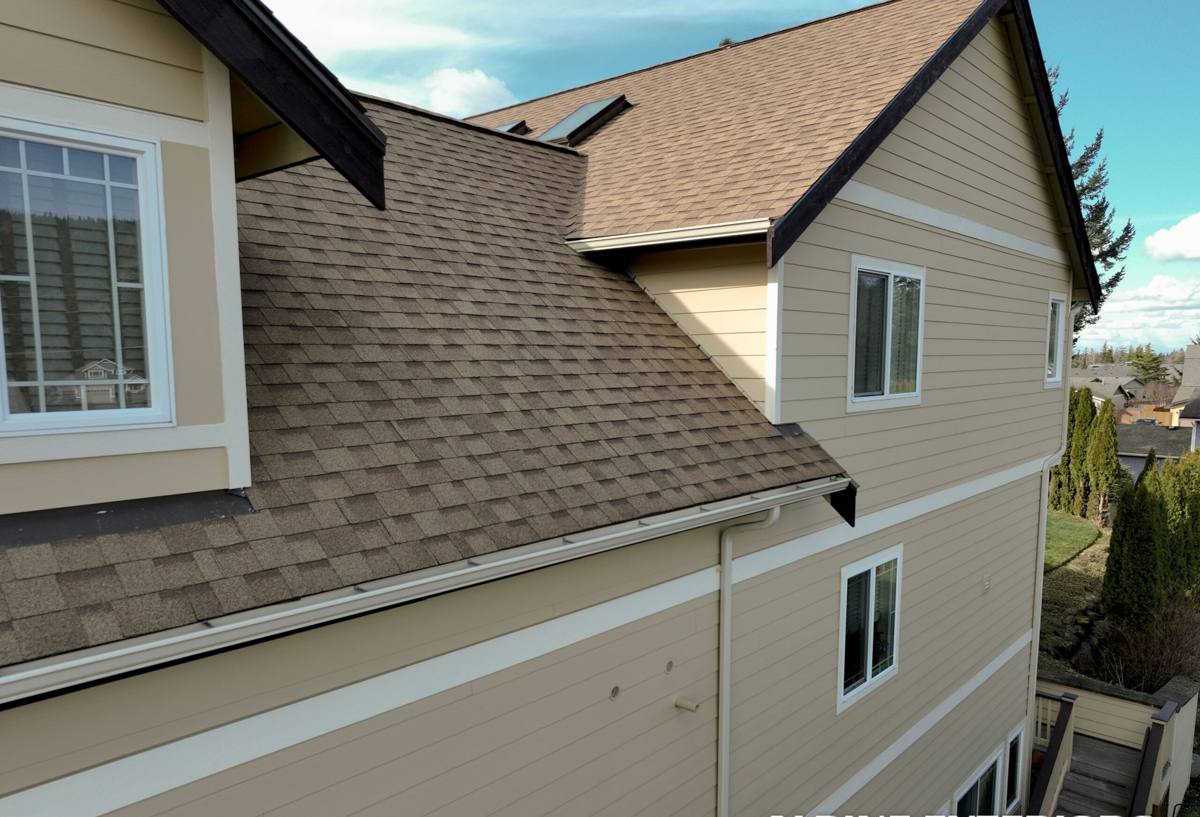
What Ferndale Homes Actually Need From a New Deck
Drainage Before Anything Else
Most deck failures we see locally trace back to water that had nowhere to go. That includes the obvious stuff — decking boards laid too tight with no gap for runoff — but also the less obvious stuff, like a ledger board bolted to the house without proper flashing, or joists sitting flush against a rim board with no airflow underneath. In a climate with this much annual rainfall, every connection point on a deck needs to either shed water or dry out fast. We plan the framing layout, board spacing, and flashing details around that from the start rather than treating drainage as an afterthought.
Footings That Account for Local Soil
Soil conditions vary block to block in this part of Whatcom County, and some Ferndale lots hold water longer than others depending on clay content and grading. Footings need to be sized and set below frost depth with that in mind — undersized or shallow footings are one of the more common reasons an older deck starts to feel wobbly or uneven within a few years.
Hardware That Won't Corrode Early
Salt air accelerates corrosion on standard fasteners and connectors faster than most homeowners expect. A deck built with the wrong grade of screws or joist hangers can show rust streaks and weakening hardware well before the wood itself shows any wear. This is one of the most overlooked details in deck construction, and it's also one of the cheapest to get right at the framing stage.
Choosing a Decking Material for This Climate
There's no single "best" decking material — there's a best material for your budget, your maintenance appetite, and how exposed your specific site is to weather. Here's how the common options actually compare once you factor in Ferndale's rain and salt air:
| Material | Upfront Cost | Moisture / Salt-Air Performance | Maintenance | Typical Lifespan |
|---|---|---|---|---|
| Pressure-treated wood | Lowest | Good if sealed and re-sealed on schedule; end grains and cuts need re-treatment | Annual cleaning, re-sealing every 1-2 years | 10-15 years with upkeep |
| Cedar | Moderate | Naturally rot-resistant, but softer and needs sealing to hold color and resist moisture staining | Cleaning and sealing every 1-2 years | 15-20 years with upkeep |
| Composite decking | Higher | Very good — doesn't absorb water like wood, resists rot; still needs surface cleaning to prevent moss/mildew film | Low — periodic washing, no sealing | 25-30 years |
| PVC decking | Highest | Excellent moisture resistance, least affected by salt air | Lowest — occasional washing | 30+ years |
Composite and PVC decking have become popular around Ferndale specifically because they take moss and mildew growth better than wood — a film can still develop on the surface, but it doesn't work its way into the board the way it can with untreated or under-maintained wood. Wood decking isn't a bad choice, but it's an honest tradeoff: lower upfront cost in exchange for a maintenance schedule you actually have to keep.
Framing and Fasteners: Where Most Deck Problems Start
The decking surface is what homeowners look at, but the framing underneath is what determines whether the deck is safe and how long it lasts. In a salt-air environment, we use fasteners and structural connectors rated for corrosion resistance — hot-dip galvanized at minimum, stainless steel in spots that see the most exposure or moisture contact, such as ledger bolts and post bases. Mixing incompatible metals (for example, the wrong screw in a treated-lumber connector) can actually speed up corrosion through galvanic reaction, so matching hardware to both the lumber treatment and the coastal environment matters more here than it would inland.
Joist spacing, blocking, and beam sizing also need to be sized correctly for the decking material you choose — composite and PVC boards often have different span requirements than dimensional lumber, and installing them on a frame spec'd for wood decking is a common shortcut that shows up later as bounce or sag.
Moss, Mildew, and Long-Term Deck Maintenance in Whatcom County
Moss doesn't just grow on roofs here — it will colonize a shaded, damp deck surface too, especially under trees or on the north side of a house where boards don't dry out between rain events. A few things keep it from becoming a structural problem instead of just a cosmetic one:
- Gaps between boards sized correctly so water drains through instead of pooling on the surface
- A washed or brushed surface a couple of times a year, more often in shaded spots
- Keeping gutters and downspouts clear so runoff isn't dumping extra water directly onto the deck
- Trimming back overhanging branches where practical to let more light and air reach the surface
- Checking the underside and framing once a year for trapped debris or standing moisture
None of this is complicated, but it only works if the deck was built with drainage and airflow in mind to begin with. A deck with tight board spacing and no ventilation underneath will grow moss no matter how often you scrub it.
Permits, Setbacks, and Code Basics for Ferndale Decks
Most new decks and deck replacements in Ferndale and unincorporated Whatcom County require a building permit, particularly once the deck is attached to the house or elevated above a certain height — the exact thresholds and setback requirements depend on your specific property and zoning, so we pull the applicable local requirements for your address rather than assuming a blanket answer. Guardrail height, baluster spacing, stair geometry, and footing depth are all code items that get checked, and they're also the details that matter most for actual safety, not just passing inspection. We handle the permit process as part of the job so you're not chasing paperwork on your own.
Our Deck-Building Process
- On-site assessment — we look at sun/shade exposure, drainage flow, soil, and how exposed the site is to wind and salt air off the water
- Material and layout conversation — honest tradeoffs between wood, composite, and PVC based on your budget and how much upkeep you want to commit to
- Permit and design — sizing footings, framing, and railings to code, and handling the permit application with the local jurisdiction
- Framing — footings, posts, beams, and joists built with corrosion-resistant hardware and proper flashing at the ledger
- Decking and railing installation — board spacing set for drainage, fasteners matched to the material
- Final walkthrough — we go over maintenance expectations specific to the material you chose so there are no surprises a year or two in
Why It Matters That We Already Work in This Area
Our crew is based just up the road in Lynden and works throughout Whatcom County, which means Ferndale's rain patterns, soil, and salt-air exposure aren't a guessing game for us — it's the same set of conditions we build for regularly. That shows up in small decisions a homeowner might never notice on their own: which grade of fastener to spec, how tight to set board gaps, where flashing actually needs to go versus where a builder from out of the area might skip it to save time. A deck is a long-term structural investment, and getting those details right the first time is a lot cheaper than fixing rot or corrosion damage five years down the road.
Questions Worth Asking Before You Sign a Deck Contract
- What grade of fasteners and hardware are you using, and are they rated for coastal/salt-air exposure?
- Who is pulling the permit, and is the footing depth and railing spec built to current code?
- What's the board spacing and how does the framing handle drainage?
- What does routine maintenance actually look like for the material you're recommending?
- Do you carry liability insurance and can you provide proof of it?
If you're planning a new deck or replacing one that's showing rot, rust, or moss buildup, we're glad to take a look and walk you through your options honestly. Reach out for a free, no-pressure estimate using the form below.