 Lynden Siding
 Why Siding Repair Looks Different in Deming
Deming sits back from the water compared to the rest of Whatcom County, but that doesn't spare it from the same weather that wears down siding everywhere between Bellingham Bay and the foothills. Marine air still pushes inland on a regular basis, driving rain sideways into wall assemblies during fall and winter storms, and the heavier tree cover on many Deming lots keeps siding shaded and damp long after a storm has passed. That combination — driving rain, humidity that lingers under the canopy, and a moss season that can run six months or more — is what actually damages siding here. It's rarely one dramatic event. It's cumulative: repeated wetting and drying, organic growth holding moisture against the surface, and small gaps or cracks that slowly let water where it doesn't belong.
A siding repair that ignores that reality just delays the next repair. A siding repair that accounts for it fixes the underlying moisture path, not just the spot you can see from the driveway.
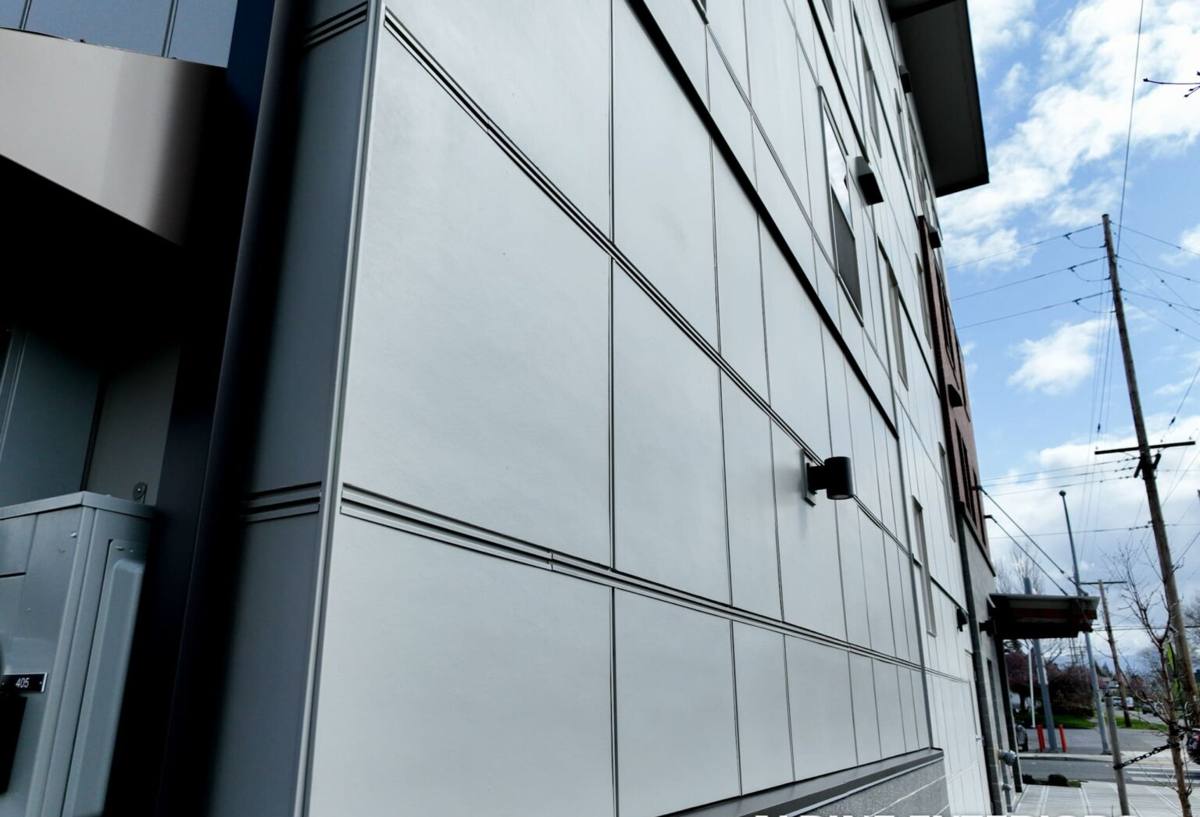
Signs a Deming Home Needs Siding Repair
Most homeowners call about siding repair because of something visible, but the visible damage is usually a symptom. Here's what we look for, and what it usually means:
- Soft or spongy spots when you press on the siding — almost always trapped moisture, often worse than it looks from outside.
- Dark streaking or moss buildup concentrated on shaded, north-facing, or tree-covered walls — a sign the surface stays wet longer than it should.
- Cracked or buckled boards near corners, seams, or trim — often a flashing or caulking failure, not a defect in the siding itself.
- Peeling or bubbling paint on painted wood or composite siding — usually moisture pushing out from behind the board, not just weathering.
- Gaps opening up at butt joints — common on materials that expand and contract more than fiber cement does.
- Staining on interior walls or trim near an exterior wall — a signal that the problem has already gotten past the siding.
Any one of these is worth a look. Several at once, especially on the same wall, usually means water has been getting behind the siding for a while.
Where Damage Concentrates in Deming
On the properties we work on around Deming, repair calls cluster in predictable spots: north and west-facing walls that stay shaded most of the day, siding under trees where debris and moisture collect in the gap between board and wall, and lower courses near grade where splash-back and slow drainage keep the material wet. Knowing where to look first saves time during the inspection and helps catch a small problem before it becomes a large one.
What a Correct Siding Repair Actually Involves
A repair that only replaces the damaged board and stops there is a cosmetic fix. A repair that holds up through another Whatcom County winter addresses what's underneath:
- Diagnosis before demolition. We find the actual moisture path — a failed caulk joint, missing flashing, a nail hole, or a grading issue pushing water back at the wall — before pulling any siding.
- Inspection of the water-resistive barrier. If the house wrap or building paper behind the damaged section is torn or degraded, replacing the siding without addressing it just resets the clock on the same failure.
- Correct flashing at penetrations and transitions. Windows, dryer vents, hose bibs, and roof-to-wall intersections are the most common places water actually gets in, even when the visible damage shows up somewhere else.
- Matched material and profile. A patch that doesn't match the plank width, reveal, or finish stands out and can create a new water trap at the seam.
- Proper fastening and clearances. Siding installed too tight to the ground, deck, or roofline traps moisture regardless of the material — a repair is the right time to correct that.
Repair vs. Replacement: How We Help You Decide
Not every damaged section needs a full re-side, and not every "repair" is worth doing instead of a replacement. Here's the honest breakdown we walk homeowners through:
| Situation | Usually Repair | Usually Replacement |
|---|---|---|
| Damage limited to one or two walls or a small area | Yes | No |
| Siding is James Hardie fiber cement, sound elsewhere | Yes | No |
| Widespread soft spots, warping, or delamination | No | Yes |
| Siding is past its realistic service life (old wood, aging composite) | No | Yes |
| Moisture has reached sheathing or framing in multiple areas | No | Yes |
| House is due for a color change or full facelift anyway | Sometimes | Yes |
We'd rather tell a homeowner a $600 repair will hold for another decade than sell a full re-side that isn't needed yet — and we'd rather say plainly when a "repair" would just be patching a house that needs a real fix.
Why We Repair With James Hardie Fiber Cement
We install and repair exclusively with James Hardie fiber cement siding. That matters for repair work specifically, not just new installation. Fiber cement doesn't swell, rot, or delaminate the way some other materials can when they take on moisture, which means a properly diagnosed and flashed repair actually stays fixed. It also means when we patch a section of existing Hardie siding, we're matching a product engineered for this climate — including HZ5 lines built for the Pacific Northwest's moisture and temperature cycling — rather than trying to blend a repair into a material with a different expansion rate or moisture tolerance.
If your home currently has vinyl, LP SmartSide, cedar, or another fiber cement brand, we'll still repair it honestly and tell you what we find. But when a section needs full replacement or a homeowner is ready to stop patching an aging product, our recommendation is Hardie — factory-finished ColorPlus color that doesn't need repainting on the same cycle as field-painted siding, and a transferable warranty that holds up if the home changes hands.
Our Deming Siding Repair Process
- On-site inspection. We look at the damaged area and the surrounding wall assembly, not just the spot you called about.
- Moisture check. Where there's any doubt, we check moisture content in the sheathing before deciding on scope.
- Written scope and cost. You get a clear explanation of what's being repaired and why, in plain language, before work starts.
- Repair. Damaged material comes out, the barrier and flashing get corrected, and matched siding goes back in to spec.
- Final check. We confirm clearances, fastening, and finish match before we call it done.
Why a Crew That Already Works in Deming Matters
Deming isn't a dense subdivision — it's a spread-out community of wooded lots, longer driveways, and properties tucked back from the Mount Baker Highway corridor. A contractor who already works this area knows that tree cover changes where moisture problems show up, that some lots need extra care around septic and well systems when equipment is on site, and that a repair scheduled for the wrong week of a wet Whatcom County fall can turn into a bigger job than it needed to be. It also means a shorter drive when you need someone back out for a follow-up look, and a crew that isn't learning the area's quirks on your dime.
We also pull permits and handle work to code under Whatcom County requirements where the scope calls for it, so a repair today doesn't turn into a headache when you go to sell the house later.
Questions Worth Asking Before You Hire Anyone
- Will you diagnose the moisture source, or just replace the visible damage?
- What happens to the house wrap or barrier behind the old siding?
- Can you match my existing siding's profile and finish?
- Are you licensed and insured to work in Whatcom County?
- Will the repaired section be covered under any warranty?
- Do you work on properties like mine — wooded, rural, or with longer access?
Maintaining a Repair Once It's Done
A correctly done repair should be low-maintenance, but "low" isn't "zero" in this climate. A yearly walk-around checking for new gaps at trim and seams, keeping gutters clear so water isn't overshooting onto the wall below, and knocking back moss or debris buildup on shaded walls before it takes hold will keep a repaired section performing as long as the rest of the siding.
If you're seeing soft spots, staining, or moss buildup on your Deming home's siding, we're happy to take a look and give you an honest read on whether it's a repair or something bigger — no pressure, no obligation. Reach out through the form below for a free estimate.