 Lynden Siding
 Deck Building in Kendall: Built for the Weather We Actually Get
Kendall sits close enough to the Nooksack River valley and open farmland that homes here take weather from every direction — wind-driven rain off the foothills, damp low-lying air that holds moisture longer than in town, and the same long gray stretch from October through April that turns untreated wood green with moss. A deck built here isn't a summer accessory. It's an outdoor room that has to survive nine months of wet weather a year, and the difference between a deck that lasts fifteen years and one that lasts thirty comes down to decisions made before the first board goes down.
We build decks throughout Lynden and the surrounding Whatcom County communities, and Kendall projects get the same standard: proper structural framing, materials matched to how wet the site actually stays, and drainage details that keep water moving instead of sitting.
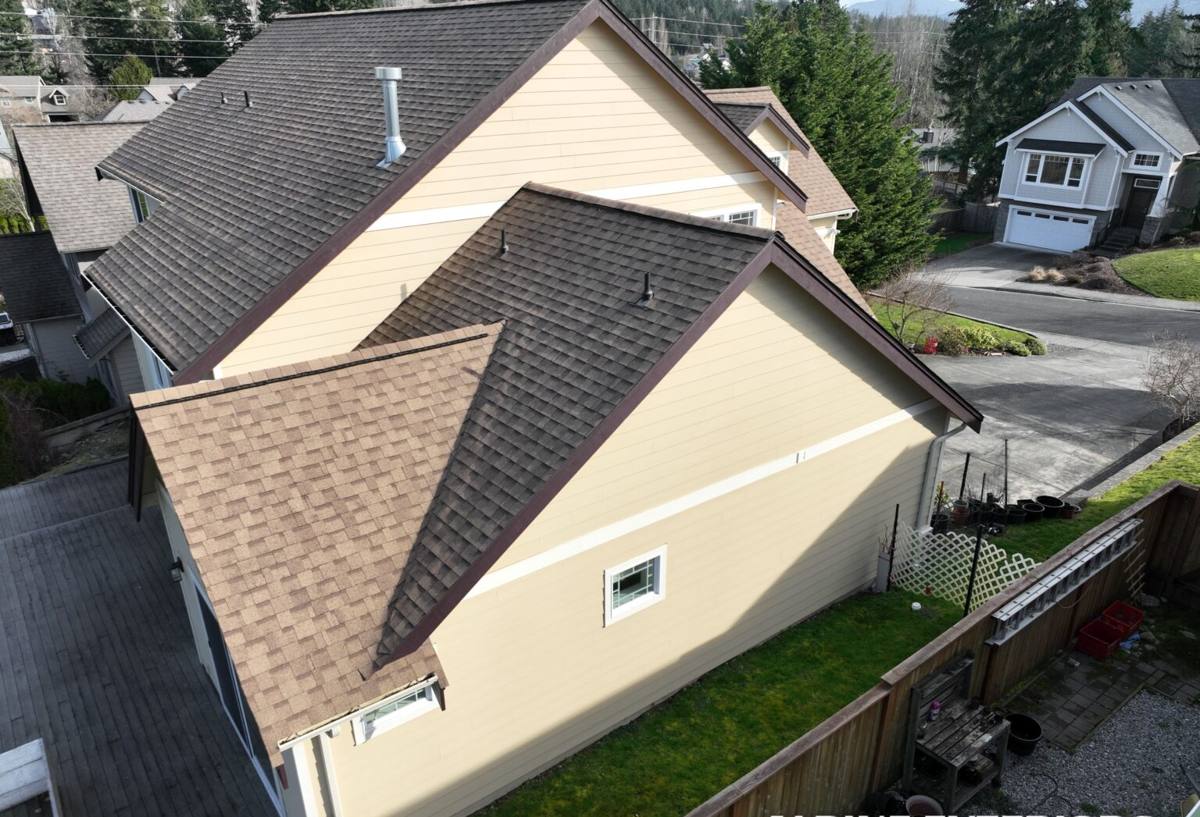
What Kendall's Climate Does to a Deck
Moisture That Doesn't Leave
Rural and semi-rural lots around Kendall often have more tree cover, more shade, and less wind exposure than in-town lots — which sounds pleasant until you realize it means decks stay damp longer after every rain. That extended dampness is exactly what feeds moss, mildew, and slow wood decay. A deck built without ventilation underneath, or with boards laid tight against each other, traps that moisture instead of shedding it.
Moss and Algae Season
Whatcom County's moss season isn't a minor cosmetic issue — moss holds water against the deck surface, and on wood decking it accelerates rot at the board edges and around fasteners. Composite and properly finished wood decking resist this better than untreated lumber, but even the best material needs a surface that drains and dries.
Freeze-Thaw at the Edges
Kendall sees enough cold snaps each winter that any water sitting in a joint, a fastener hole, or ledger connection can freeze, expand, and start working a deck apart from the inside. This is a structural issue as much as a cosmetic one, and it's why flashing and fastener choice matter more here than in a drier climate.
What a Correct Deck Build Involves
Ledger and Structural Connection
Most deck failures we're called out to inspect start at the ledger board — the point where the deck attaches to the house. If that connection isn't properly flashed, water works its way behind the siding and into the rim joist, and you end up with rot inside the wall long before the decking itself shows any wear. Correct ledger flashing, proper fasteners rated for treated lumber, and a small air gap or drainage plane behind the ledger are non-negotiable on every deck we attach to a house.
Footings and Framing
Whatcom County soil varies a lot from lot to lot, and Kendall's more rural parcels can have wetter ground than in-town sites. Footings need to be sized and set to local frost depth and soil conditions, not just poured to the minimum. Joists and beams should be pressure-treated or naturally rot-resistant, spaced to the decking manufacturer's spec (composite typically needs tighter joist spacing than wood), and gapped properly for drainage and airflow underneath.
Decking Material Choice
This is where most of the long-term maintenance decision gets made. We'll walk through the honest trade-offs with you rather than push one option:
| Material | Moisture/Moss Behavior | Maintenance | Typical Lifespan |
|---|---|---|---|
| Cedar | Naturally rot-resistant but still needs sealing; moss and algae will grow on it without upkeep | Annual cleaning, re-sealing every 2–3 years | 15–20 years with maintenance |
| Pressure-treated pine | Treated against rot but more prone to surface moss and checking than cedar | Cleaning and re-staining every 1–2 years | 10–15 years |
| Composite decking | Sheds moisture well, resists rot; some products still show surface mildew if not cleaned | Occasional washing, no staining or sealing | 25–30+ years |
| PVC decking | Best moisture and moss resistance of the group; fully non-porous surface | Lowest — soap and water | 25–30+ years |
We install all of these. Composite and PVC cost more up front but make sense for shaded, damp Kendall lots where a wood deck would need frequent attention just to stay ahead of moss. Wood makes sense where budget is the priority and the owner is comfortable with the maintenance schedule.
Fasteners and Hardware
Everything below the decking surface — joist hangers, structural screws, post bases — should be rated for ground contact and treated lumber (stainless or hot-dip galvanized, not standard zinc-coated). In a climate this wet, cheap fasteners are the first thing to fail, and they fail invisibly until a board comes loose.
Railing and Guardrails
Code requires guardrails above a certain deck height, and the connection points for railing posts are another common spot for water intrusion if not detailed correctly. We build railing posts with the same flashing and fastening standards as the rest of the structure — no shortcuts because it "just holds a railing."
Drainage Details That Actually Matter
- Decking gapped correctly between boards so water passes through instead of pooling on the surface
- Joists sloped slightly away from the house so water sheets off rather than back toward the ledger
- Ledger flashing installed as a continuous drainage plane, not just caulked
- Post bases set above grade or on proper footings so wood never sits in standing water
- Under-deck airflow preserved — skirting, if used, should still allow ventilation, not seal the space
- Stair stringers and landing pads graded so water doesn't collect at the base
Our Process for a Kendall Deck Build
1. On-Site Assessment
We look at the lot's drainage, sun and shade exposure, tree cover, and how the deck will attach to the house. Shaded, damp lots around Kendall get a different material recommendation than an open, sunny one.
2. Design and Permitting
We handle the structural design and pull the required Whatcom County permits. A deck attached to the house, above a certain height, or with a roof over it typically requires a permit and inspection — we don't skip this step, because an unpermitted deck can become a real problem at resale.
3. Framing and Structural Work
Footings, ledger, joists, and beams go in first, built to hold up under our wet winters and to pass inspection before decking ever gets installed.
4. Decking, Railing, and Finish Work
Decking is installed with correct gapping, railings are set and finished, and stairs are built to code with proper drainage at the base.
5. Final Walkthrough
We walk the finished deck with you, point out any maintenance items specific to the material you chose, and answer questions before we consider the job done.
Why It Matters to Hire a Crew That Already Works Kendall
A deck built to a generic spec sheet from a drier region doesn't hold up here. Crews unfamiliar with Whatcom County's moisture load sometimes under-flash ledgers, skip proper joist spacing for composite decking, or use fasteners that aren't rated for our conditions — problems that don't show up for a year or two, by which point the fix is far more expensive than doing it right the first time. We've built and repaired decks across Lynden and the surrounding areas including Kendall, and we know which details can't be skipped in this climate.
Signs an Existing Kendall Deck Needs Attention
- Moss or dark staining building up on the deck surface between cleanings
- Soft or spongy spots when you walk across the boards
- Gaps or rust staining around fasteners
- Visible daylight or water staining at the ledger-to-house connection
- Railing posts that flex or feel loose
- Standing water that doesn't drain within a few hours after rain
If you're seeing any of these, it's worth having the structure inspected before it becomes a safety issue, not just a cosmetic one.
What a Kendall Deck Project Typically Involves Cost-Wise
| Factor | Why It Moves the Price |
|---|---|
| Size and shape | More square footage and complex angles mean more framing and cutting |
| Height above grade | Taller decks need more substantial footings, posts, and guardrails |
| Material choice | Composite and PVC cost more upfront than wood but need far less upkeep over time |
| Site access and grade | Sloped or hard-to-access Kendall lots can add labor and equipment time |
| Permitting requirements | Attached, elevated, or roofed decks require more design and inspection steps |
Every lot is different, which is why we give firm numbers only after seeing the site — but we're always upfront about the trade-offs between material cost and long-term maintenance before you decide.
If you're planning a new deck or need an honest look at one that's already showing wear, we're happy to come out to your Kendall property for a free, no-pressure estimate. Fill out the form below and we'll get in touch to schedule a time.