 Lynden Siding
 Custom Windows Built for Maple Falls Weather
Maple Falls sits in a part of Whatcom County that gets more than its share of driving rain, long damp stretches, and a moss season that seems to start earlier every year. Windows here don't just have to look good — they have to keep water out through months of sideways rain, resist the constant dampness that feeds mold and moss on siding and trim, and hold up through temperature swings between chilly mornings and warmer afternoons. A window that's fine in a drier inland climate can fail fast out here if it wasn't installed with this region's conditions in mind.
This page covers what custom window replacement actually involves for a Maple Falls-area home, what tends to go wrong with windows in this climate, and how we approach the job so it holds up for the long haul — not just the first winter.
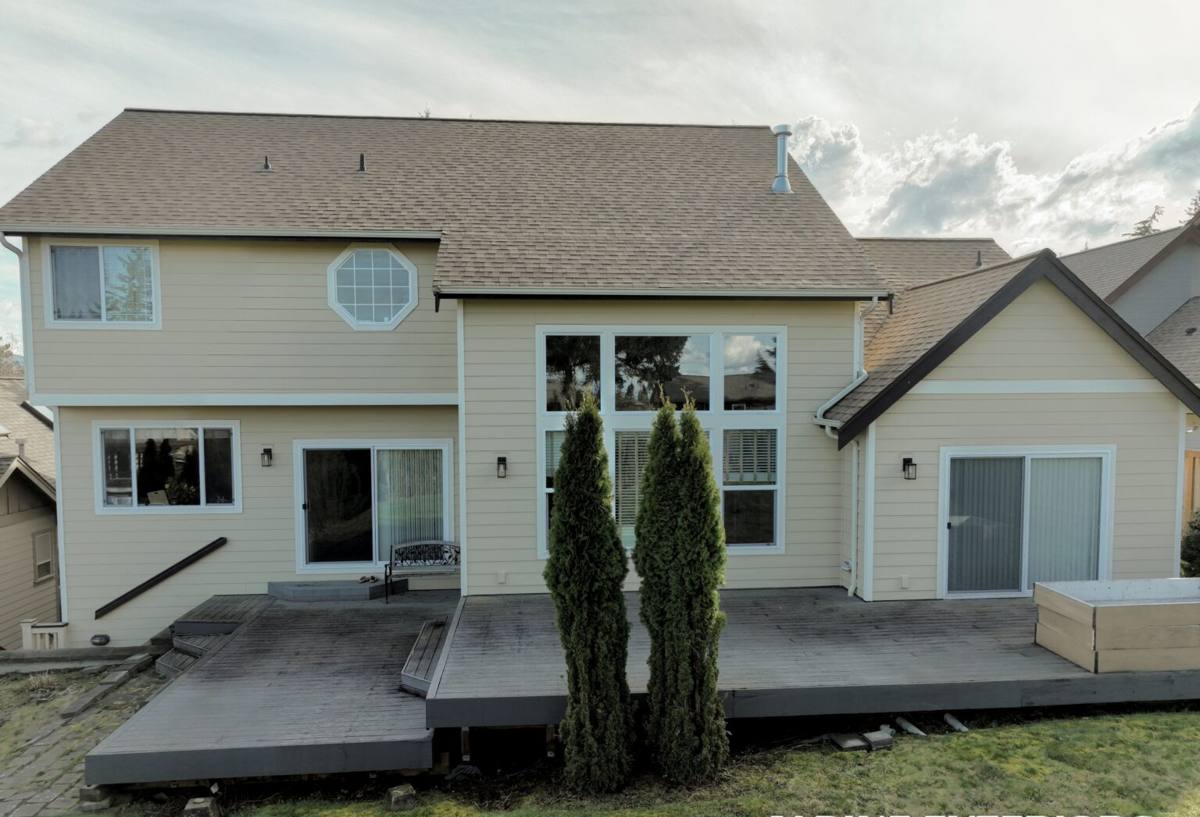
What This Climate Does to Windows
Whatcom County weather is persistent rather than extreme, and that's actually what causes the most damage. It's not one big storm — it's months of moisture working into small gaps, freeze-thaw cycling, and the constant presence of moss and algae wherever wood, caulk, or trim stays damp.
Driving Rain and Wind-Driven Moisture
Rain here often comes in at an angle, pushed by wind, rather than falling straight down. That means water finds its way into places a simple top-and-sides seal won't protect — under the sill, behind trim, and into any gap where flashing was skipped or done wrong. Proper window installation in this area has to plan for water hitting the window from the side and below, not just from above.
The Long Moss Season
Anywhere shaded or slow to dry — north-facing walls, areas under trees, spots that don't get much direct sun — grows moss and algae for a good chunk of the year. On windows, that shows up as green or black staining on sills, frames, and the caulk lines around the unit. Beyond the look of it, trapped moisture under moss-covered trim is what eventually rots wood and breaks down sealants.
Salt Air and Coastal Influence
Being in the Puget Sound region, homes here get some exposure to salt-laden air, which speeds up corrosion on hardware, screens, and lower-grade metal components. It's not the same as a beachfront property, but it's enough that cheap hardware and unprotected fasteners wear out faster than they would inland.
Signs a Maple Falls Home Needs Window Work
Older windows in this climate tend to fail in predictable ways. Worth checking for:
- Soft or discolored wood at the sill or bottom corners of the frame
- Fogging or moisture between panes on double-glazed units (a sign the seal has failed)
- Persistent moss or dark staining on the sill that keeps coming back after cleaning
- Drafts you can feel with a hand near the frame on a windy day
- Paint or finish peeling specifically around the window, even if the rest of the wall is fine
- Difficulty opening, closing, or locking — frames can swell and warp with repeated wetting
Any one of these can be a minor fix. Several together, especially soft wood plus fogged glass, usually means it's time to replace rather than patch.
What a Correct Custom Window Installation Involves
"Custom" here means the window is built or selected to fit the actual opening and the actual conditions of the house — not a generic stock size forced into place. That matters more in a wet climate, because a loose or improperly flashed installation is exactly how water gets behind the wall.
Proper Flashing and Water Management
Every opening needs flashing that directs water down and out, never toward the house structure. This includes sill pan flashing at the bottom of the opening, side flashing that overlaps correctly, and head flashing at the top that sheds water away from the wall assembly. Skipping or shortcutting any one of these is the single most common cause of hidden rot behind windows in this climate.
Sealing Without Trapping Moisture
It sounds counterintuitive, but a window can be sealed too tightly in the wrong places. The goal is to stop bulk water and air infiltration on the outside while still allowing any incidental moisture that does get in to drain and dry out, rather than sealing it into the wall cavity. This is a detail that gets missed when a crew treats every job the same way regardless of climate.
Correct Sizing and Shimming
An out-of-square or poorly shimmed window will bind, won't seal evenly, and puts stress on the frame that shows up as cracked caulk and gaps within a year or two. Measuring twice and shimming to plumb and level isn't optional — it's the difference between a window that lasts 20+ years and one that needs recaulking every season.
Frame Material Comparison
| Material | Moisture Performance | Maintenance | Typical Lifespan |
|---|---|---|---|
| Vinyl | Doesn't rot or corrode; performs well in wet climates | Low — occasional cleaning | 20–30 years |
| Fiberglass | Very stable in moisture and temperature swings | Low | 30+ years |
| Wood (clad exterior) | Good if cladding stays intact; vulnerable where clad fails | Moderate to high | 20–30 years with upkeep |
| Aluminum | Prone to condensation and corrosion near salt air unless thermally broken | Moderate | 15–25 years |
We steer most Maple Falls homeowners toward vinyl or fiberglass for a straightforward reason: in a climate with this much sustained moisture, materials that don't depend on an intact paint or clad layer to stay protected simply hold up with less babysitting. Wood-clad windows can still be the right call for a specific look or a historic home, but we're upfront that they come with more maintenance in this weather, not less.
Our Process for a Maple Falls Job
- On-site assessment — we look at the existing openings, check for hidden water damage around current windows, and measure for accurate custom sizing.
- Honest scoping — if we find rot or damage behind the window during removal, we tell you before proceeding, not after the invoice.
- Removal and prep — old units come out carefully to avoid unnecessary damage to siding or trim, and the opening is inspected and repaired as needed.
- Flashing and installation — sill pan, side, and head flashing installed in the correct order, window set plumb and level, shimmed properly.
- Sealing and trim — exterior sealed for water management, interior and exterior trim finished to match the home.
- Final walkthrough — we check operation, seals, and cleanup with you before calling the job done.
Cost Factors to Understand
| Factor | Why It Matters |
|---|---|
| Frame material | Vinyl and fiberglass generally cost less upfront than wood-clad; fiberglass tends to run higher than vinyl |
| Number and size of openings | More or larger windows means more material and labor |
| Condition behind the old window | Rot or water damage found during removal adds repair scope |
| Custom shapes or sizes | Non-standard openings cost more than stock sizes |
| Glass package | Upgraded low-E coatings or gas fills add cost but improve efficiency |
We don't quote a flat per-window number over the phone because the condition behind the old window and the specific opening size change the real cost. A site visit gives you an accurate number, not a guess.
A Homeowner's Checklist Before Signing a Window Contract
- Ask what flashing method will be used at the sill, sides, and head
- Ask what happens if rot is found once the old window comes out
- Get frame material and glass specs in writing, not just "vinyl windows"
- Ask about warranty coverage for both the window unit and the installation labor separately
- Confirm who's doing the actual installation — the crew that shows up should be the crew that's experienced with this climate
- Ask how they handle disposal of old windows and job-site cleanup
Why a Local Crew Matters Here
Window installation done wrong in a dry climate might just mean a draft. Done wrong in Whatcom County, it means water working behind the siding for years before anyone notices — usually as a soft spot or a moss-stained streak long after the workmanship warranty has expired. A crew that already works Lynden and the surrounding Maple Falls area knows this pattern because we see it on tear-outs regularly: caulk used as a substitute for flashing, sills without proper slope, trim reinstalled over damp wood.
We're not guessing at what this weather does to a house — it's the same driving rain, the same moss, the same damp stretches on every job in this area. That's the advantage of hiring locally over a crew that's unfamiliar with the region: the details that matter here aren't theoretical to us.
Get a Straightforward Estimate
If your windows are showing any of the signs above, or you're planning ahead for a remodel, we're happy to take a look and give you an honest read on what's needed — no pressure, no inflated scope. Fill out the form below to schedule a free estimate for your Maple Falls home.