 Lynden Siding
 Why Window Replacement Looks Different in Custer Than It Does Inland
Custer sits close enough to the water that homes here take a different kind of weathering than houses further inland in Whatcom County. Salt-laden air off the Strait of Georgia and the bay works into window frames, hardware, and sealants over time, corroding metal components and breaking down finishes faster than a drier inland climate would. Add driving rain that comes in sideways during winter storms, plus a moss season that can stretch from fall through spring on anything shaded or north-facing, and you've got a combination that finds every weak point in a window installation. A window that was installed correctly handles all of this without issue for decades. One that was rushed, under-flashed, or fitted with the wrong materials starts showing problems within a few years — fogging between panes, soft trim, drafts you can feel standing next to the glass on a windy day.
We work on homes in and around Custer regularly, and the patterns repeat: older single-pane or early double-pane windows with failed seals, wood sills that have absorbed moisture from years of wind-driven rain, and aluminum frames that have pitted or corroded from salt exposure. None of that is unusual for the area — it's just what this climate does to windows over 20-30 years. The fix isn't complicated, but it does need to be done with this specific environment in mind, not treated like a generic window swap.
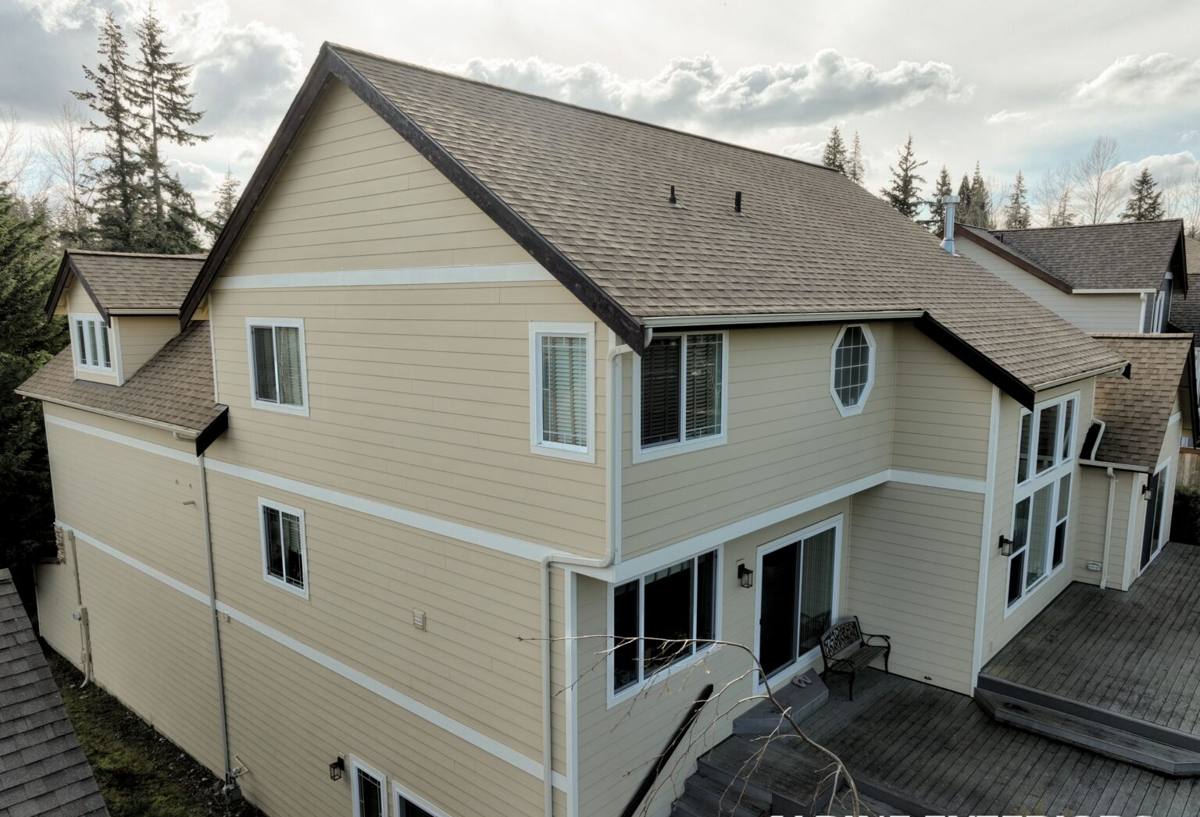
Signs Your Custer Home Is Ready for New Windows
Most homeowners don't replace windows on a schedule — they replace them when something starts to bother them. Here's what we'd actually look for during a walk-through, and what should push replacement up your priority list:
- Visible fog, haze, or moisture trapped between panes of a double-glazed unit — the seal has failed and it won't clear on its own
- Drafts you can feel around the frame, especially during windstorms coming off the water
- Wood trim or sills that feel soft, spongy, or show dark staining from repeated moisture exposure
- Windows that are painted or caulked shut because the frame has swollen or warped
- Visible corrosion or pitting on aluminum frames or hardware — a common sign of long-term salt air exposure
- Persistent moss or black mildew streaking on the sill or lower frame that comes back every year no matter how often it's cleaned
- Noticeably higher heating bills without any other explanation
- Condensation forming on the inside of the glass regularly during cold weather
One or two of these on their own might just mean a repair or a resealing job. Several at once, especially on windows original to the house, usually means the frame and glazing are past the point where patching makes sense.
What a Correct Window Replacement Job Actually Involves
Window replacement gets treated like a simple swap sometimes — pull the old unit, drop in the new one, caulk the edges. That approach might look fine on the day it's finished, but in a climate that throws driving rain at a house for months at a time, shortcuts here show up as rot and leaks within a few seasons. A correct job pays attention to what's happening behind the trim, not just what's visible from the street.
Flashing and Moisture Barrier
Every new window opening needs proper flashing tape or membrane integrated with the house's existing weather-resistive barrier, lapped correctly so water sheds outward and down rather than getting trapped behind the siding. This is the single most common place we find past installations cut corners — skipping flashing or overlapping it backward is invisible once the trim goes back on, but it's exactly what lets water into the wall cavity during a hard rain event.
Sill Pan and Drainage
A sill pan at the bottom of the rough opening gives any water that does get past the window a way out instead of a place to sit. On older Custer homes we often find no sill pan at all, or one that was improperly sloped, which is part of why sill rot is such a common finding on this side of the county.
Insulation and Air Sealing
The gap between the new window frame and the rough opening needs to be insulated and air-sealed — not just stuffed with fiberglass, which settles and leaves gaps, but with a low-expansion foam or backer rod and sealant sized to the actual gap. This is what stops the draft complaints and cuts down on condensation around the frame in winter.
Fastening and Structural Check
Windows need to be shimmed square and plumb, fastened per the manufacturer's schedule, and checked for level before trim goes back on. A window that's slightly out of square will bind, won't seal evenly under wind pressure, and will wear out its weatherstripping faster.
Choosing the Right Frame Material for This Climate
Frame material matters more here than it does in a drier, calmer climate, because whatever you choose has to stand up to salt air and sustained moisture exposure year after year. There isn't one right answer for every house, but the trade-offs are worth understanding before you decide.
| Frame Material | Moisture & Salt Air Resistance | Maintenance | Typical Lifespan |
|---|---|---|---|
| Vinyl | Good — won't rot or corrode, though color and seals can degrade with UV and age | Low — occasional cleaning, no painting | 20-30 years |
| Fiberglass | Very good — dimensionally stable, resists moisture and salt exposure well | Low | 30-40+ years |
| Wood-clad | Depends heavily on cladding integrity — any breach exposes wood to rot risk | Higher — cladding seams and interior wood need periodic inspection | Varies; can be excellent or short if cladding fails |
| Bare Aluminum | Poor in salt air — prone to pitting and corrosion over time | Moderate to high | Shorter effective life near the coast |
For most Custer homes, we steer clients toward vinyl or fiberglass because they hold up to salt air and driving rain without the ongoing maintenance burden. Wood-clad windows can look great and perform well, but they're a bigger commitment — if the cladding seam ever fails, the wood underneath is exposed to exactly the moisture conditions this area sees most. That's a maintenance trade-off worth being honest about up front, not something to discover five years in.
Glass and Glazing: What Actually Makes a Difference Here
Double vs. Triple Pane
Double-pane with a good low-E coating and argon fill is the standard choice for most homes in this area and performs well against both heat loss and condensation. Triple-pane adds cost and weight for a modest efficiency gain — worth considering on a north-facing wall that takes the brunt of winter wind, but not always necessary for the whole house.
Low-E Coatings and Gas Fills
Low-emissivity coatings reduce heat transfer through the glass and help cut down on the interior condensation that's common in this climate during cold snaps. Argon or krypton gas fill between panes adds insulating value; argon is the standard, cost-effective choice for most replacement projects.
Condensation Resistance
If your current windows fog on the inside every time it gets cold, that's a sign of poor glazing performance, not just a humidity problem in the house. Better glazing paired with correct installation (so the frame itself isn't a cold spot) solves most of this.
Our Process, Start to Finish
Assessment and Measurement
We start with an on-site look at every window being considered — checking the sill, frame, and surrounding trim for existing moisture damage, not just measuring for a quote. If we find rot or water intrusion already in progress, we'll flag it before work starts rather than discovering it mid-install.
Install Day
We remove the old unit, inspect the rough opening, repair or replace any compromised framing or sheathing, then install flashing, sill pan, the new window, insulation, and trim in that order. We work around weather where we can — driving rain during an open wall cavity is exactly the situation you want to avoid, so timing matters as much as technique.
Cleanup and Walkthrough
Old windows and debris are hauled off site. Before we consider the job done, we walk through operation and sealing on every window with you.
Warranty
Materials carry the manufacturer's warranty; our installation work is backed by our own labor warranty. We'll go over both in plain terms before you sign anything — no fine print surprises.
What Drives the Cost
Every house is different, and we'd rather give you a real number after seeing the job than a made-up estimate over the phone. That said, here's what typically moves the price up or down:
| Cost Factor | Why It Matters |
|---|---|
| Frame material | Vinyl is generally the most budget-friendly; fiberglass and wood-clad cost more upfront |
| Existing damage | Rotted sheathing or framing found during removal adds repair work before the new window can go in |
| Window size and type | Larger units, bay/bow windows, and custom shapes cost more than standard double-hung or slider sizes |
| Glazing package | Triple-pane and upgraded low-E coatings add cost over standard double-pane |
| Number of windows | Whole-house projects typically bring a better per-window price than one-off replacements |
| Access and site conditions | Second-story windows or difficult access can add labor time |
Why It Matters to Hire a Crew That Already Works in Custer
A lot of window problems we get called out to fix started as a reasonable installation somewhere else that just wasn't built for this specific combination of salt air, wind, and sustained rain. A crew that works this area regularly already knows which details can't be skipped here — flashing sequencing that accounts for wind-driven rain, sill pan setups that handle the moisture load, and material choices that hold up rather than needing attention again in a few years. We're also familiar with the local permitting process through Whatcom County, so that step doesn't stall your project. None of this is complicated information, but it's the kind of thing that only shows up as a problem years later if it's missed — and by then it's a repair job, not a warranty call.
Keeping New Windows Performing in This Climate
New windows installed correctly need very little upkeep, but a little attention goes a long way in this environment:
- Rinse salt residue off frames and glass periodically, especially after storms, to slow buildup on hardware and finishes
- Keep weep holes at the base of the frame clear of debris so water can drain out as designed
- Clean moss or algae off sills and lower frames promptly rather than letting it sit through a wet season
- Check caulking and sealant around trim annually and touch up any cracked or separated sections
- Operate each window a few times through the year, even in winter, so hardware and weatherstripping don't stick or seize
If you're weighing whether it's time to replace windows on a Custer home, or you just want a straight answer about what's going on with the ones you have, we're glad to take a look. Reach out for a free, no-pressure estimate — use the form below to get started.