 Lynden Siding
 Why Roofs in Custer Wear Differently
Custer sits close enough to the water that salt-laden air is a daily fact of life, not an occasional nuisance. Add in the driving, wind-pushed rain that comes off Puget Sound weather systems and the long stretch of gray, damp months Whatcom County sees every year, and you've got a climate that is genuinely hard on a roof. Metal fasteners corrode faster near the coast. Shaded, north-facing slopes stay wet long enough for moss and algae to take hold and never fully dry out. Wind-driven rain finds its way under poorly lapped shingles and around flashing that would hold up fine in a drier climate but fails here over time.
None of that means a roof replacement in Custer has to be complicated or expensive beyond reason. It means the materials and the details matter more than they would somewhere inland and dry. A roof spec'd for a desert climate, installed exactly to the letter of a generic manual, can still underperform here if it ignores what this specific stretch of coastline does to a house.
Signs Your Custer Home Needs Replacement, Not Another Repair
Most homeowners don't wake up one day and decide to replace a roof — they notice something, patch it, and eventually realize the patching has become a pattern. Here's what tends to signal it's time to stop repairing and start planning a full replacement:
- Moss carpeting the shaded slopes even after cleaning, especially on north-facing sections that rarely see direct sun
- Granule loss heavy enough that you're finding grit in the gutters every time it rains
- Shingles that are curling, cupping, or cracking, particularly on slopes exposed to wind off the water
- Soft or spongy spots underfoot, or sagging visible from the ground — usually a sign the deck underneath has taken on moisture
- Daylight visible through the attic sheathing, or damp insulation after a storm
- A roof that's 20-25+ years old on architectural asphalt, or older on a three-tab product, even if it "looks fine" from the driveway
- Rust staining or corrosion around flashing, vent boots, and fasteners — common here well before it would show up in a drier inland climate
Any one of these on its own might just need a repair. Two or three together, especially on a roof already past the 20-year mark, usually means repair costs are about to outpace what a full replacement would run.
What a Correct Roof Replacement Actually Involves Here
Tear-off and deck inspection
We don't recommend overlaying a new layer of shingles over an old one in this climate. Trapped moisture between layers is exactly the kind of slow, hidden damage that salt air and persistent damp accelerate. A full tear-off lets us see the deck itself — sheathing that's delaminated, soft, or stained from long-term moisture gets replaced before anything new goes down. Skipping this step is the single most common reason a "new" roof fails early.
Underlayment and ice-and-water barrier
Eaves, valleys, and any low-slope transitions get a self-adhering ice-and-water membrane, not just felt or synthetic underlayment. In a climate with sustained wind-driven rain, water gets pushed uphill under shingles in ways a dry-climate install doesn't have to plan for. The field of the roof gets a synthetic underlayment rated for the exposure, lapped correctly for the prevailing wind direction rather than just "downhill."
Flashing and fasteners
This is where salt air does the most quiet damage. Plain electro-galvanized fasteners and flashing corrode faster this close to the coast. We spec corrosion-resistant fasteners and flashing — stainless steel or heavier hot-dip galvanized components — at chimneys, walls, valleys, and vent penetrations, since these are the spots that leak first when metal starts to go.
Ventilation
Balanced intake and exhaust ventilation matters more here than in a dry climate because trapped attic moisture has nowhere to go on a roof that's already dealing with damp air outside. Poor ventilation shows up as premature shingle failure from underneath and can accelerate the exact moss and mildew growth homeowners are trying to get rid of on top.
Choosing Materials for Salt Air, Rain, and Moss
There's no single "best" roofing material for every Custer home — it depends on budget, roof pitch, shade exposure, and how long you plan to stay in the house. Here's how the common options actually compare for this specific climate:
| Material | Moss/Algae Resistance | Salt Air Durability | Typical Lifespan | Maintenance |
|---|---|---|---|---|
| Standard architectural asphalt shingle | Fair — needs periodic cleaning on shaded slopes | Good with corrosion-resistant flashing/fasteners | 20-30 years | Moderate |
| Algae-resistant (copper/zinc-granule) asphalt shingle | Good to very good | Good with proper flashing details | 25-30 years | Low to moderate |
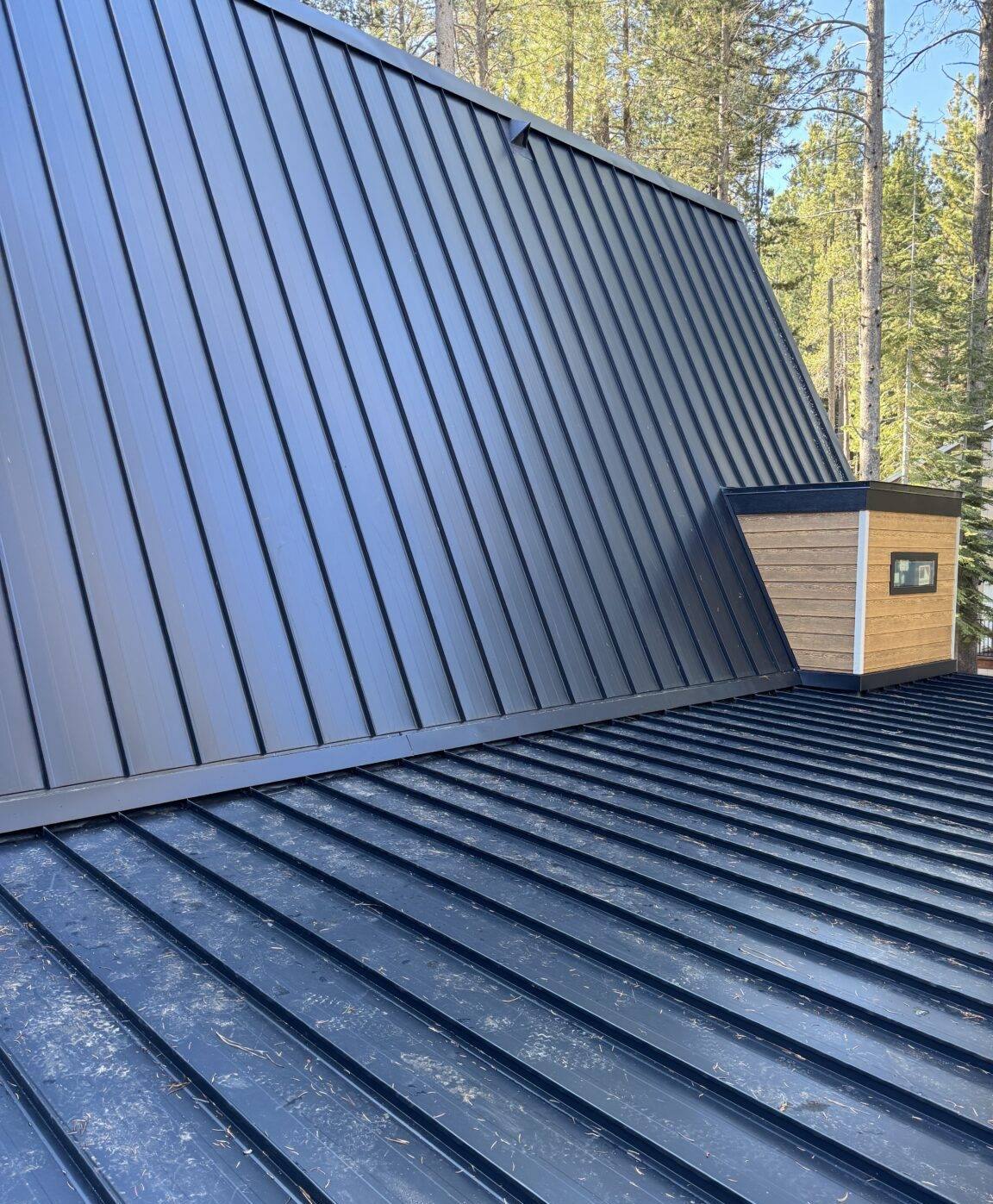
| Metal (standing seam or coated panel) | Very good — sheds moss growth medium | Very good with marine-grade coatings/fasteners | 40-60 years | Low |
| Cedar shake | Poor without diligent upkeep — retains moisture | Fair — hardware needs upgrading | 20-30 years with upkeep | High |
| Synthetic/composite shingle | Good | Good | 30-50 years | Low |
We steer most Custer homeowners toward algae-resistant asphalt or metal for exactly the reasons in that table: less time spent fighting moss, and hardware that isn't quietly corroding out of sight. Cedar shake can still be the right call on a home where the look matters and the owner is committed to the upkeep it demands in a wet climate — we'll always lay out that trade-off honestly rather than talk anyone out of a look they want.
A note on moss control
Zinc or copper strips installed near the ridge use rainwater runoff to inhibit moss regrowth on the slopes below them. They're not a substitute for proper drainage and airflow, but paired with an algae-resistant shingle they meaningfully cut down how often a roof needs manual moss treatment.
Our Roof Replacement Process
- On-site inspection and honest assessment — repair versus replace, with the reasoning explained, not just a recommendation
- Written estimate covering material options, scope, and a realistic timeline
- Full tear-off and deck inspection, with any rot or damage documented and repaired before new material goes down
- Ice-and-water membrane at eaves and valleys, synthetic underlayment across the field
- New flashing and fasteners sized for the exposure, not just whatever matches the old ones
- Shingle or panel installation to manufacturer spec and local wind-exposure requirements
- Ventilation check and correction if intake/exhaust is unbalanced
- Full site cleanup, including a magnetic sweep for nails and debris
- Final walkthrough and warranty paperwork
We don't skip steps to hit a lower number on a bid. If a corner needs to be cut to make a price work, we'd rather tell you that upfront and let you decide, than have you find out later from a leak.
Permits and Local Code Considerations
Roof replacement in unincorporated Whatcom County generally requires a permit, and inspections check things like proper ice-and-water barrier placement, ventilation, and fastening schedules for wind exposure. We handle the permit process as part of the job rather than leaving it to the homeowner, and we build the timeline around it so there are no surprise delays once the tear-off has already started.
Scheduling around the wet season is also worth planning for. Late summer and early fall tend to give the most predictable dry-weather windows for a tear-off, though a well-run crew can still get a roof done correctly outside that window by managing exposed sections carefully and not opening up more roof than can be dried in before weather moves in.
Why a Crew That Already Works in Custer Matters
A roofing crew that regularly works this part of Whatcom County has already seen how a given roof pitch, shade pattern, or exposure to open wind off the water plays out over a few winters — not just on paper, but on actual roofs in the area. That translates into a few practical advantages:
- Faster, more accurate read on which slopes are moss-prone before work even starts
- Material and fastener choices that reflect what actually holds up locally, not a generic national spec sheet
- Familiarity with the county permitting and inspection process, which keeps the timeline predictable
- Realistic scheduling around the wet season instead of guessing
- A crew that's still reachable down the road if a question comes up after the job is done
None of that replaces a careful inspection of your specific roof — every house is different — but it means less time spent re-explaining local conditions and more time spent actually solving them.
If your roof in Custer is showing its age, we're happy to take a look and give you a straight answer about repair versus replacement — no pressure, no hard sell. Use the form below to request a free estimate.