 Lynden Siding
 Why Blaine Roofs Wear Differently Than Roofs Inland
Blaine sits right up against the water and the border, which means its roofs deal with a combination of stresses that inland Whatcom County homes don't see nearly as often. Salt-laden air moving off the bay, wind-driven rain that comes in sideways instead of straight down, and a moss season that can run most of the year all work on a roof at the same time. None of these alone would be a big deal. Together, over years, they shorten the life of flashing, fasteners, and shingles faster than most homeowners expect.
Salt Air and Metal Components
Roofs are held together by more metal than people realize — nails, flashing around chimneys and vents, drip edge, valley metal, and fasteners on ridge caps. In a coastal air environment like Blaine's, unprotected or lower-grade metal corrodes noticeably faster than it would a few miles inland. Once flashing starts to pit or nails start to lose their grip, that's usually where a leak starts, not in the middle of a shingle field.
Driving Rain and Wind
Storms off the water don't just drop rain straight down — they push it sideways, up under shingle edges, and into any gap that wouldn't normally matter in calmer weather. That's why repairs done for this area need to account for wind-driven rain at eaves, rakes, and any horizontal seam, not just the obvious hole or missing shingle.
The Long Moss Season
Cool, damp conditions for much of the year give moss and algae plenty of time to establish on north-facing slopes and shaded sections of roof. Moss doesn't just look bad — it holds moisture against the roofing material, lifts shingle edges as it grows, and can work its way under flashing over time. A roof that looks fine from the ground can already have moisture damage building underneath a moss mat.
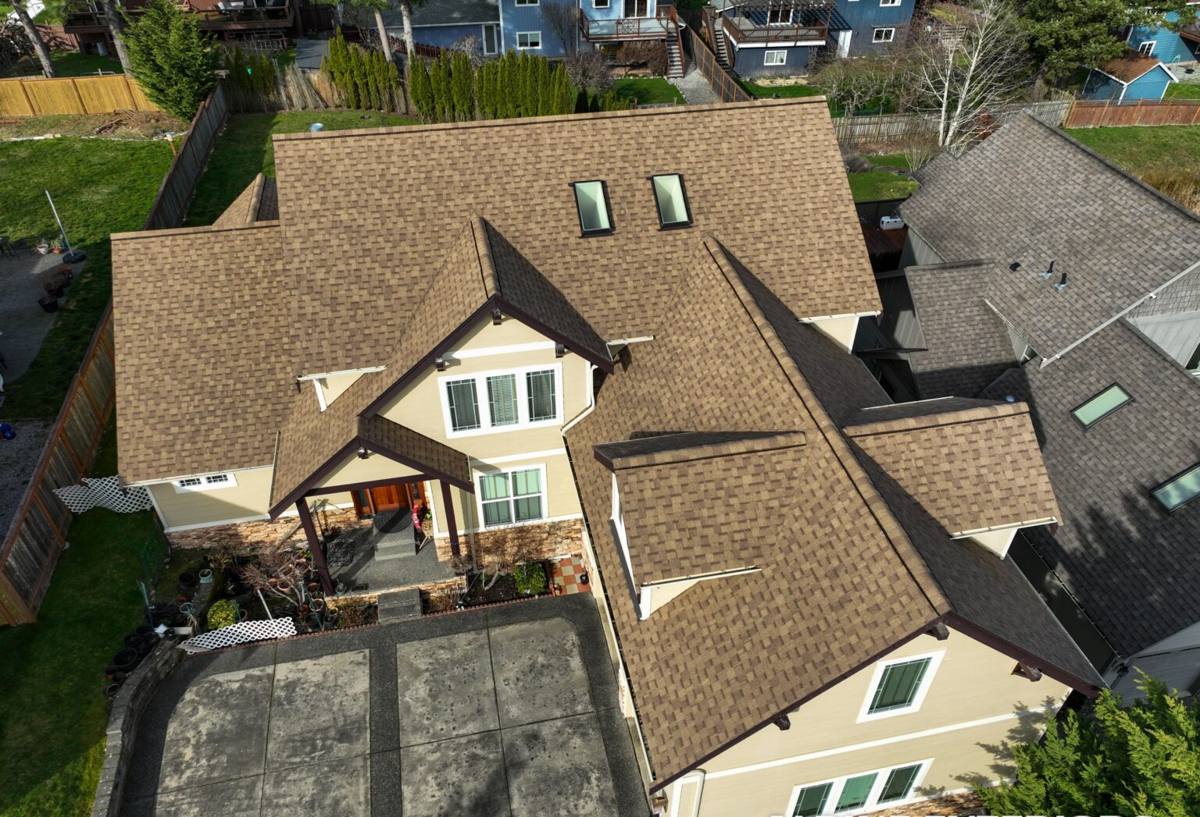
Common Repair Issues We See on Blaine Roofs
- Flashing that has corroded or pulled loose around chimneys, skylights, and roof-wall intersections
- Shingles lifted or torn along edges and ridges from wind exposure
- Moss growth that has caused granule loss and soft spots on shaded slopes
- Nail pops and fastener corrosion allowing water to track underneath shingles
- Gutter and eave-edge rot from water that's been pushed under the roof edge instead of running off it
- Isolated leaks around vent boots and pipe penetrations where rubber seals have hardened and cracked
Most of these show up as a small stain on a ceiling or a damp spot in an attic long before there's an obvious problem on the roof itself. That gap between when water starts getting in and when it becomes visible inside the house is exactly why repair timing matters.
What a Correct Repair Actually Involves
A roof repair that's done right isn't just sealing over the spot where water is showing up inside. It starts with figuring out where the water is actually entering, which is often several feet away from where the stain appears, since water tends to travel along the underlayment or framing before it drips down.
Finding the Real Leak Path
This means checking flashing details, valleys, penetrations, and the surrounding shingle field — not just the section directly above the damage. Skipping this step is the most common reason a "fixed" leak comes back a few storms later.
Matching Materials the Right Way
When we replace shingles, we look for a reasonably close match in style and color so the repair doesn't stand out more than it has to, and we tie new material into the existing roofing system correctly at seams and overlaps rather than just layering patches on top.
Getting the Flashing Detail Right
Given the salt air and wind-driven rain this area deals with, flashing work gets extra attention. Loose or undersized flashing is one of the most common causes of repeat leaks, and it's often the difference between a repair that lasts and one that doesn't.
Repair or Replace? How We Help You Decide
Not every roof problem in Blaine calls for a full replacement, and not every leak is a simple patch. The right call depends on the roof's age, how widespread the damage is, and what condition the underlying materials are in once we actually get eyes on them.
| Factor | Usually Points to Repair | Usually Points to Replacement |
|---|---|---|
| Roof age | Under roughly two-thirds of expected lifespan | Near or past expected lifespan for the material |
| Extent of damage | Isolated to one area or feature (flashing, one slope, one penetration) | Spread across multiple slopes or recurring in different spots |
| Moss/algae condition | Surface growth, no soft decking found | Soft or spongy decking discovered under moss-heavy areas |
| Underlayment condition | Still intact where inspected | Degraded, brittle, or missing in multiple areas |
| History of leaks | First occurrence or new damage from a specific event | Repeat leaks in different locations over recent years |
We'll walk you through which column your roof falls into and why, rather than defaulting to the more expensive answer. Plenty of Blaine roofs genuinely just need a targeted repair.
Our Process for a Blaine Roof Repair Call
- Inspection. We get on the roof (or use a safe vantage point where access is limited) and check the suspect area plus the flashing, valleys, and penetrations nearby, since the leak source is often not where the damage shows up inside.
- Diagnosis and explanation. We tell you what we found, what's causing it, and why — in plain terms, not just "you need a new roof."
- Written estimate. You get a clear scope of work and price before anything happens, including whether we recommend repair or think replacement makes more sense.
- The repair itself. We remove and replace only what's actually compromised, tie new flashing and shingles into the existing system properly, and reseal penetrations with materials suited to sustained moisture and salt-air exposure.
- Cleanup and a straight assessment. We clear debris, and if we noticed moss buildup or other conditions worth watching, we'll tell you — even if it's not something that needs work today.
Materials We Use and Why
For repair work in this environment, we lean toward corrosion-resistant fasteners and flashing rather than the cheapest available option, since standard-grade metal simply doesn't hold up as long this close to the water. We also pay attention to underlayment at eaves and valleys — the areas most exposed to wind-driven rain — using self-adhering membrane in those spots rather than felt alone, because it seals around fastener penetrations instead of just shedding water.
We don't push moss-preventive products or treatments as a substitute for addressing an actual repair issue. Moss control has its place as ongoing maintenance, but it's not a fix for damaged flashing or compromised decking, and we'll always tell you which one you actually need.
Maintenance That Extends the Life of a Repair
A good repair lasts longer when it's not fighting years of neglected moss and debris buildup. Between service calls, a few habits go a long way in this climate:
- Keep gutters and downspouts clear so wind-driven rain has somewhere to go instead of backing up under the roof edge
- Have moss physically removed rather than just treated, especially on north-facing and shaded slopes
- Trim back overhanging branches that keep sections of roof damp and shaded longer than the rest
- Do a visual check from the ground after major windstorms for lifted or missing shingles
- Address small leaks early — a stain the size of a coin now is a much smaller repair than the same leak six months later
Why It Matters to Hire a Crew That Already Works Blaine
Roof repair isn't a one-size-fits-all trade. A crew that mostly works drier, inland climates isn't necessarily thinking about salt-air corrosion on flashing or how far wind-driven rain can travel under a shingle edge, because those aren't the problems they see every day. Working Whatcom County roofs regularly — including the coastal conditions Blaine deals with — means we're already factoring in the moss season, the salt exposure, and the storm patterns off the water when we diagnose a problem, instead of treating every repair like it's happening somewhere drier and calmer.
It also means a faster, more accurate assessment. We're not guessing at how this area's climate affects a roof — we're accounting for it from the first inspection.
If you've got a leak, a damp ceiling stain, or a roof you just want checked before the next round of storms, we're glad to take a look. Estimates are free and there's no pressure to move forward — use the form below to get started.