 Lynden Siding
 Composite Decking for Aldergrove-Area Homes
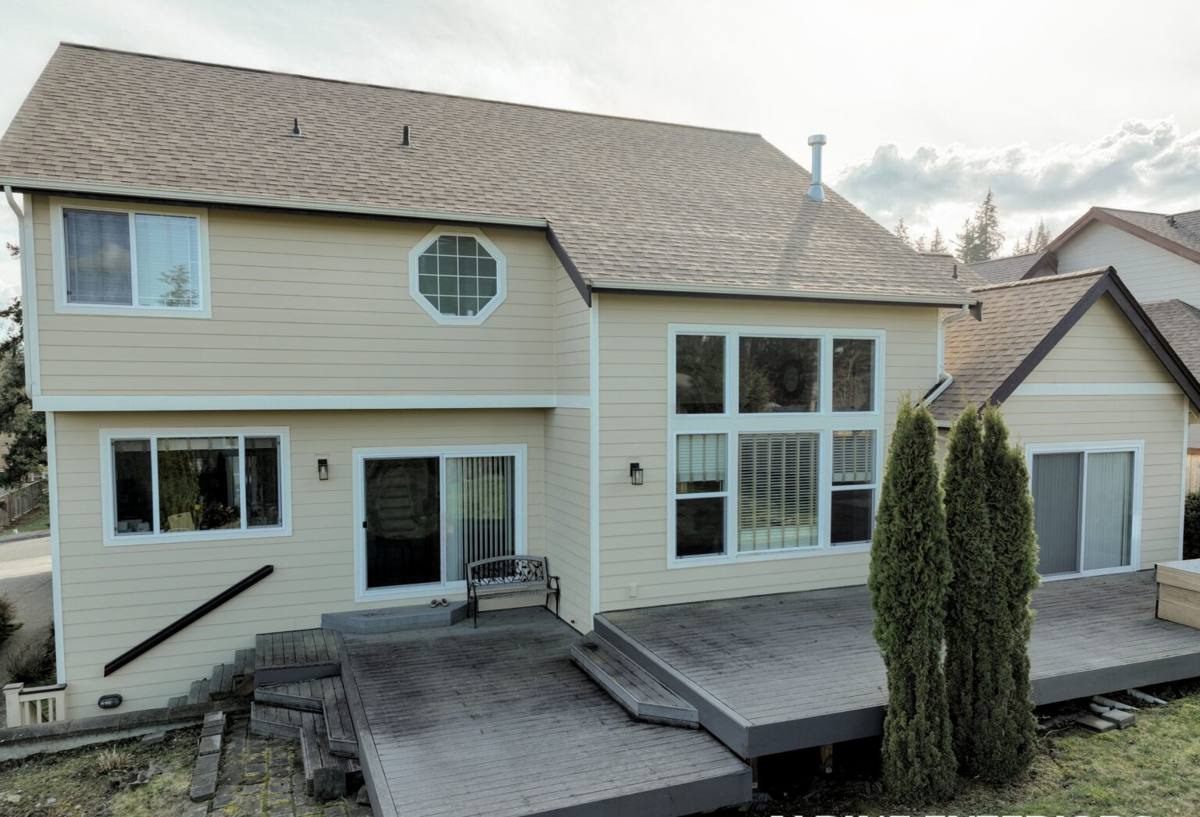
Aldergrove sits close enough to Lynden that a lot of homeowners here call a Lynden crew for exterior work rather than driving into the Fraser Valley for a contractor. That's fine by us — we already spend most of our week on job sites within a few minutes of the border, and the building conditions on both sides of it are nearly identical. Composite decking is one of the projects where that local familiarity actually changes the outcome, not just the sales pitch. A deck built for a dry climate doesn't hold up here. One built with our conditions in mind will still look and perform the way it's supposed to a decade from now.
This page covers composite decking specifically — what it needs to do in this climate, how a correct installation differs from a rushed one, and what our process looks like from first call to final walkthrough.
Why the Local Climate Changes the Decking Conversation
Whatcom County and the adjacent Fraser Valley share the same weather pattern: long wet seasons, low winter sun that leaves shaded areas damp for days at a time, and enough salt air moving in off the Strait of Georgia and Puget Sound to matter for exposed fasteners and metal components. None of that is exotic — it's just persistent. A deck out here isn't dealing with one bad storm; it's dealing with months of low-grade moisture exposure every year, followed by a moss season that starts earlier and lasts longer than most homeowners expect.
What that means for decking specifically
- Moss and algae growth on any board surface that stays shaded and damp, especially the north and east sides of a house
- Slow-drying substructure if joists and framing aren't given real airflow underneath the deck
- Fastener corrosion on cheaper hardware exposed to salt-tinged rain over years, not weeks
- Board-end moisture wicking where cut ends aren't capped or sealed properly
- Slippery walking surfaces when a board's surface texture wasn't chosen with our rain pattern in mind
Composite decking exists partly to solve the rot and splintering problems that come with wood in this climate, but composite isn't maintenance-free just because it's marketed that way. It still needs to be installed with drainage, ventilation, and hardware choices that respect what this region does to exterior materials year-round.
What a Correctly Built Composite Deck Involves
Substructure first
The framing underneath a composite deck matters more here than in a dry climate, because that framing stays damp longer. We use pressure-treated or naturally resistant framing lumber, joist tape or flashing on top of the joists to keep water from sitting in the wood, and enough gap between the ground and the deck to let air actually move through. Skipping joist protection is one of the most common shortcuts we see on decks that were built cheap — the boards on top look fine for years while the frame underneath is quietly failing.
Board spacing and drainage
Composite boards need consistent gapping, both between boards and at the perimeter, so water has somewhere to go instead of pooling. Too tight, and you get standing water and algae streaks. Too loose, and the deck looks unfinished and small debris collects in the gaps. We set spacing based on the specific board profile and the manufacturer's span tables, not a rule of thumb applied to every job the same way.
Fasteners and hardware
This is where salt air actually shows up as a real cost. We use hidden fastening systems and hardware rated for coastal or high-moisture exposure, not the cheapest stainless option available. Corroding screws or clips are one of the most common reasons a composite deck starts to look tired within a few years even though the boards themselves are holding up fine.
Edge and stair detailing
Fascia boards, stair stringers, and post wraps all need the same moisture logic as the field of the deck. A deck that looks finished from the top but has exposed, uncapped cuts at the edges is a deck that will show moisture staining and mildew at those exact points first.
Choosing the Right Composite Product
Composite decking isn't one product — it's a category with real differences in how boards are made, capped, and warrantied. We walk homeowners through the trade-offs honestly instead of pushing whatever has the best margin.
| Factor | What to Know |
|---|---|
| Full cap vs. partial cap | Full-cap boards protect all four sides from moisture intrusion, which matters more in a wet climate like ours; partial-cap boards cost less but expose the core on cut ends unless those ends are properly finished |
| Surface texture | Textured or grooved surfaces resist algae buildup and stay less slick underfoot during our wet months compared to smooth, low-texture boards |
| Color | Darker boards run hotter in summer sun but tend to show less staining from organic debris and moss residue over time than very light colors |
| Warranty structure | Look closely at what's covered — fading, staining, and structural integrity are often warrantied separately, and installation errors can void coverage regardless of the product |
| Board profile | Grooved-edge boards pair with hidden fastener systems for a clean look; face-screwed boards are more forgiving to install but show fastener heads |
We don't install every product on the market. When we steer a homeowner away from a particular option, it's because we've seen how it performs under our specific rain and moss conditions over multiple seasons — not because of anything wrong with the brand in general. Our standard is what holds up here, not what performs fine in a drier region.
Our Process for an Aldergrove-Area Composite Deck
- On-site assessment: We look at drainage direction, sun/shade exposure, existing structure condition if it's a rebuild, and how the deck ties into the house's siding and flashing.
- Product selection: Based on the site conditions and the homeowner's budget, we narrow down board options and walk through the real trade-offs — not just color and price.
- Substructure work: Framing, joist protection, and ledger flashing get addressed before a single composite board goes down. This is the step that determines how the deck ages, and it's the step that's easiest to shortcut invisibly.
- Installation: Boards are laid with manufacturer-spec spacing, hidden or corrosion-resistant fasteners, and proper end treatment on every cut.
- Finish detailing: Fascia, stairs, post wraps, and any lighting or railing integration get finished to match the field decking.
- Walkthrough: We go over basic seasonal maintenance — mainly keeping drainage paths and shaded areas clear of debris — so the deck starts its life set up to shed moisture the way it's supposed to.
Timeline factors
Most composite deck installs in this size range take anywhere from a few days to about two weeks depending on scope, whether it's new construction or a tear-out and rebuild, and how much structural or drainage work the substructure needs. Weather windows during our wet season can add scheduling flexibility to the plan — we build that into the timeline up front rather than treating rain delays as a surprise.
Maintenance Reality: What Composite Still Needs
Composite decking is lower-maintenance than wood, not maintenance-free. In this climate, the realistic upkeep looks like:
- Periodic sweeping and rinsing to keep organic debris from feeding moss and algae growth, especially in shaded corners
- An occasional soft-wash cleaning in early spring, before moss season really sets in, using a cleaner rated for composite surfaces
- Checking that gaps between boards and at the perimeter stay clear so water keeps draining as designed
- Inspecting fastener points and hardware periodically, particularly on decks closer to open exposure where salt-tinged rain is more direct
- Trimming back vegetation that shades the deck surface and slows drying after rain
None of this is heavy work, but skipping it entirely is how a well-installed composite deck ends up looking neglected years before it should.
Why a Crew That Already Works Aldergrove Matters
Composite decking done wrong doesn't usually fail in an obvious way — it fails slowly, through moss buildup in gaps that were spaced wrong, staining around cut ends that weren't capped, or hardware that starts rusting through in a spot with more salt exposure than the installer accounted for. A crew that only occasionally works this specific corner of Whatcom County and the border area doesn't build the pattern recognition for those failure points the way a crew that's out here constantly does.
Because Aldergrove is close to our regular Lynden service area, we're not treating it as a special trip or padding the estimate for distance. It's part of the same territory we already know — the same rain patterns, the same moss timing, the same general housing stock and site conditions we see on Lynden decks every season.
What to Expect From an Estimate
A useful composite decking estimate covers more than square footage and a board color. Before we give a number, we look at the existing structure (if there is one), site drainage, sun exposure, stair and railing needs, and any tie-ins to the house itself. Vague estimates that skip those details tend to turn into change orders once work starts — we'd rather get it right up front.
If you're planning a new composite deck or replacing an aging wood or composite deck in the Aldergrove area, we're happy to come take a look and put together a straightforward, no-pressure estimate based on what your specific site actually needs — not a generic per-square-foot number. Reach out through the form below to get started.