 Lynden Siding
 Siding Replacement for Acme Homes: Why Location Matters
Acme sits in a part of Whatcom County where the weather doesn't do anything by half measures. Homes here spend most of the year under some combination of driving rain, heavy tree cover, and damp air that never fully dries out between storms. That combination is hard on every exterior building material, but it's especially hard on siding that wasn't built or installed with this climate in mind. When we replace siding on an Acme home, we're not just swapping old material for new — we're correcting for years of moisture exposure and setting the house up to handle the next twenty or thirty years of the same conditions.
This page focuses on one job, done right, in one area: full siding replacement for homes in and around Acme. If you're trying to figure out whether your siding is actually due for replacement, what a correct job looks like, and why the crew you hire matters as much as the material they install, this is written for you.
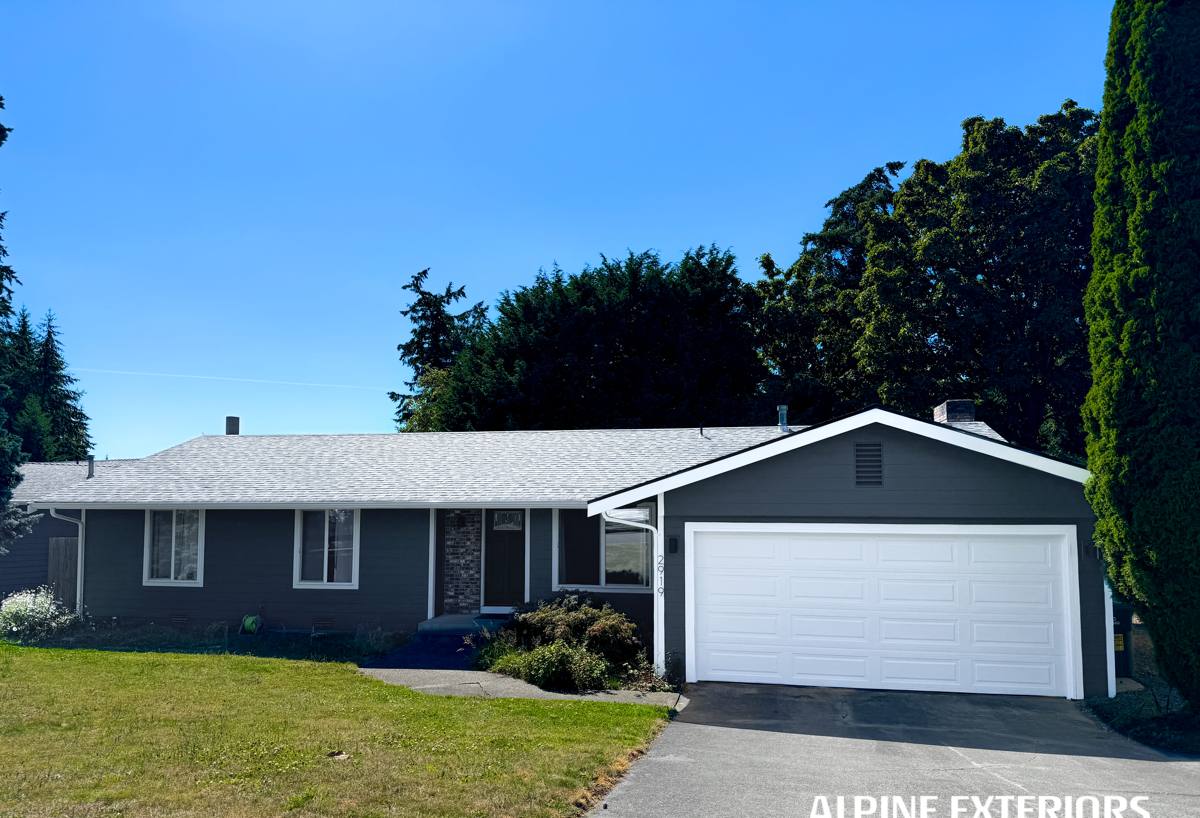
What Whatcom County's Climate Does to Siding Over Time
Driving Rain and Wind-Driven Moisture
Rain in this part of Washington rarely falls straight down. Wind pushes it sideways into wall assemblies, working into seams, laps, and fastener penetrations that would stay dry in a calmer climate. Over years, that wind-driven moisture finds every weak point in a siding system — a poorly lapped joint, a gap where trim meets siding, a nail that wasn't set right. Once moisture gets behind the siding, the problem stops being cosmetic and starts being structural.
Moss, Algae, and Long Shade Seasons
Acme's tree cover and the region's mild, wet climate add up to a long moss and algae season — longer than most homeowners realize until they're scrubbing green growth off their siding for the third year in a row. Moss holds moisture against the surface of the siding far longer than open air would, which accelerates rot in wood-based products and breaks down coatings on lower-grade materials faster than the manufacturer's warranty assumes.
Salt Air and Marine-Influenced Weather
Whatcom County's proximity to Puget Sound means much of the regional weather — including what reaches inland communities like Acme — carries some marine influence: salt-tinged moisture in storm systems, humidity that lingers, and temperature swings between damp mornings and drier afternoons. That cycling of wet and dry, expansion and contraction, is part of what wears down caulking, fastener heads, and factory finishes over time.
Temperature Swings and Moisture Cycling
Even without extreme heat or cold, the day-to-day swing between damp and dry stresses siding materials. Wood-based products swell and shrink with each cycle, which is exactly the mechanism that causes paint to crack, seams to open, and edges to fray on products not engineered for consistent moisture exposure.
Signs Your Acme Home May Need Siding Replacement
Not every siding problem calls for full replacement — but several signs mean patching or repainting is just delaying the inevitable. If you're seeing more than one or two of these, it's worth having a full inspection rather than a spot repair:
- Soft or spongy spots when you press on the siding, especially near the bottom courses
- Paint that's peeling, bubbling, or won't hold a fresh coat for more than a couple of years
- Visible warping, buckling, or gaps opening up at seams and corners
- Persistent moss or algae staining that returns within months of cleaning
- Rising energy bills that suggest the wall assembly is no longer sealing properly
- Visible rot, delamination, or crumbling at panel edges or butt joints
- Interior signs — musty smells, discoloration on interior walls near exterior corners
What a Correct Siding Replacement Job Involves
Tear-Off and What's Underneath
Replacing siding correctly starts with what you can't see from the curb. Once the old siding comes off, we inspect the sheathing underneath for rot, soft spots, or prior water damage — problems that are common on older Whatcom County homes where moisture has been working its way in for years. Any compromised sheathing gets replaced before a single new panel goes up. Skipping this step is one of the most common ways a siding job fails early, regardless of what material goes on top.
Weather-Resistive Barrier and Flashing
A correct installation includes a properly lapped weather-resistive barrier and flashing detailed around every window, door, and penetration — the parts of the house most exposed to wind-driven rain. This is where a lot of lower-cost siding jobs cut corners, because it's invisible once the siding goes up but it's the single biggest factor in whether the wall assembly stays dry for the next few decades.
The Siding Installation Itself
Once the barrier and flashing are right, installation comes down to correct fastening, proper clearances at grade and around trim, and consistent lap and joint placement per the manufacturer's specifications. James Hardie siding, in particular, has specific nailing patterns, gap requirements, and clearance rules that directly affect both its performance and its warranty coverage — details we follow to spec on every job, not just when it's convenient.
Why We Install Only James Hardie Fiber Cement
We don't install vinyl, LP SmartSide, primed wood, cedar, or off-brand fiber cement — not because those products have no legitimate use, but because we've made a professional decision about what holds up best in this specific climate over the long run. James Hardie fiber cement is non-combustible, doesn't swell or rot the way wood-based products can when moisture gets past the surface, and comes factory-finished with ColorPlus technology, which resists the fading and peeling that repeated wet-dry cycling causes on field-painted materials. Hardie also engineers specific product lines (HZ5, for example) for regions with real moisture exposure, which matches what Whatcom County homes actually deal with. Standardizing on one product line lets us install it correctly every time, rather than juggling installation specs across half a dozen different systems.
Our Siding Replacement Process for Acme Homeowners
1. On-Site Assessment
We walk the exterior with you, check for soft spots and moisture damage, and look at how the current siding has held up against sun, shade, and wind exposure specific to your lot.
2. Written Proposal
You get a clear scope of work — what's being torn off, what sheathing repair (if any) is anticipated, which Hardie product and color you're getting, and a firm price, not a rough guess that grows once the walls are open.
3. Tear-Off and Sheathing Repair
Old siding comes off, sheathing gets inspected and repaired as needed, and we document anything unexpected we find before closing it back up.
4. Weather Barrier, Flashing, and Installation
House wrap, flashing, and Hardie siding go on to manufacturer spec, with attention to the same wind-driven rain and moisture-cycling issues that caused the original failure.
5. Final Walkthrough
We walk the finished job with you, cover care and maintenance basics, and make sure everything matches what was promised in the proposal.
Cost Factors in an Acme Siding Replacement Project
Every home is different, but the same handful of factors drive most of the cost variation we see on siding replacement projects in this area:
| Factor | Why It Affects Cost |
|---|---|
| Sheathing condition | Rot or water damage found during tear-off adds repair scope before new siding can go on |
| Home size and wall complexity | More corners, dormers, and trim details mean more labor and material cuts |
| Siding profile and accessories | Lap width, trim style, and accent details (like board and batten sections) affect material and labor |
| Access and site conditions | Tree cover, slopes, and tight lot lines common in Acme can affect staging and scaffolding needs |
| Existing moisture barrier condition | A failed or missing weather-resistive barrier adds scope beyond the visible siding |
Why a Crew That Already Works in Acme Matters
Siding installation isn't one-size-fits-all across Washington. A crew that primarily works drier, less wind-exposed parts of the state may not build in the same margins for wind-driven rain, moss growth, and moisture cycling that a home in Acme actually needs. A crew that regularly works Whatcom County has already seen how local conditions expose the weak points in a siding job — which flashing details matter most, which exposures need extra attention, and which shortcuts simply don't hold up here. That local pattern recognition shows up in the details: tighter flashing work, more conservative clearances, and a lower callback rate for moisture issues down the road.
Caring for Your Siding After Replacement
Hardie fiber cement is low-maintenance compared to wood-based alternatives, but "low-maintenance" doesn't mean "no maintenance," especially in a climate that supports moss and algae growth most of the year. A yearly rinse-down, keeping gutters clear so water isn't sheeting down the wall, and trimming back vegetation that keeps siding in constant shade will extend the life of the installation and keep it looking like it did the day it went up.
If your Acme home's siding is showing its age, or you just want an honest read on whether repair or full replacement makes sense, we're happy to take a look. Fill out the form below for a free, no-pressure estimate.