 Lynden Siding
 Roof Repair in Acme: Built for Whatcom County Weather
Acme sits in the wooded river valleys and foothill terrain east of Lynden, where tall trees, shaded rooflines, and near-constant winter rain create roofing problems that don't show up the same way on a more open, sun-exposed lot closer to town. Add in the marine-influenced air that moves through Whatcom County off the Sound, and you get a climate that's tough on roofs from three directions at once: standing moisture, driving rain that finds every weak seam, and a moss season that can run most of the year in shaded spots. A roof repair here has to account for all three, not just patch the spot that's leaking today.
We work on homes throughout the Acme area regularly, which means we're not guessing at how a roof behaves under heavy tree cover or figuring out moss patterns for the first time. That local pattern recognition is a big part of what separates a repair that lasts from one that fails again in a year or two.
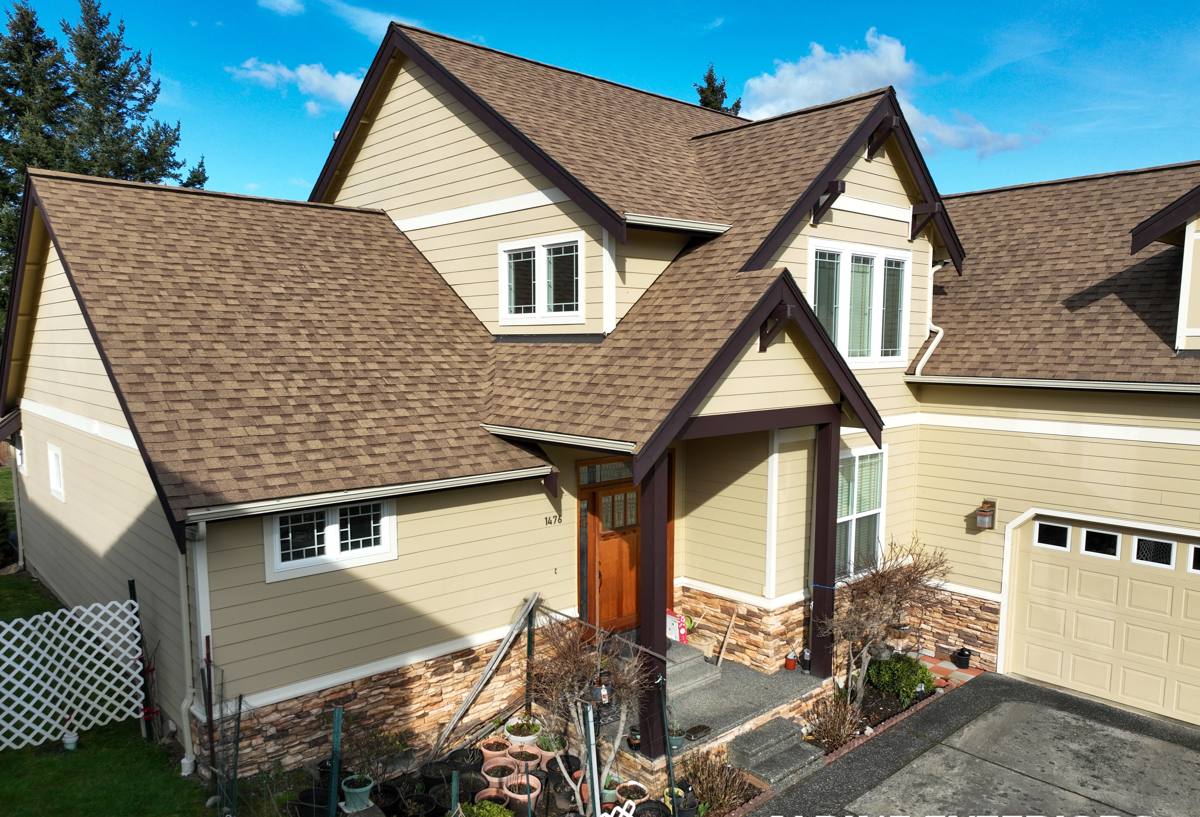
Common Roof Problems We See in the Acme Area
Moss and Trapped Moisture
Shaded, north-facing roof slopes near tree lines stay damp far longer than open roofs after a storm passes. That extended dampness is exactly what moss needs to take hold. Once moss establishes on shingles or shakes, it lifts the material at the edges, holds water against the roof deck, and works its way into fasteners and flashing over time. By the time moss is visible from the ground, it's often already done some damage underneath.
Wind-Driven Rain and Flashing Failures
Rain that falls straight down is one thing; rain that's being pushed sideways by wind off the valley is another. Driving rain finds any gap in flashing around chimneys, skylights, dormers, and roof-to-wall transitions, and it doesn't need much of an opening to get in. Flashing failure is one of the most common causes of interior leaks we're called out for, and it's frequently mistaken for a shingle problem when the shingles themselves are fine.
Wear From Tree Cover and Shade
Beyond moss, heavy tree cover means more debris accumulation in valleys and around penetrations, more organic buildup that holds moisture against the roofing material, and less direct sun to dry things out between rain events. Roofs in these conditions age differently than roofs on open lots even when the shingle or material is identical.
What a Correct Roof Repair Actually Involves
Diagnosis Before Patching
The most common mistake in roof repair isn't bad workmanship — it's fixing the visible symptom instead of the actual source. A stain on a ceiling doesn't always mean the leak is directly above it; water can travel along rafters or sheathing before it shows up inside. A correct repair starts with tracing the water back to where it's actually entering, checking flashing, underlayment, and deck condition around that point, not just laying a patch over the spot that looks wet.
Matching Materials and Technique
Repairs also need to match the existing roof correctly — same or compatible shingle profile and exposure, correct flashing metal and technique for the specific transition being repaired, and fasteners placed to manufacturer spec rather than just "enough to hold it down." A repair that doesn't integrate properly with the surrounding roofing often creates a new leak path even if it stops the original one.
Signs Your Acme Roof Needs Repair Now
- Dark streaking or green/black moss growth on shaded slopes or along roof edges
- Granules collecting in gutters or downspouts, a sign shingles are wearing thin
- Curling, cracked, or missing shingles, especially after a windstorm
- Rust staining or visible gaps around chimney, skylight, or vent flashing
- Water stains on interior ceilings or walls, particularly near roof penetrations
- Sagging areas on the roof plane, which can indicate deck moisture damage
- Daylight visible through the roof deck from inside an unfinished attic
- Debris or standing organic buildup in valleys that never fully dries out
Our Roof Repair Process
- On-site inspection. We walk the roof (weather permitting) and check the attic from inside where accessible, looking at decking, insulation, and any staining that points to where water is actually moving.
- Honest diagnosis. We explain what we found in plain terms — what's causing the problem, what it will take to fix it correctly, and whether a repair is the right call versus a larger scope of work.
- Written estimate. You get a clear scope and price before anything is scheduled, no surprises added once the crew is on the roof.
- Repair work. We remove and replace damaged material, correct flashing and underlayment as needed, and re-secure everything to hold up under wind-driven rain, not just stop a leak in dry conditions.
- Cleanup and check. Debris and old material are cleared from the site and gutters, and we do a final check of the repaired area before we call it done.
Repair or Replace? How We Help You Decide
Not every roof problem in Acme needs a full replacement, and not every leak can be permanently solved with a patch. We look at the roof's overall age and condition, not just the immediate symptom, before recommending either path.
| Factor | Points Toward Repair | Points Toward Replacement |
|---|---|---|
| Roof age | Under 15–20 years, materials still structurally sound | Near or past expected material lifespan |
| Extent of damage | Isolated to one section, flashing point, or leak | Widespread across multiple slopes or layers |
| Deck condition | Solid, dry sheathing under the damaged area | Soft, rotted, or repeatedly wet decking |
| Moss/moisture history | First occurrence, addressed early | Chronic moss return despite prior treatment |
| Repair history | Few or no prior repairs | Multiple past repairs in different spots |
When a roof lands in the middle of that table, we'll walk you through the trade-offs directly rather than pushing toward the more expensive option by default.
Roofing Materials We Work On
Asphalt Composition Shingle
The most common roofing material on homes in and around Acme, and generally the most straightforward to repair section by section since matching shingles is usually available and the repair blends in cleanly.
Metal Roofing
Metal handles driving rain and heavy moss growth better than most materials, but repairs require matching panel profile and paying close attention to fastener seals and seam flashing, since a poorly matched repair is more visible on metal than on shingle.
Cedar Shake
Cedar shake can look great and holds up well when properly maintained, but in a shaded, damp climate like Acme's it demands more regular upkeep to manage moss and moisture retention than composition shingle or metal. As a matter of professional standard, we're upfront with homeowners about that maintenance load before recommending shake repairs versus a longer-term material switch, so the decision is based on what the roof will actually need going forward, not just how the repair looks the day we finish.
What Roof Repair Typically Costs in Acme
Costs vary based on what's actually wrong, but as a general guide: small, isolated repairs — a section of flashing, a handful of damaged shingles, a single leak point — typically run from a few hundred dollars up to around a thousand. Larger repairs involving multiple areas, moss remediation across a full slope, or deck repair under damaged shingles run higher, into the low thousands. Access difficulty (steep pitch, tree cover requiring extra care) and the amount of underlying deck damage found once we open up the area are the two biggest factors that move a job from the low end to the high end of that range. We give you a firm number before work starts, not a moving target.
Why Hire a Crew That Already Works in Acme
A roofer who mostly works flatter, open-lot roofs closer to Lynden isn't automatically prepared for the shaded, tree-heavy conditions common around Acme. Knowing which slopes hold moss longest, how driving rain behaves against a valley-facing roof, and how to work safely and efficiently around dense tree cover comes from doing it repeatedly in this specific setting, not from general roofing experience alone. That local familiarity shows up in faster, more accurate diagnosis and repairs that hold up through the next wet season instead of needing a second visit.
If you're dealing with a leak, visible moss, or damage from a recent storm, we're happy to take a look and give you a straight answer about what it needs. Reach out for a free, no-pressure estimate using the form below.