 Lynden Siding
 Custom Windows Built for Acme-Area Homes
Homes in and around Acme sit in a part of Whatcom County that takes real weather seriously. Between salt-laden air moving in off the water, long stretches of driving rain, and a moss season that seems to start earlier every year, window systems here work harder than they do almost anywhere else in the state. A window that's fine in a drier inland climate can start failing in five or six years out here if it wasn't built, sealed, and installed with this specific environment in mind.
We install custom windows for homes throughout the Lynden area, including Acme, and we size, spec, and flash every job around what actually happens to a window on this side of Whatcom County over a full year of weather — not around a national average.
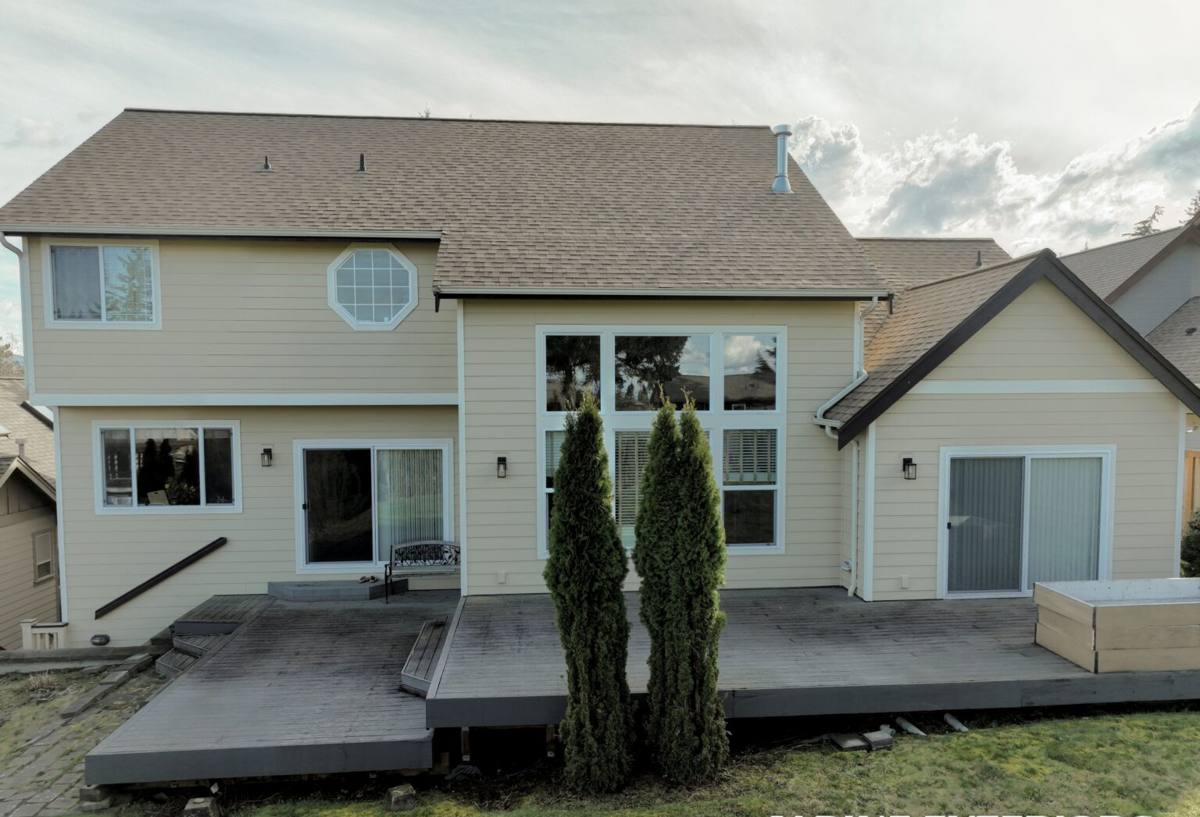
How Local Weather Wears Down Windows
It's worth understanding what's actually attacking your windows, because it shapes almost every decision in a good installation.
Moisture Is the Main Enemy
Driving rain doesn't just hit a window — with enough wind behind it, it gets pushed sideways and upward into gaps that would never see water in a calmer climate. Over time, that moisture finds its way behind trim, into sill framing, and around poorly sealed corners. Once water gets behind a window unit, rot and mold follow, often invisibly, for years before anyone notices a soft spot in the wall.
Salt Air Accelerates Corrosion
Salt in the air speeds up corrosion on hardware, fasteners, and metal window components. Cheap or mismatched hardware can start pitting and sticking well before the glass or frame shows any wear, which is why hardware choice matters as much as the frame material itself.
Moss and Organic Growth
A long, damp moss season means organic growth doesn't stay confined to your roof. It creeps onto north-facing sills, into corner joints, and along any horizontal surface that stays shaded and wet. Left alone, it holds moisture against the frame and finish, which shortens the life of both.
What "Custom" Actually Means for Your Home
Custom windows aren't just about picking a style off a brochure. For an Acme-area home, custom means:
- Sizing windows to your actual rough openings rather than forcing a stock size and patching the gap
- Matching frame material and finish to your home's exposure — a wall that takes the brunt of the weather needs different specs than a sheltered side
- Choosing glass packages (double or triple pane, low-E coatings, gas fill) suited to both energy performance and condensation resistance in a wet, cool climate
- Selecting hardware rated for coastal or near-coastal corrosion exposure
- Coordinating window flashing details with your existing siding and weather barrier so water has a planned path out, not just a hope that it won't get in
Skipping any one of these usually shows up later as a leak, a fogged pane, or hardware that won't operate smoothly.
Signs It's Time to Replace Your Windows
Not every window problem means a full replacement, but in this climate, certain signs are worth taking seriously rather than patching over.
- Fogging or moisture between panes — the seal has failed and the insulating gas is gone
- Soft or discolored trim and sill wood around the window
- Drafts you can feel even with the window fully latched
- Windows that are hard to open, close, or lock — often a sign of frame swelling or warping from moisture
- Visible gaps between the window frame and siding
- Persistent black or green growth on sills that keeps coming back after cleaning
If you're seeing more than one of these on the same window, it's usually a sign the moisture has already gotten past the surface.
Choosing the Right Materials and Glass
There's no single "best" window material for every home — the right choice depends on exposure, budget, and how much upkeep you want to take on. Here's how the common options compare for a home dealing with the driving rain and salt air typical of this area.
| Material | Moisture Behavior | Maintenance | Typical Trade-Off |
|---|---|---|---|
| Vinyl | Won't rot; seams and welds are the main moisture concern | Low — no painting or sealing needed | Fewer color/finish options than wood or fiberglass |
| Fiberglass | Very stable in wet/dry cycling; resists warping | Low to moderate | Higher upfront cost than vinyl |
| Wood (clad exterior) | Interior wood needs protection from any moisture intrusion | Higher — exterior clad helps, but seals and joints need periodic checks | Best interior appearance, but least forgiving of installation mistakes in a wet climate |
| Aluminum | Prone to corrosion in salt air unless properly coated | Moderate | We generally steer clients away from bare aluminum frames this close to salt exposure |
We don't push one brand or material on every job. We'll walk you through what fits your home's exposure, your budget, and how much maintenance you actually want to do, and explain the honest trade-offs rather than just upselling the priciest option.
Our Installation Process
1. On-Site Assessment
We look at your existing windows, framing, and siding condition, and we pay particular attention to how each wall is exposed — which sides take the worst of the wind-driven rain, which stay shaded and damp longer, and where moss and growth have already taken hold.
2. Product Selection
Based on that assessment, we help you choose frame material, glass package, and hardware suited to each elevation of the house. Not every window on your home needs the same spec — a sheltered side and an exposed side can reasonably get different treatments.
3. Removal and Prep
Old windows come out carefully, and we inspect the rough opening and framing underneath for any hidden rot or moisture damage before anything new goes in. This step matters more here than in drier climates — installing a new window over damaged framing just hides the problem.
4. Flashing and Sealing
Proper flashing integration with your house wrap or weather barrier is where most window failures in this climate actually start. We install flashing in the correct shingle-lap order so water is directed out and down, never trapped behind the window.
5. Installation and Finish
Windows are set, shimmed, and secured to manufacturer spec, then sealed and trimmed. We check operation on every unit before we consider the job finished.
6. Walkthrough and Cleanup
We walk the finished work with you, answer questions about care and warranty, and clean up the site — no leftover debris or packaging left behind.
What Affects the Cost of a Window Project
Every home is different, but these are the main factors that move the price of a custom window project up or down.
| Factor | Why It Matters |
|---|---|
| Frame material | Vinyl is typically the most budget-friendly; wood-clad and premium fiberglass cost more |
| Glass package | Triple-pane and specialty low-E coatings add cost but improve comfort and condensation resistance |
| Number and size of openings | Larger or custom-shaped windows require more labor and often custom-order lead time |
| Condition of existing framing | Hidden rot or moisture damage found during removal adds repair work before new windows go in |
| Flashing and siding integration | Homes needing siding repair or re-flashing around openings take more time to do correctly |
| Exterior exposure | Walls facing prevailing wind and rain may warrant upgraded hardware or sealants |
We give straightforward, itemized estimates so you know what you're paying for and why — no vague lump-sum numbers.
A Homeowner's Prep Checklist
If you're getting ready for a window project, a little preparation on your end helps the job go smoothly.
- Clear furniture, blinds, and curtains from around each window being replaced
- Note any windows that have been especially drafty, hard to operate, or prone to condensation
- Point out any past leaks or water stains near windows, even if they seem resolved
- Decide which windows, if any, you want upgraded to different sizes or styles versus a like-for-like replacement
- Ask about warranty coverage on both the product and the installation labor
- Plan for pets and kids to be kept clear of the work area during removal and installation
Why Local Experience in Acme Matters
A window contractor who mostly works drier, inland regions can still install a technically correct window and have it fail here within a few years — not because the product was bad, but because the flashing details, sealant choices, and hardware weren't matched to what Whatcom County actually throws at a house. We work homes in this area regularly, so we're not guessing at how a north-facing sill will hold up to a wet winter, or which hardware will corrode fastest with salt air in the mix. That local pattern recognition is often the difference between a window that performs for decades and one that needs attention again in a handful of years.
If you're weighing whether it's time to replace windows on your Acme-area home, we're happy to take a look and give you a straightforward assessment. Reach out for a free, no-pressure estimate using the form below — we'll walk the exterior with you, point out what we see, and lay out your options honestly.