 Lynden Siding
 Why Decks Near Abbotsford Wear Out Faster Than the Brochures Say
Abbotsford sits in the Fraser Valley, close enough to the Strait of Georgia and Puget Sound that salt-laden air reaches decks even on properties that feel nowhere near open water. Combine that with driving rain off the coastal weather systems and a moss season that can run from October through April, and you have three separate forces working against a deck at once: corrosion, moisture intrusion, and organic growth that holds water against the wood long after a storm has passed.
Most decks in this region don't fail because the homeowner neglected them. They fail because they were built to a generic spec that assumes a drier climate — undersized flashing, standard fasteners instead of coated ones, decking laid tight with no drainage gap. None of that shows up as a problem for the first few years. By year eight or ten, it shows up everywhere at once.
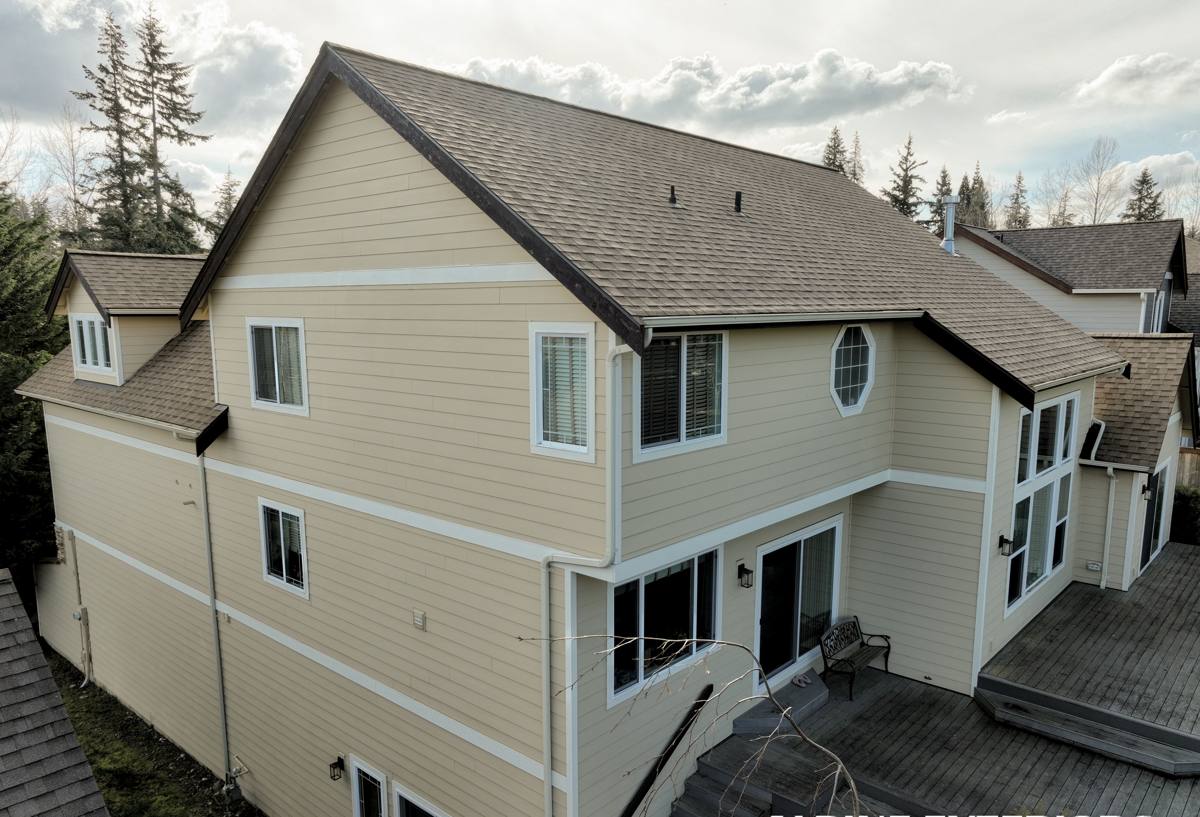
Signs a Deck Needs Replacement, Not Another Repair
A lot of decks get patched for years past the point where patching still makes sense. Here's how we tell the difference on a walkthrough:
- Soft or spongy spots in the decking boards, especially near the house or around post bases
- Ledger board separating slightly from the house rim joist, or staining below it
- Rust streaks running down from screws, joist hangers, or post brackets
- Persistent green or black film on boards that reappears within weeks of cleaning
- Railing posts that flex or wobble when pushed sideways
- Visible rot or crumbling wood when probed with a screwdriver at joists, beams, or posts
- A structure more than 15-20 years old that has never had the substructure inspected
If the problems are limited to a few boards and the frame underneath is sound, repair is the honest answer and that's what we'll recommend. Replacement makes sense once the framing, ledger connection, or footings are compromised — patching decking on top of a failing structure just hides the real problem for another season.
What a Proper Deck Replacement Actually Involves
A deck replacement is a structural project, not a cosmetic one, even when the goal is just to get new boards down. Doing it right in this climate means paying attention to what's invisible once the project is finished:
The Ledger Connection
This is the single most important point on the entire structure and the most common failure point we find. The ledger board bolts into the house rim joist, and if it isn't flashed correctly, water runs behind it and rots the house framing, not just the deck. We install proper flashing with a drip edge and use structural lag bolts or through-bolts rated for the load, not deck screws.
Framing and Joist Protection
Joists, beams, and posts get joist tape or a comparable moisture barrier on top before decking goes down, so standing water and debris don't sit directly against the wood fiber. All structural connectors are corrosion-resistant, sized to code, and fastened with matching hardware — mixing metals invites galvanic corrosion, which is a quiet but real problem in wet coastal climates.
Footings and Post Bases
Posts sit on bases that hold them above grade, never buried or sitting in standing water. Footings are sized and set to frost depth and load requirements, not just "deep enough to feel solid."
Drainage Under the Deck
Decking is spaced to shed water rather than trap it, and where grade allows, we look at whether water is draining away from the structure or pooling underneath it. A deck built on a low spot with poor drainage will outlast nothing, no matter what material sits on top.
Choosing Decking Material for This Climate
There's no single "best" decking material — there's a best material for a given budget, maintenance appetite, and exposure. Here's how the common options actually compare once you factor in what Abbotsford weather does to them over time:
| Material | Upfront Cost | Maintenance | Moisture/Moss Behavior | Realistic Lifespan |
|---|---|---|---|---|
| Pressure-treated wood | Lowest | Annual cleaning + re-staining/sealing | Absorbs moisture, prone to moss if not maintained | 10-15 years |
| Cedar | Moderate | Regular sealing to hold color and resist rot | Naturally rot-resistant but still needs upkeep here | 15-20 years |
| Capped composite | Higher | Occasional wash, no staining or sealing | Doesn't absorb water; surface can still host moss film if never cleaned | 25-30+ years |
| PVC decking | Highest | Occasional wash | Fully moisture-resistant, best moss resistance | 30+ years |
We install all of these and won't push you toward the highest-margin option. Wood costs less up front but demands ongoing attention that a lot of homeowners underestimate — in a climate with this much rain, skipping a season of sealing shows up fast. Composite and PVC cost more initially but remove the maintenance burden almost entirely, which is often the deciding factor for people who travel, rent the property, or simply don't want a yearly deck-sealing weekend.
Our Deck Replacement Process
- On-site assessment — we inspect the existing structure, ledger connection, footings, and drainage, and tell you honestly whether replacement or repair is the right call.
- Design and material selection — we walk through decking, railing, and fastener options based on your budget and how much maintenance you want to take on.
- Permitting — most deck replacements above a certain height or size require a permit; we handle the application and inspection scheduling.
- Demolition — full removal of old decking and framing, with a check of the house rim joist and ledger area for hidden water damage before anything new goes up.
- Framing rebuild — new ledger flashing, joists, beams, and footings built to current code, not just matched to what was there before.
- Decking and railing installation — boards and railing system installed per manufacturer spacing and fastening specs.
- Final walkthrough — we go over the finished deck with you, note any manufacturer-specific care instructions, and make sure everything meets inspection where required.
Fasteners, Hardware, and Railings for a Wet Climate
Hardware choice matters as much as the decking on top of it. In a region with this much rain and airborne salt, we use stainless steel or heavy hot-dip galvanized fasteners and connectors rather than standard coated screws, which can start rusting within a few years of exposure. Hidden fastener systems are worth considering on composite and PVC decking — they keep water from pooling in screw heads and give a cleaner surface that's easier to keep moss-free. For railings, aluminum and composite systems hold up better than untreated wood posts, which are usually the first part of a deck to show rot because they take the brunt of standing water at the base.
Permits and Local Considerations
Deck replacement rules vary by jurisdiction and by the height and footprint of the structure — a low deck close to grade is often treated differently than one attached at a second-story walkout. We check what applies before work starts rather than assuming, and we handle the paperwork so you're not the one tracking down inspection windows. If your property sits right on the border area between Whatcom County and the Abbotsford side, it's also worth confirming which jurisdiction's code actually governs your project before any framing decisions are locked in — we sort that out during the initial assessment rather than guessing.
Keeping a New Deck Looking Good Through Moss Season
Even the most moisture-resistant materials benefit from basic seasonal care in this climate. A simple maintenance routine goes a long way toward protecting the investment:
- Sweep debris off the deck regularly in fall — wet leaves sitting on boards is exactly what starts moss growth
- Rinse or lightly scrub composite and PVC surfaces once or twice a year to remove surface film before it takes hold
- Re-seal or re-stain wood decking on the schedule the product calls for, not just when it looks faded
- Check that gutters and downspouts near the deck are directing water away, not onto it
- Look under the deck once a year for standing water or blocked drainage paths
- Tighten or inspect railing posts annually — this is usually the first place looseness shows up
Why It Matters That We Already Work in Abbotsford
A crew that mainly builds decks in a dry inland climate and occasionally takes a job out this way will build to the spec they know, not the one this weather actually demands. Working regularly in and around Abbotsford and Lynden means we've already seen which ledger connections fail first, which fastener grades hold up, and which low spots under a deck never drain properly no matter what's built on top. That's the kind of thing you only learn by doing the work here repeatedly, not by reading a manufacturer's installation guide once.
If your deck is showing its age, or you just want an honest read on whether it needs replacing or can be repaired, we're happy to take a look. Reach out for a free, no-pressure estimate using the form below.