 Lynden Siding
 Nooksack sits low against the river and close enough to the Sound that the air carries salt on top of the near-constant Whatcom County damp. Homes here deal with a longer wet season than most of western Washington gets credit for, and decks take the brunt of it. A deck built here has to shed water fast, resist moss and algae growth for most of the year, and hold up under freeze-thaw cycles that show up more often than people expect this close to the water. Composite decking, installed correctly, handles all of that better than wood — but "installed correctly" is doing a lot of work in that sentence, and it's where most of the problems we get called out to fix actually start.
Why Composite Makes Sense for Nooksack Homes
Wood decking has a real appeal — it's familiar, it's cheaper up front, and a lot of homeowners like the look. But wood is porous, and porous material in a climate that stays wet from October through May is a maintenance job you sign up for every year: stripping, sealing, re-staining, and eventually replacing boards that have started to cup or rot from the underside where nobody looks. Composite decking doesn't absorb water the way wood does, so it doesn't swell, split, or feed the moss and algae that thrive in shaded, damp corners of a yard.
That matters more in Nooksack than in a lot of places. The combination of river-bottom humidity, tree cover, and salt-tinged air off the Strait means a deck surface here spends more days damp than dry for a good chunk of the year. Composite's closed-cell or capped construction sheds that moisture instead of soaking it in, which is the single biggest reason it holds its color and structure longer than untreated or even pressure-treated wood in this specific setting.
What "Correct" Actually Means Here
Composite boards themselves are only part of the equation. The framing underneath, the fasteners, the airflow beneath the deck, and the drainage path around the ledger board all determine whether a composite deck lasts twenty-plus years or starts showing problems in five. We've replaced composite decking that failed early — not because the boards were bad, but because the substructure trapped water against untreated joists, or the ledger flashing was never done right in the first place.
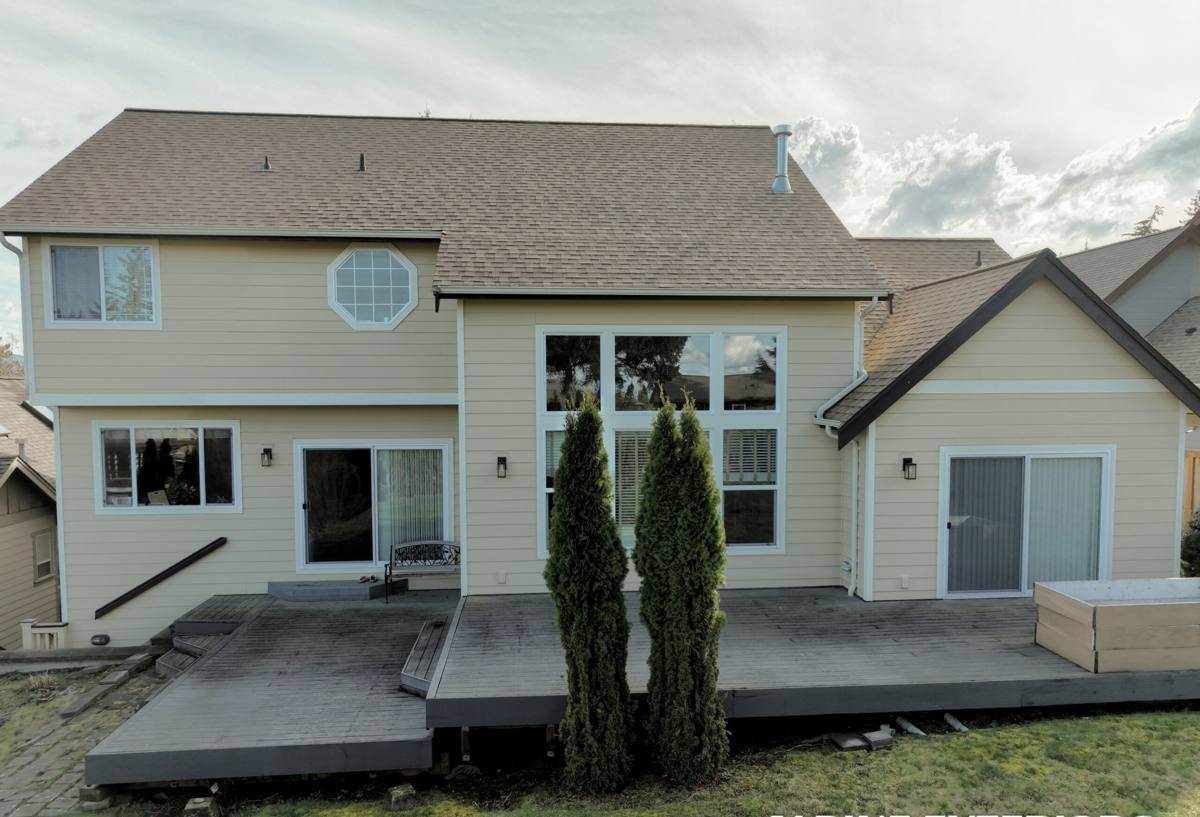
What Local Moisture Does to a Deck Over Time
Driving rain off the Sound doesn't just fall straight down — wind pushes it sideways into ledger boards, fascia, and the gap between a deck and the house. Over a few wet seasons, that sideways moisture finds any weak point in the flashing and works its way into the rim joist or the wall sheathing behind it. This is one of the most common sources of hidden rot we find on older decks in this area, composite or wood, because the surface board was never the problem — the water got in behind it.
Moss is the other constant. Anywhere a deck sits under tree cover or on the shaded north side of a house, moss and algae will colonize any surface that stays damp longer than it should. On wood, that moss holds moisture against the grain and accelerates rot. On composite, moss mostly sits on the surface and can be power-washed off, but it will still take hold faster on a deck with poor drainage or airflow underneath. The fix isn't a different material coating — it's designing the deck so water actually leaves instead of pooling.
Freeze-Thaw Near the River
Nooksack doesn't get the deep freezes of eastern Washington, but it gets enough cold snaps combined with saturated ground that footings and fasteners see real freeze-thaw cycling most winters. Concrete footings that weren't poured below frost depth, or hardware that isn't rated for ground contact, are common failure points we see on decks built to a minimum spec rather than a correct one.
What a Proper Composite Deck Build Involves
- Footings sized and set to code depth for our frost line and soil conditions, not just "deep enough"
- Pressure-treated or coated framing lumber rated for ground contact and prolonged moisture exposure
- Proper ledger board flashing where the deck meets the house, sealed to shed water away from the wall assembly
- Joist tape or a moisture barrier on top of the framing so fasteners don't create a path for water into the wood
- Hidden or color-matched fastening systems appropriate to the specific composite board being installed
- Adequate airflow and drainage slope underneath the deck so water and debris don't sit and breed moss
- Stainless or coated hardware throughout — not standard galvanized — given the salt content in the air here
Skip any one of these and the composite boards on top will outlast the structure holding them up, which just means a full rebuild instead of a resurfacing down the road.
Comparing Decking Options for This Climate
| Material | Moisture Behavior | Moss/Algae Resistance | Typical Maintenance |
|---|---|---|---|
| Pressure-treated wood | Absorbs water, prone to cupping and checking | Low — moss takes hold quickly in shade | Annual cleaning, periodic staining/sealing |
| Cedar | Naturally rot-resistant but still absorbs moisture over time | Moderate | Regular sealing to maintain resistance |
| Capped composite | Sheds surface moisture, minimal absorption | Good — surface growth washes off easily | Occasional washing, no sealing/staining |
| Uncapped composite (older generation) | Can absorb some moisture at cut ends and edges | Moderate | Periodic cleaning, edge sealing recommended |
Most composite decking installed today is capped on all four sides, which is the version we recommend for anything near the river or exposed to salt-laden air. Uncapped or older composite products can still perform well, but they need more attention at cut edges and fastener points where the cap layer isn't protecting the core.
Our Process for a Nooksack Composite Deck
1. Site Assessment
We look at drainage on the property, sun and shade exposure, proximity to trees, and how the existing structure (if there is one) has held up. A deck on the shaded side of a house near mature trees gets a different drainage and airflow plan than one in an open, sun-exposed yard.
2. Substructure First
Before a single composite board goes down, we confirm footings, framing, ledger flashing, and hardware meet the standard this climate actually requires — not just code minimums. This is the part of the job that determines whether the deck is still solid in fifteen years.
3. Board and Fastening System Selection
We walk homeowners through composite board options that fit the budget and the look they want, and we match the fastening system to that specific board so there's no gapping, squeaking, or visible fastener corrosion later.
4. Build and Inspection
We build to create positive drainage away from the house and airflow underneath the deck, then walk the finished structure with the homeowner before calling the job done.
Cost Factors Homeowners Should Know
Composite decking costs more per square foot than pressure-treated wood up front, but the gap narrows significantly once you account for the sealing, staining, and board replacement wood typically needs over the same span. A few things that move the price on any given project:
- Deck size and shape — cutouts, curves, and multiple levels add labor
- Height above grade — railing requirements and stair complexity increase with elevation
- Substructure condition — replacing an existing deck's framing versus building on new footings
- Board tier — mid-range capped composite versus premium lines with longer warranties
- Site access — how easily materials and equipment can reach the build area
We'll always give an honest range before work starts rather than a number that changes once we're into the framing.
Why Hire a Crew That Already Works Nooksack
A lot of the mistakes we get called to fix come from crews that build decks the same way regardless of where they are — same footing depth, same flashing detail, same fastener spec, whether the job is in a dry inland town or three miles from a river with salt in the air half the year. A crew that already works this part of Whatcom County knows which corners of a property tend to stay wet longest, how much shade actually changes a drainage plan, and which hardware holds up against the specific mix of moisture and salt content here versus somewhere further inland.
That local knowledge doesn't show up in a bid — it shows up five years later, in whether the deck still feels solid and the boards still sit flat. It's also why we're comfortable standing behind the substructure work as much as the visible composite surface, since that's the part that actually determines the lifespan of the whole project.
Maintenance That Actually Matters
Composite decking is often marketed as maintenance-free, which oversells it a little. It doesn't need staining or sealing, but it does benefit from a seasonal rinse to clear pollen, moss spores, and organic debris before they get a foothold, especially in shaded areas of a Nooksack property where things stay damp longer. A simple annual routine — clearing debris from between boards, rinsing the surface, and checking that under-deck airflow hasn't been blocked by stored items or overgrowth — keeps a well-built composite deck looking and performing the way it should for decades.
If you're planning a new deck or replacing one that's showing its age, we're happy to take a look and put together a straightforward, no-pressure estimate for your property. Use the form below to get in touch.