 Lynden Siding
 Asphalt Shingle Roofing Built for Maple Falls' Climate
Maple Falls sits up against the foothills of Whatcom County, under heavy tree cover and closer to the mountains than the shoreline. That combination means long, wet stretches through fall, winter, and spring, plus the kind of persistent shade that keeps roof surfaces damp far longer than homes out in the open. Add in the driving rain that comes through this part of Washington and the moss that thrives wherever shade and moisture meet, and you've got a climate that is genuinely hard on a roof. Whatcom County as a whole deals with marine-influenced weather that pushes wind-driven rain sideways under poorly sealed shingles, and Maple Falls gets that same weather pattern layered on top of denser forest canopy. An asphalt shingle roof here has to be installed correctly the first time, because the climate doesn't give a poorly flashed valley or a skipped underlayment course much room for error.
We install and repair asphalt shingle roofs for homes in and around Maple Falls, and we size every job to what this specific stretch of Whatcom County actually does to a roof over a Northwest winter — not to a generic spec sheet.
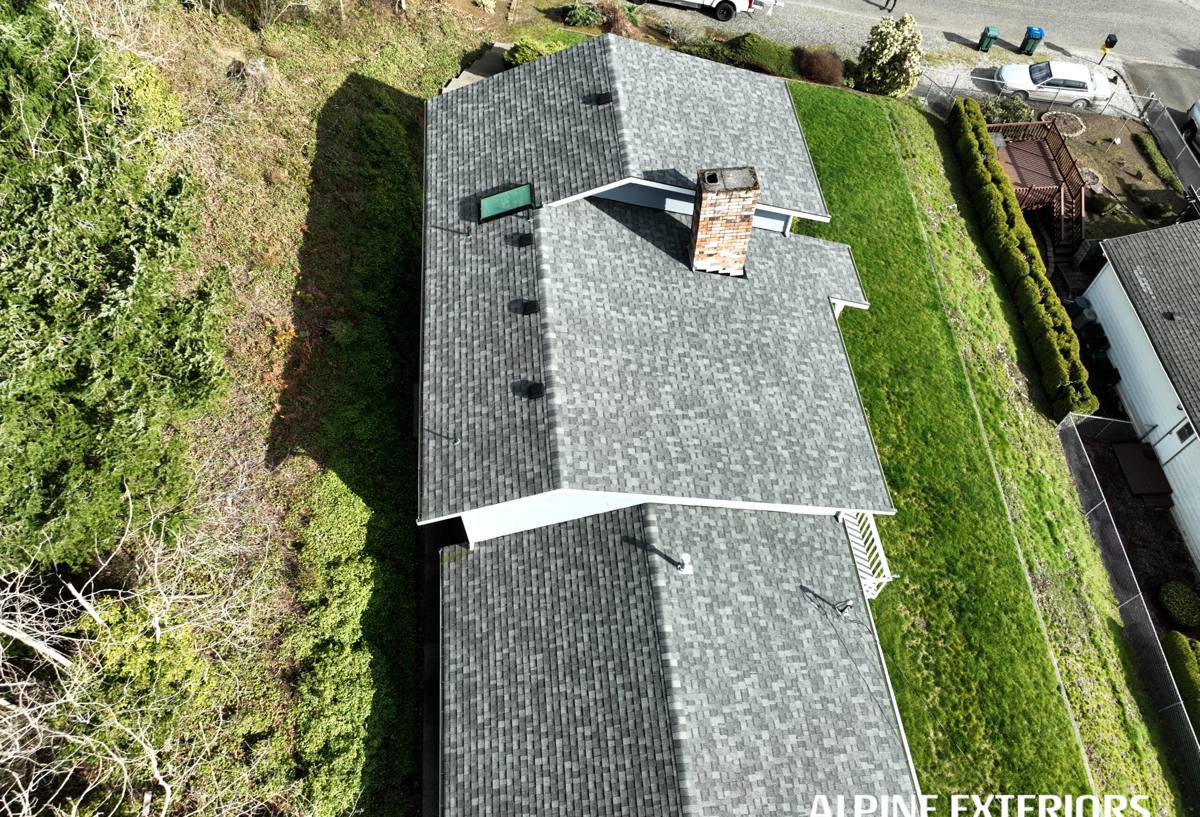
What Driving Rain and Moss Actually Do to a Roof
Two things drive most of the roofing problems we see on Maple Falls homes: wind-driven rain finding its way past standard laps and fasteners, and moss holding moisture against the shingle surface long after a storm has passed.
Driving Rain
Asphalt shingles are designed to shed water moving straight down. When wind pushes rain sideways or upward under the shingle tabs, water can work past the exposed layer and reach the underlayment, the deck, or the nail line. Over enough seasons, that's how you get soft decking, stained ceilings, and leaks that show up nowhere near where the water actually entered. Proper overlap, sealed nail heads, and correctly lapped underlayment are what keep driving rain out — and they're also the details that get skipped on a rushed job.
Moss
Moss doesn't just sit on top of a roof looking bad. Its root structure holds moisture directly against the shingle granules, which accelerates granule loss and shortens the life of the shingle. Moss growing in a shaded valley or north-facing slope can also lift shingle edges as it spreads, creating small gaps that let water in during the next hard rain. In a heavily treed area like Maple Falls, moss isn't an occasional nuisance — it's an ongoing maintenance factor that has to be planned for from the day the roof goes on.
Signs a Maple Falls Roof Needs Attention
Because of the shade and moisture here, roof problems in Maple Falls often show up earlier than the shingle's rated lifespan would suggest. Homeowners should watch for:
- Dark streaking or green-black patches, especially on north-facing or shaded slopes
- Granules collecting in gutters or at the base of downspouts
- Shingle edges that look curled, lifted, or cupped
- Soft spots or sagging when walked on (a job for a professional, not a DIY check)
- Daylight visible through the attic roof deck, or damp insulation below it
- Moss thickness of a quarter inch or more in any one area
Catching these early usually means a repair. Waiting on them usually means a full replacement, because trapped moisture under a shingle field doesn't stay contained to one spot.
What a Correct Asphalt Shingle Roofing Job Actually Involves
A roof that's going to hold up to Whatcom County's rain and moss cycle needs every layer done right, not just the shingles on top. The parts that matter most and are easiest to shortcut:
Deck Inspection and Repair
Old fasteners, rot, and soft plywood get addressed before anything new goes down. Installing new shingles over a compromised deck just hides the problem for a while.
Ice and Water Shield at Vulnerable Points
Eaves, valleys, and roof-to-wall transitions get a self-adhering waterproof membrane underneath the shingles. These are the spots where driving rain and ice most often find a way in, and they're worth the extra material.
Synthetic Underlayment
Covering the full deck with a quality synthetic underlayment gives a second line of defense if wind-driven rain ever gets past the shingle surface — which, in this climate, it eventually will somewhere on the roof's life.
Proper Flashing
Chimneys, skylights, sidewalls, and any roof penetration need correctly formed and sealed flashing. Flashing failure, not shingle failure, is one of the most common causes of leaks we find on older Whatcom County roofs.
Ventilation
A shaded, damp climate makes attic ventilation more important, not less. Balanced intake and exhaust venting keeps moisture from condensing under the deck and helps shingles run cooler and last longer.
Correct Nailing Pattern
Manufacturer nailing specs exist for wind resistance. Underdriven, overdriven, or misplaced nails are a leading cause of shingles blowing off or sealing improperly — and they void warranty coverage if a claim is ever needed.
Choosing the Right Shingle for This Climate
Not every asphalt shingle handles a wet, shaded, moss-prone environment the same way. Here's how the common options compare for a Maple Falls installation:
| Shingle Type | Moss/Algae Resistance | Typical Lifespan Here | Best Fit |
|---|---|---|---|
| Standard 3-tab | Lower — no algae-resistant granules | Shorter under heavy shade | Budget-conscious, sun-exposed roof planes |
| Architectural (laminate) | Moderate to good, especially with algae-resistant (AR) granules | Longer, more consistent | Most Maple Falls homes, especially shaded slopes |
| Algae-resistant (AR) upgrade | Best available in asphalt shingles | Slower granule and color loss under shade | North-facing or heavily treed roof sections |
| Impact-rated architectural | Good, plus added durability | Longer with proper install | Homes wanting extra durability and possible insurance credit |
For most Maple Falls properties, we recommend an architectural shingle with algae-resistant granules as the baseline — the upfront cost difference is modest, and it directly addresses the moss and staining issue that this climate causes.
Our Process, Start to Finish
- On-site inspection: We walk the roof and attic, check the deck condition, ventilation, flashing points, and existing moss or wear patterns before quoting anything.
- Honest estimate: A written scope of work and price range, with the reasoning behind any recommended upgrades explained plainly — no pressure to add things you don't need.
- Material selection: We walk through shingle options with the climate factors above in mind, not just color and price.
- Tear-off and deck check: Old roofing comes off, the deck gets inspected again with everything exposed, and any repairs are handled before new material goes down.
- Installation: Underlayment, ice and water shield, flashing, shingles, and ventilation components installed to manufacturer spec.
- Cleanup and final walkthrough: Magnetic sweep for debris, gutters checked, and a final review of the finished roof with the homeowner.
Cost Factors for a Maple Falls Roofing Project
Every roof is different, but the same handful of factors drive most of the price variation we see locally:
| Factor | Why It Matters Here |
|---|---|
| Roof size and pitch | Steeper pitches and tree cover slow down safe access and material handling |
| Deck condition | Moisture-related rot from years of shade and rain can mean added deck repair |
| Number of valleys and penetrations | More flashing detail work, more labor and material |
| Shingle grade chosen | Standard vs. algae-resistant architectural shingles carry a real but modest price gap |
| Ventilation upgrades needed | Older Maple Falls homes often need added intake or exhaust venting brought up to current standards |
| Access and tree clearance | Heavily wooded lots sometimes need branch clearance or extra care for safe staging |
We give a firm, itemized number after the on-site inspection — not a phone-quote guess — because these factors vary enough house to house that a fair estimate has to be based on what's actually on your roof.
Maintenance That Keeps a Maple Falls Roof Going
Good installation is half the job. In this climate, ongoing maintenance is what actually protects the investment over time.
- Clear gutters and downspouts at least twice a year, more often under heavy tree cover
- Have moss treated and gently removed before it thickens — not scraped or pressure-washed, which damages granules
- Trim overhanging branches to cut down on shade, debris, and moss-friendly conditions
- Check attic ventilation isn't blocked by insulation or debris
- Schedule a roof inspection after any major windstorm
- Address small flashing or shingle issues promptly rather than waiting for a leak
Why Hire a Crew That Already Works in Maple Falls
A roofing crew that mostly works drier, sunnier parts of the state will install a roof to a generic standard. A crew that regularly works Maple Falls and the surrounding Whatcom County foothills knows which roof planes hold moss longest, where driving rain tends to find weak flashing, and which ventilation setups actually keep up with this level of shade and moisture. That local pattern recognition shows up in the details — where we add extra ice and water shield, how we handle valleys under dense tree cover, and which shingle upgrades are worth the money here versus in a drier climate. It's the difference between a roof that looks right on installation day and one that's still performing correctly five winters later.
If you're weighing a repair against a full replacement, or just want an honest read on your current roof's condition, we're glad to take a look. Reach out for a free, no-pressure estimate using the form below — we'll walk the roof, tell you what we actually find, and give you a clear, written price before anything moves forward.