 Lynden Siding
 Roof Repair Built for Aldergrove's Climate
Aldergrove sits close enough to the Salish Sea and the Fraser Valley lowlands that its roofs take a different kind of beating than roofs further inland. Salt-laden air off the coast accelerates corrosion on exposed metal fasteners and flashing. Driving rain, pushed sideways by winter storms, finds every gap in a roofing system that a calmer climate would never expose. And the long, damp moss season here means organic growth has months at a time to work into shingle mat and wood shakes before a dry stretch ever shows up to slow it down. A roof repair that ignores these three factors tends to fail again within a season or two. One that accounts for them holds up.
We work throughout the Lynden and greater Whatcom County area, and Aldergrove falls within our regular service range just across the line into British Columbia. That matters more than it might seem — a crew that only shows up once for an emergency call doesn't have the same read on how local weather patterns actually behave against a roof over multiple seasons.
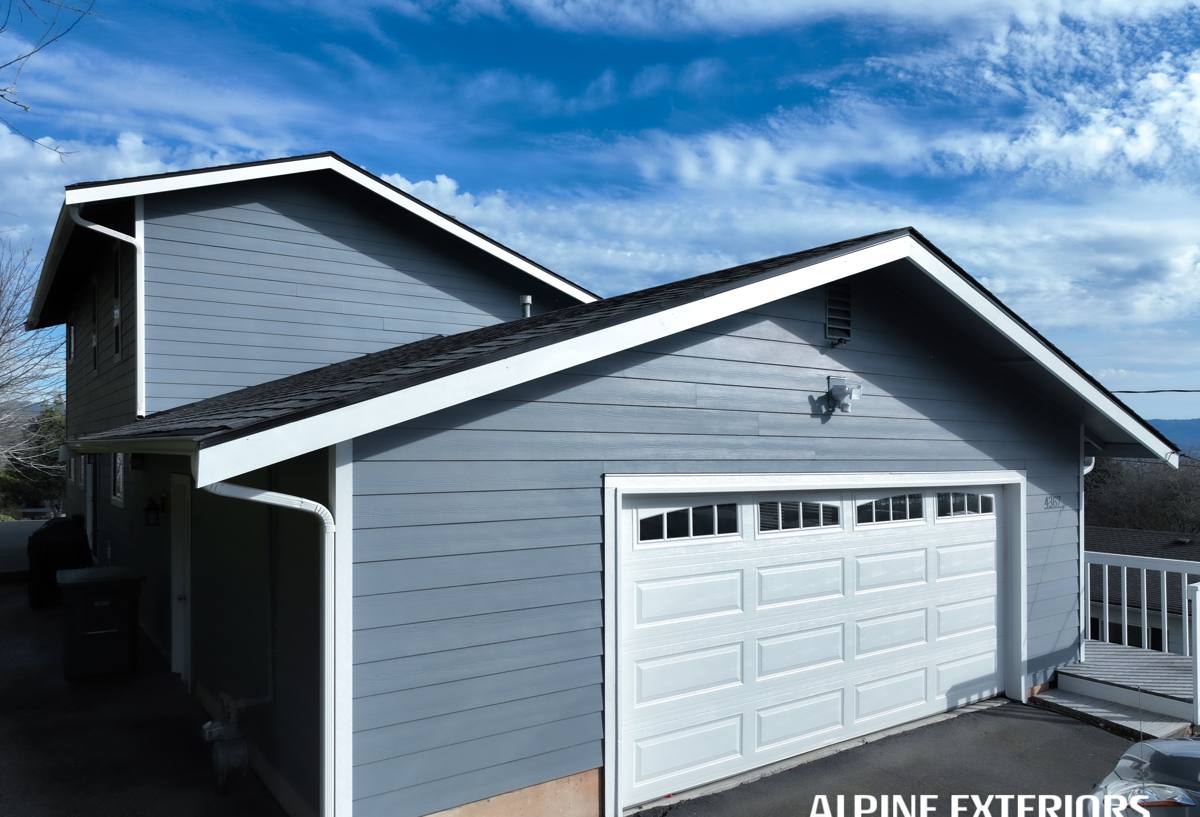
What Local Homes Actually Need From a Roof Repair
Most of the repair calls we get in this area fall into a handful of categories, and each one has a different root cause tied to the regional climate.
Moss and Organic Growth
Moss doesn't just sit on top of a roof looking bad — its root structure lifts shingle edges, holds moisture against the roof deck, and creates a wicking path for water to travel under the shingle mat instead of off of it. In a climate with a long wet season and mild temperatures, moss gets uninterrupted growing time that drier regions simply don't offer. Left alone, a moss mat can shorten the life of an otherwise sound roof by years.
Wind-Driven Rain Intrusion
Rain that falls straight down mostly runs off a properly shingled roof without issue. Rain that's being pushed sideways by wind behaves differently — it can work backward under shingle tabs, around chimney flashing, and through nail penetrations that were never designed to handle horizontal pressure. This is one of the most common causes of ceiling stains and attic leaks we diagnose in this area, and it's often mistaken for a "leaky roof" when the real issue is a handful of undersized or poorly sealed flashing details.
Salt Air and Fastener Corrosion
Even at a distance from open coastline, salt-carrying air corrodes exposed metal faster than it would inland. Roofing nails, flashing edges, and metal drip edge that aren't rated for coastal-adjacent exposure can start to rust and weaken years ahead of schedule. Once fasteners lose their grip, shingles loosen, and a small leak becomes a bigger one fast.
What a Correct Roof Repair Involves
A roof repair that actually solves the problem — rather than patching the symptom — follows a consistent process regardless of how minor or major the damage looks from the ground.
- Diagnose from the source, not the stain. Interior water stains rarely sit directly below the actual entry point. We trace the path of water along rafters, sheathing, and underlayment before deciding where the repair actually needs to happen.
- Inspect the whole roof plane, not just the damaged spot. If moss, wind, or corrosion caused the failure in one area, there's a good chance the same conditions are affecting neighboring shingles and flashing that haven't failed yet.
- Match materials correctly. Mismatched shingle types, colors, or profiles from a rushed patch job stand out and can also create their own water-shedding problems if the layering isn't done right.
- Address the cause, not just the hole. If moss caused the failure, we don't just replace the shingle — we look at what's letting moss establish itself there in the first place, whether that's shade, debris buildup, or a low-slope section that drains slowly.
- Reseal and re-flash properly. Flashing around chimneys, vents, skylights, and valleys is where most repeat leaks originate. A repair that doesn't renew the flashing seal is usually a temporary one.
Common Roof Repair Needs by Category
| Issue | Typical Cause in This Area | What a Proper Fix Involves |
|---|---|---|
| Ceiling or attic stains | Wind-driven rain intrusion at flashing or shingle laps | Trace leak path, replace compromised underlayment, reseal flashing |
| Moss buildup on shingles | Long wet season, shaded or north-facing slopes | Careful moss removal, damaged shingle replacement, treatment to slow regrowth |
| Loose or lifted shingles | Wind exposure combined with aging or under-driven fasteners | Re-secure or replace shingles with correctly rated fasteners |
| Rusted flashing or fasteners | Salt-air corrosion over time | Replace with corrosion-resistant flashing and fastener hardware |
| Valley or chimney leaks | Aging flashing seals, debris damming water flow | Full flashing renewal, not just surface caulking |
How Our Repair Process Works
We keep the process straightforward because most homeowners calling about a roof repair are dealing with an active problem, not planning a remodel.
- We start with a roof inspection to identify the actual source of the damage, not just the visible symptom.
- We give you a clear explanation of what we found and what it will take to fix it correctly — including whether a targeted repair is enough or whether the damage points to a bigger issue worth knowing about.
- We provide an honest estimate before any work begins, with the scope spelled out so there are no surprises.
- We complete the repair using materials suited to this region's conditions — not the cheapest option, but the one that holds up against moss, wind-driven rain, and salt air over time.
- We clean up thoroughly, including removing old shingle debris and moss material so it doesn't wash into gutters or landscaping.
Repair or Replace? A Practical Way to Think About It
Not every roof problem calls for a full replacement, and a contractor who suggests otherwise before even inspecting the roof isn't doing you any favors. At the same time, some damage is a sign of a roof nearing the end of its useful life, and a repair in that case is only buying limited time.
Signs a repair is likely the right call
- Damage is isolated to one section, flashing point, or a handful of shingles
- The roof is younger than its expected lifespan and otherwise in good condition
- The underlying deck and structure show no signs of rot or long-term water damage
Signs it's worth discussing replacement
- Multiple sections show granule loss, curling, or widespread moss damage
- You've had repeat leaks in different spots over the past couple of years
- The roof is already past or near the end of its expected material lifespan
We'll always tell you honestly which category your roof falls into. A repair that's clearly a stopgap on a roof that needs replacement isn't a service worth selling you.
Why Hiring a Crew That Already Works Aldergrove Matters
Roofing crews that mainly work in drier or more sheltered climates don't always account for the combination of conditions that show up here — sustained moss season, wind-driven rain off the lowlands, and the corrosive edge that comes with proximity to salt air. A crew that regularly works Whatcom County and the neighboring border communities, including Aldergrove, has already seen how these conditions play out on real roofs over real seasons. That means fewer guesses and a repair that's built for the climate it actually has to survive, not a generic fix pulled from a different region's playbook.
Local familiarity also means faster response. When a storm rolls through and a leak shows up, a contractor who already knows the area's common problem points can often diagnose and address the issue faster than one starting from scratch.
Maintaining Your Roof Between Repairs
A repair holds up longer when it's paired with basic upkeep, especially in a climate that gives moss and moisture every advantage.
- Keep gutters and valleys clear of debris so water has a clear path off the roof
- Have moss addressed before it spreads across shingle mat, not after
- Trim back overhanging branches that keep sections of the roof shaded and damp
- Schedule a roof check after major windstorms, even if nothing looks obviously wrong from the ground
- Address small flashing issues early — they're a fraction of the cost of a deferred leak that's damaged sheathing or insulation
If you're dealing with a leak, missing shingles, moss buildup, or just want an honest read on your roof's condition, we're glad to take a look. Request a free, no-pressure estimate below and we'll walk you through exactly what we find and what it would take to fix it right.