 Lynden Siding
 Storm Damage Roof Repair for Acme Homes
Acme sits in the wooded, low-lying stretch of Whatcom County southeast of Lynden, where tree cover, higher rainfall totals, and long stretches of damp shade put roofs through a different kind of wear than homes closer to open ground. When a windstorm rolls through or a heavy winter system dumps rain for days on end, the damage isn't always obvious from the driveway. A few lifted shingles, a cracked ridge cap, or a soft spot around a vent boot can sit quietly for months before they show up as a stain on a ceiling. Our job is to find that damage early, explain plainly what's going on, and fix it in a way that holds up through the next storm season — not just patch it until the next call.
We work roofs throughout Lynden and the surrounding Whatcom County communities, including Acme, so we're familiar with how the tree-heavy, moisture-heavy conditions out here affect roofing differently than in more exposed parts of the county.
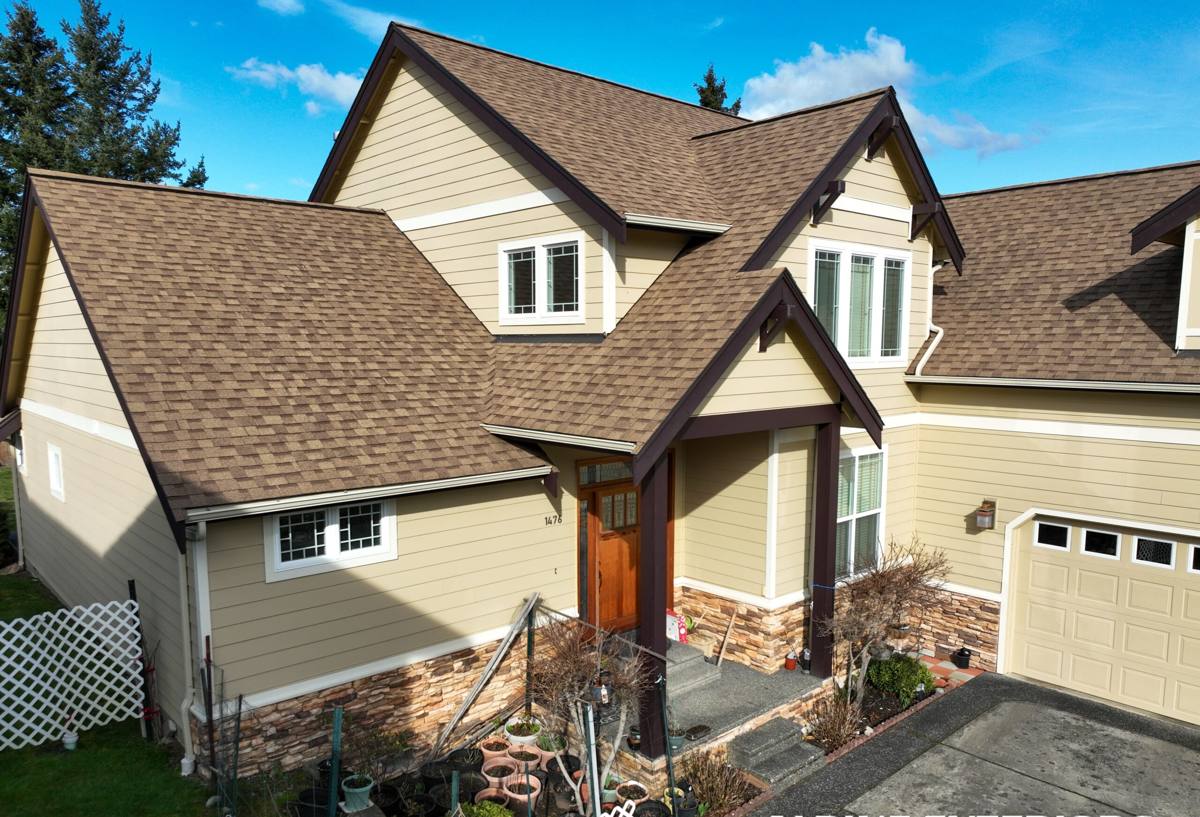
What Acme's Climate Does to a Roof
Three things drive most of the storm-related roof repair calls we get in this area, and they compound each other.
Driving rain and wind-driven damage
Pacific storm systems moving through Whatcom County don't just drop rain straight down — wind pushes it sideways, up under shingle edges, and into any gap that wouldn't normally see water. A roof that's watertight in a light, straight-down rain can still leak in a sideways storm if flashing, fasteners, or shingle seals have started to fail.
Salt-influenced air
Whatcom County's proximity to the Salish Sea means salt-laden air travels further inland than people expect, accelerating corrosion on exposed metal — nail heads, flashing, gutter fasteners, and vent housings. Corroded metal fails quietly, and it's usually the first thing to give way in a storm.
A long moss season
Acme's tree cover and shade mean roofs here stay damp longer after every storm, which is exactly what moss needs to take hold. Moss doesn't just look bad — it lifts shingle edges as it grows, holds moisture against the roofing material, and works its way under laps where it can freeze and expand in cold snaps. A roof with an established moss problem is more vulnerable to storm damage because the shingles are already loosened and the deck underneath may already be absorbing moisture.
Signs Your Roof Took Storm Damage
Most storm damage doesn't announce itself. Here's what we tell Acme homeowners to look for after a significant wind or rain event:
- Shingles that look curled, cracked, or flipped up at the edges, especially on the side of the roof that faced the wind
- Granules collecting in gutters or at downspout outlets — a sign of accelerated shingle wear
- Visible gaps or lifted flashing around chimneys, skylights, or vent pipes
- New or worsening water stains on interior ceilings or in the attic
- Moss clumps that have thickened or spread since the last time you looked
- Debris — branches, needles, cones — built up in valleys where water is supposed to flow freely
- Sagging or soft-feeling spots when walking the attic near the roof deck (a sign of moisture already in the wood)
If you see any of these after a storm, it's worth having it looked at before the next system rolls through. Small, cheap fixes get expensive fast once water finds its way into the deck or insulation.
What a Correct Storm Repair Actually Involves
A lot of storm repair work we see from other jobs is surface-level — a few shingles swapped, some sealant smeared around a vent, done. That approach hides a problem instead of fixing it. A repair done right starts with understanding why the damage happened, not just where.
Inspection first
We check the obvious damage, but we also check the areas that tend to fail next: flashing seams, valley metal, boot seals around penetrations, and the fastener pattern on surrounding shingles. If wind lifted one section, nearby sections often have loosened seals even if they haven't visibly failed yet.
Deck condition matters as much as the shingles
If water got under the roofing material, the plywood or OSB deck underneath may be soft, delaminating, or holding moisture. Nailing new shingles over a compromised deck doesn't solve anything — it just buries the problem. We check deck condition at every repair site before we close anything back up.
Matching materials, not improvising
Storm repairs should match the existing roof's shingle profile, color, and, where possible, manufacturer line — both for appearance and so the repaired section weathers at the same rate as the rest of the roof. When an exact match isn't available (common on older roofs), we'll tell you honestly and talk through the best-looking option rather than pretending it's a perfect match.
Flashing and fasteners get the same attention as shingles
Given the corrosion risk from salt-influenced air out here, we don't just reuse questionable flashing or fasteners because they're "still there." Corroded metal is one of the more common repeat-failure points we find on storm calls, and it's cheap to replace compared to the cost of doing another repair in a year.
Our Process, Start to Finish
| Step | What Happens |
|---|---|
| 1. Contact & scheduling | You describe what happened or what you're seeing; we schedule a visit — sooner if there's active leaking |
| 2. On-roof inspection | We physically inspect the damaged area and surrounding roof sections, plus the attic if accessible |
| 3. Written assessment | You get a clear explanation of what's damaged, why, and what repair options exist — no pressure, no scare tactics |
| 4. Repair | We complete the agreed-upon repair, including deck work if needed, matching materials where possible |
| 5. Walkthrough | We show you what was done and flag anything else worth watching, like early moss regrowth or aging flashing nearby |
Cost Factors for Storm Damage Repair
Every roof and every storm event is different, so we don't quote blind. That said, here's what typically drives cost up or down on a storm repair:
| Factor | Effect on Cost |
|---|---|
| Extent of shingle damage | A handful of shingles is a straightforward repair; wide wind-lift across a slope costs more |
| Deck condition underneath | Soft or delaminated decking adds material and labor beyond the shingle work itself |
| Roof pitch and access | Steep or high roofs, common on some Acme lots with taller tree-adjacent rooflines, take longer to work safely |
| Flashing and metal replacement | Corroded flashing or fasteners add modest cost now but prevent repeat failures |
| Moss removal needed first | Established moss has to be cleared before damage underneath can be properly assessed and repaired |
| Material matching | Exact shingle matches on older roofs sometimes cost more to source, or require a broader color-blend approach |
Moss Removal as Part of Storm Repair
Because Acme's shade and moisture hold moss longer than more open parts of the county, we often find that a "storm damage" call is really two problems layered together: wind or rain exposed a weak spot, and moss had already been undermining that same section for a season or two. When that's the case, we address both — clearing moss safely (without power-washing, which strips granules and shortens shingle life) and treating the area to slow regrowth, then completing the structural repair underneath.
Why Hire a Crew That Already Works Acme
Storm damage repair isn't a one-size-fits-all trade. A crew that mostly works drier, more exposed parts of a region can miss how differently a shaded, tree-heavy area like Acme behaves — how long moisture sits, how fast moss reestablishes, and where salt-air corrosion tends to show up first on local homes. We work this part of Whatcom County regularly, which means we're not guessing at how a roof here ages or what usually fails first after a storm. That translates into a faster, more accurate diagnosis and a repair that's built for the conditions the roof will actually keep facing — not generic advice pulled from a drier climate.
Questions to Ask Before Hiring Anyone for Storm Repair
- Will you inspect the full roof, or only the spot I'm asking about?
- Do you check the deck condition, not just the shingles, before repairing?
- What's your plan if the material doesn't exactly match my existing shingles?
- Are flashing and fasteners included in the repair, or only the visible shingle damage?
- Do you carry proper insurance, and can you show it if asked?
- Will I get a written explanation of what was found and what was done?
A contractor who answers these plainly, without dodging or rushing you, is generally one worth trusting with the job.
If you've got storm damage, a suspicious stain, or a roof that just doesn't look right after the last system came through, we're happy to take a look. Fill out the form below for a free, no-pressure estimate — we'll tell you honestly what we find, whether it's a small fix or something bigger.