 Lynden Siding
 Metal Roofing for Abbotsford, BC: Built for Border-Country Weather
Abbotsford sits in the Fraser Valley just across the line from Whatcom County, and the weather doesn't stop at the border. Homes here deal with the same marine-driven system that shapes roofing everywhere in this corner of the Pacific Northwest: humid air pushing in off the water, long stretches of wind-driven rain through fall and winter, and mild, damp conditions that give moss and algae a growing season that runs most of the year. A roof that isn't built specifically for that combination — salt-tinged air, sideways rain, and near-constant moisture on shaded slopes — tends to show its age far sooner than the homeowner expects, regardless of what the shingle package was rated for on paper.
Metal roofing is one of the most effective answers to that climate, and it's why we get asked about it more in Abbotsford than in almost any other part of our service area. This page covers what a metal roof actually needs to hold up here, what a correct installation involves, and how our process works for homeowners on the Abbotsford side of the border.
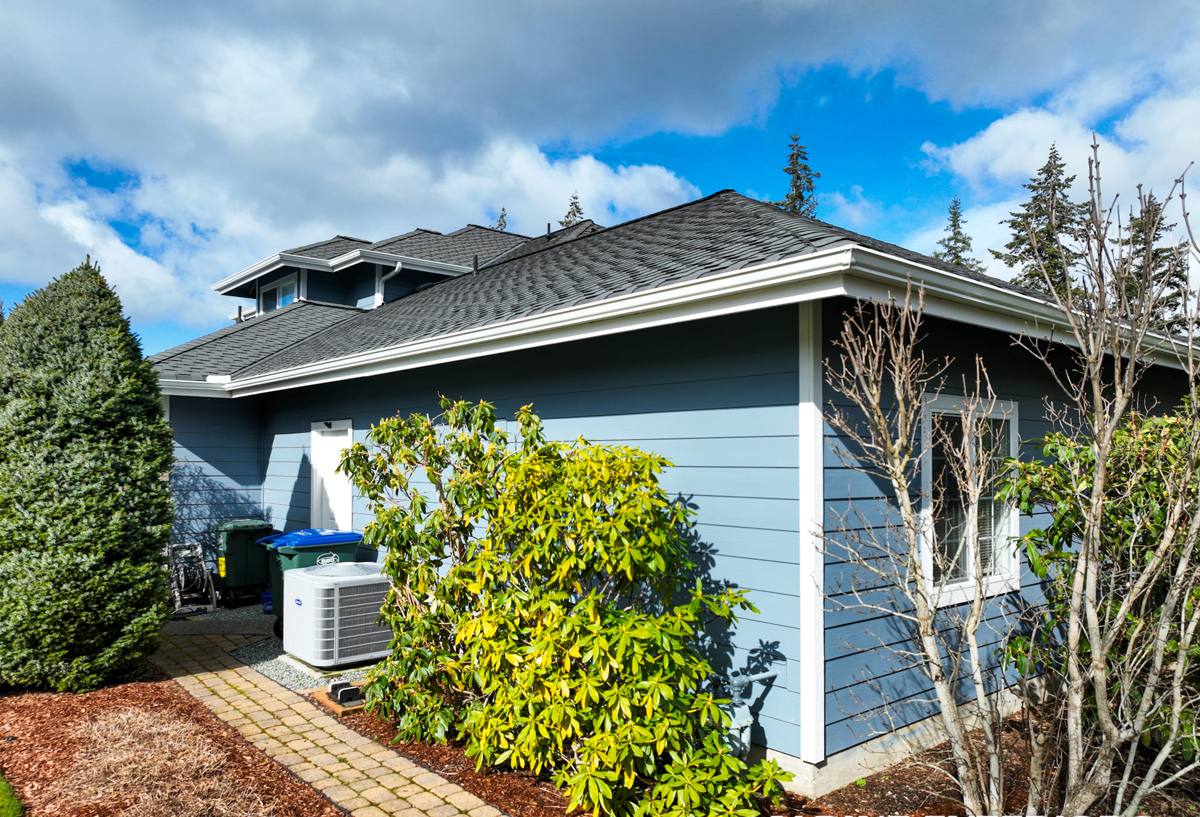
What Salt Air, Driving Rain, and Moss Actually Do to a Roof Here
Salt Air and Corrosion
Even away from the immediate coastline, Fraser Valley air carries enough salt to accelerate corrosion on fasteners, flashing, and lower-grade metal trim over time. On a roof, that shows up first at the small stuff — exposed screw heads, ridge caps, valley flashing — long before it shows up on the main roof panels themselves. It's one of the reasons fastener and flashing selection matters as much as the roofing material itself in this climate.
Wind-Driven Rain
Rain in this valley rarely falls straight down. Wind pushes it sideways into panel seams, around vent pipes and chimneys, and under any flashing detail that isn't lapped and sealed correctly. That sideways load is a tougher test of the installation than of the metal itself — a well-made panel with a rushed flashing job will leak in exactly the spots you'd expect, while a properly detailed roof sheds that same rain without issue.
A Long Moss and Algae Season
Shaded roof planes, north-facing slopes, and roofs under mature trees stay damp longer than sun-exposed sections, and in this climate that dampness can persist for most of the year. On an asphalt roof, that turns into moss working its way under shingle edges. On a correctly installed metal roof, the smooth, non-porous panel surface gives moss and algae far less to hold onto, which is one of the main reasons homeowners in Abbotsford move to metal in the first place.
Why Metal Makes Sense for This Specific Climate
Metal roofing isn't the right choice for every home or every budget, but for a climate built around sustained moisture and a long moss season, it solves problems that other materials manage rather than avoid. The smooth surface sheds water fast, resists moss and algae buildup far better than a porous shingle surface, and — when installed with the correct fastening and flashing details — handles wind-driven rain better than most alternatives. It also holds up well against the freeze-thaw cycling this region sees in a typical winter, without the granule loss or curling that eventually catches up with asphalt shingles here.
The trade-off is upfront cost. A metal roof costs more to install than an asphalt shingle roof of the same size, and that's a real factor for a lot of homeowners. What it buys is a roof that, installed correctly, is realistically built to outlast two or three asphalt roofs over the life of the house — which changes the math for anyone planning to stay long-term.
Metal Roofing Systems: What We Install and Why
"Metal roofing" covers more than one system, and the right one depends on your roof's pitch, the look you want, and your budget. We'll walk through the real trade-offs rather than defaulting to whichever is easiest to sell.
| System | How It's Fastened | Moss & Moisture Behavior | Typical Look | Realistic Lifespan Here |
|---|---|---|---|---|
| Standing seam | Concealed clips, no exposed fasteners on the panel field | Excellent — smooth seams shed water and resist moss buildup better than any exposed-fastener system | Clean, modern vertical lines | 40-60 years |
| Exposed-fastener metal panel | Screws driven directly through the panel | Good, but fastener seals need periodic checking as they age | Simple, ribbed panel look | 25-40 years |
| Metal shingle / shake profile | Interlocking panels, concealed fasteners | Very good; profile still sheds water well despite the textured look | Mimics shake or slate | 40-50 years |
Standing seam is what we recommend most often for this climate specifically because it has no exposed fasteners in the field of the roof for salt air and wind-driven rain to work on over time. Exposed-fastener panels are a reasonable, lower-cost option on the right roof, but they ask more of the installer to get the fastener spacing, torque, and washer seals right, and they'll need occasional attention as those seals age.
What a Correct Metal Roof Installation Actually Involves
Most metal roof problems we get called out to fix in this region trace back to installation shortcuts, not the metal itself. On every job, that means:
- Proper underlayment rated for the panel system, not just a minimum-code product
- Correctly spaced and torqued fasteners — over-driven or under-driven screws are one of the most common causes of early leaks on exposed-fastener systems
- Fully lapped and sealed flashing at every valley, chimney, vent pipe, and roof-to-wall transition
- Corrosion-resistant fasteners and trim matched to the panel metal, so dissimilar metals aren't creating a galvanic corrosion problem down the road
- Proper panel expansion allowance, since metal roofing moves with temperature swings and needs to be installed so that movement doesn't stress the seams
- Adequate roof deck ventilation to let moisture escape rather than get trapped under the panels
None of this adds significantly to the cost of a job relative to the panels themselves, but skipping it is exactly what turns a fifty-year roof into one with leaks in year eight.
Repair, Recoat, or Replace: How We Help You Decide
Not every metal roofing question in Abbotsford is about a first-time install. We also get called to look at older metal roofs with isolated leaks, fading finish, or fastener problems. A localized leak at one flashing detail on an otherwise sound roof is usually a straightforward repair. Widespread fastener failure across an aging exposed-fastener roof, or a finish that's chalking and losing its protective coating across large sections, is more honestly addressed with a broader repair plan or, eventually, replacement. We'll tell you which situation you're actually in and why, instead of defaulting to whichever answer costs more.
Serving Abbotsford, BC from a Crew Rooted in Lynden
Lynden sits close enough to the border that Abbotsford has always been part of how we think about this region's weather and roofing needs — the two towns share the same Fraser Valley air, the same wind-driven rain patterns, and the same long moss season. Working on both sides of that border means understanding that Abbotsford homes face this climate directly, without the buffer some more inland areas get, and building every roof accordingly.
Before any work starts on a home in Abbotsford, we'll walk through what permitting and inspection steps apply in your specific municipality, since those requirements are handled locally and we make sure that step is covered as part of the project rather than an afterthought. What doesn't change from one side of the border to the other is the standard the roof gets built to: correct flashing, correct fastening, and materials chosen for what this specific climate actually does to a roof over decades, not just what looks good on install day.
Questions to Ask Before You Commit
Whether you're comparing quotes or just starting to look into metal roofing for your Abbotsford home, a few questions separate a solid contractor from one who's guessing:
- Can they explain their flashing approach at valleys and roof-to-wall transitions in plain terms, not just name a panel brand?
- Do they specify corrosion-resistant fasteners and trim matched to the panel metal?
- Will they put the panel system, underlayment, and warranty terms in writing before work starts?
- Have they installed metal roofing on homes actually exposed to this region's salt air and wind-driven rain, not just in a drier climate?
- Do they have a clear answer for how they handle permitting and inspection in your specific municipality?
If your Abbotsford home needs a metal roof — new construction, a full replacement, or you're just trying to understand whether it's the right move — we're glad to take a look and give you a straightforward, honest read on what your roof actually needs. Reach out using the form below to schedule a free, no-pressure estimate.